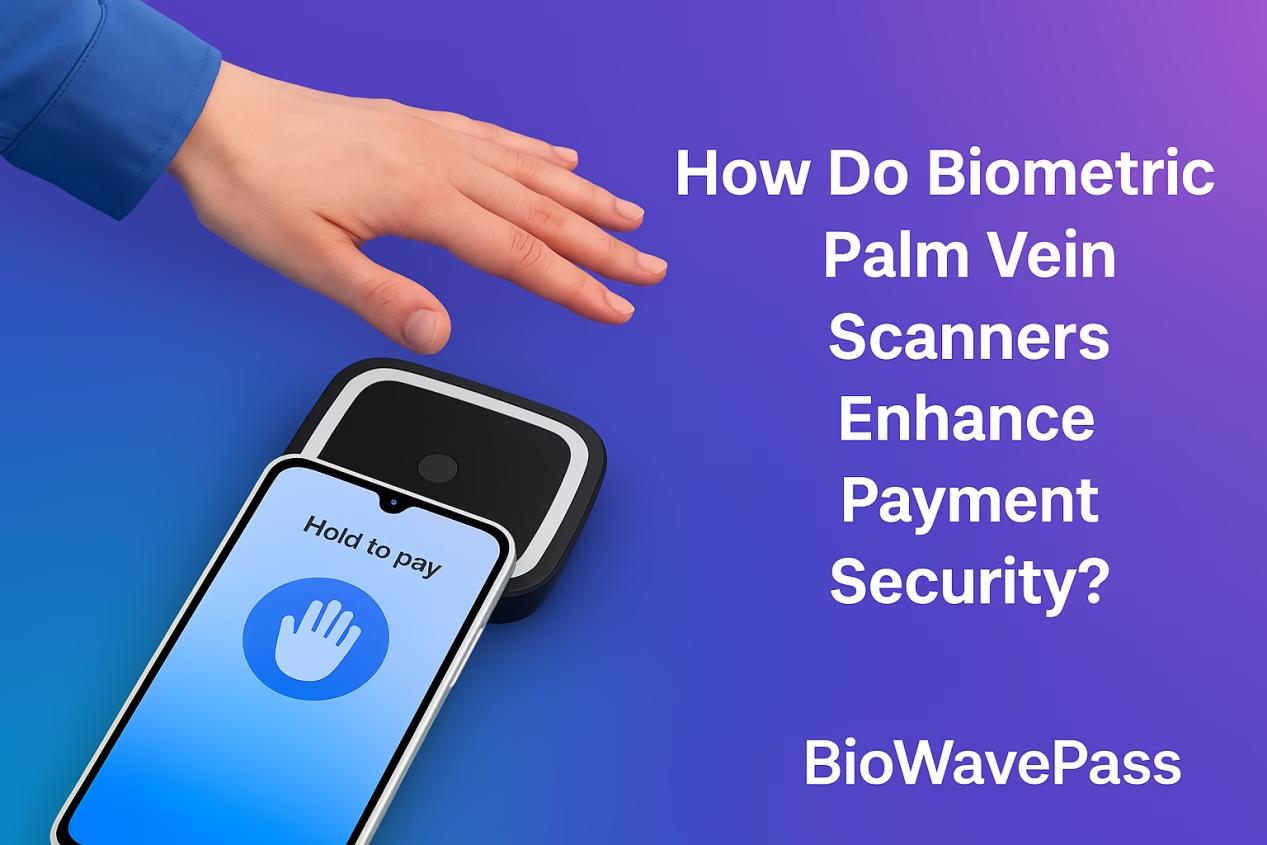
Comment les scanners biométriques des veines de la paume de la main améliorent-ils la sécurité des paiements ?
Payment fraud is evolving faster than traditional security measures can respond.
From card cloning and stolen PINs to deepfake-based identity theft, today’s financial ecosystem faces constant security pressure.
Consumers now expect frictionless convenience — but without compromising security.
That’s where BioWavePass Palm Vein Technology bridges the gap between speed, safety, and trust.
⚠️ What Are the Risks in Today’s Payment Systems?
Banks, fintechs, and merchants continue to face several recurring challenges in digital transactions:
- 💳 Card & PIN Fraud: Easily replicated through skimming, social engineering, or phishing.
- 📱 Device-Dependent Authentication: Mobile-based biometrics fail when devices are lost or shared.
- 🤖 AI-Generated Spoofing: Facial and fingerprint recognition are increasingly vulnerable to deepfake or replica attacks.
- 🧩 Compliance Pressure: Regulators demand stronger, multi-factor authentication for financial institutions.
These issues underline a key need — a biometric verification method that’s internal, unique, and impossible to duplicate.
🖐️ How Palm Vein Technology Reinforces Payment Security
Palm Vein Technology authenticates users based on the unique vein patterns beneath the skin, captured using RGB + IR dual-spectrum imaging.
Unlike external biometrics (face, fingerprint), palm vein patterns are invisible, internal, and impossible to replicate.
🔍 Key Advantages:
- ✅ Internal Biometrics: Vein structures are protected beneath the skin — impossible to photograph or lift.
- ✅ RGB + IR Fusion: Detects real liveness, preventing spoofing or silicone imitations.
- ✅ Sub-Second Matching: Recognizes users in 0.35 seconds, suitable for POS and fintech apps.
- ✅ Ultra-Low False Acceptance Rate (FAR): Achieves 1 in 100 billion accuracy — ideal for high-value payments.
- ✅ Contactless Experience: Users simply wave their hand — no card, no PIN, no phone required.
BioWavePass Palm Vein Scanner SDK enables developers to easily embed these features into fintech platforms or payment gateways with minimal integration effort.
⚙️ How Fast Is Deployment?
The BioWavePass system is built for rapid integration and scalability, whether for banks, fintech startups, or eKYC vendors.
| Stage | Time | Description |
|---|---|---|
| Server Setup | ~7 minutes | Deploy SDK on your private or hybrid cloud using the installation guide |
| Integration Testing | ~1 hour | Run live Palm Vein ID matching for real-world payment validation |
| Full Pilot Launch | 1 day | Enable biometric payments across POS, kiosk, or mobile apps |
Developers can use the Palm Vein SDK to connect their app directly to biometric hardware through standardized APIs — no third-party dependency, no external cloud.
🔐 Why BioWavePass Is Trusted for Payment-Grade Reliability
Unlike fingerprints or facial data, palm veins cannot be stolen, cloned, or reverse-engineered.
This makes the BioWavePass Palm Payment Technology inherently secure, private, and stable — designed for bank-grade authentication.
Core Security Highlights:
- AES-256-CBC encrypted template storage
- Fully local or private-cloud processing
- SDK compliance with EMV and PCI DSS frameworks
- Stable FAR/FRR performance across millions of registered users
- Proven scalability for fintech and national payment infrastructures
By keeping all templates and matching within your servers, BioWavePass ensures that no personal data or biometric features ever leave your control — a must-have for modern compliance environments.
🧩 Real-World Fintech Applications
BioWavePass Palm Vein Technology is now empowering fintech innovation across multiple sectors:
- 🏦 Banking & Payments – Secure account login, ATM access, and high-value transfers
- 🛍️ Retail & POS – Contactless palm payments replacing card swipes
- 📲 Digital Wallets – Seamless palm-based authentication for eKYC and mobile payments
- 🧾 Government Programs – Secure citizen disbursements and subsidy systems
- 🧠 Enterprise Security – Dual authentication for access control and employee verification
With its Palm Vein SDK et developer-ready Flutter Plugin, BioWavePass makes it possible to deploy biometric fintech pilots in under an hour.
✅ Conclusion
In an age of AI-generated fraud and rising data breaches, Palm Vein Biometrics represent the strongest form of identity assurance — invisible, internal, and unhackable.
BioWavePass helps banks and fintechs deploy Technologie de paiement par téléphone portable that’s fast, compliant, and future-proof.
- ⚙️ Deploy in 7 minutes
- 🚀 Validate in 1 hour
- 🔒 Scale securely to millions of users
Palm Vein is not just a new way to pay — it’s the foundation of biometric payment security for the next decade.
Start to Pay with Your Hands: https://biowavepass.com/palm-payment-technology/
Partager cet article
A propos de l'auteur

Vous pourriez aussi aimer
Which Is the Best EMV & PCI Certified Palm Vein POS Terminal?
Will Palm Vein POS Support Existing EMV, NFC, and QR Payment Ecosystem?

Why Palm Vein Technology Is Emerging as a Payment-Grade Biometric Standard
Where Is Palm Vein Biometric Data Stored and How Is It Secured?
How Do You Choose the Best Palm Vein Technology for Real Projects?
How to Solve Power Issues in Palm Vein Scanner Projects?
What Is Palm Scanning Technology?
How Palm Vein Biometrics Can Be Integrated Into Mobile Payment Systems: A BioWavePass Implementation Guide
How to setup Palm Payment? Designing a Seamless Palm Payment Flow for Fintech and Payment Platforms