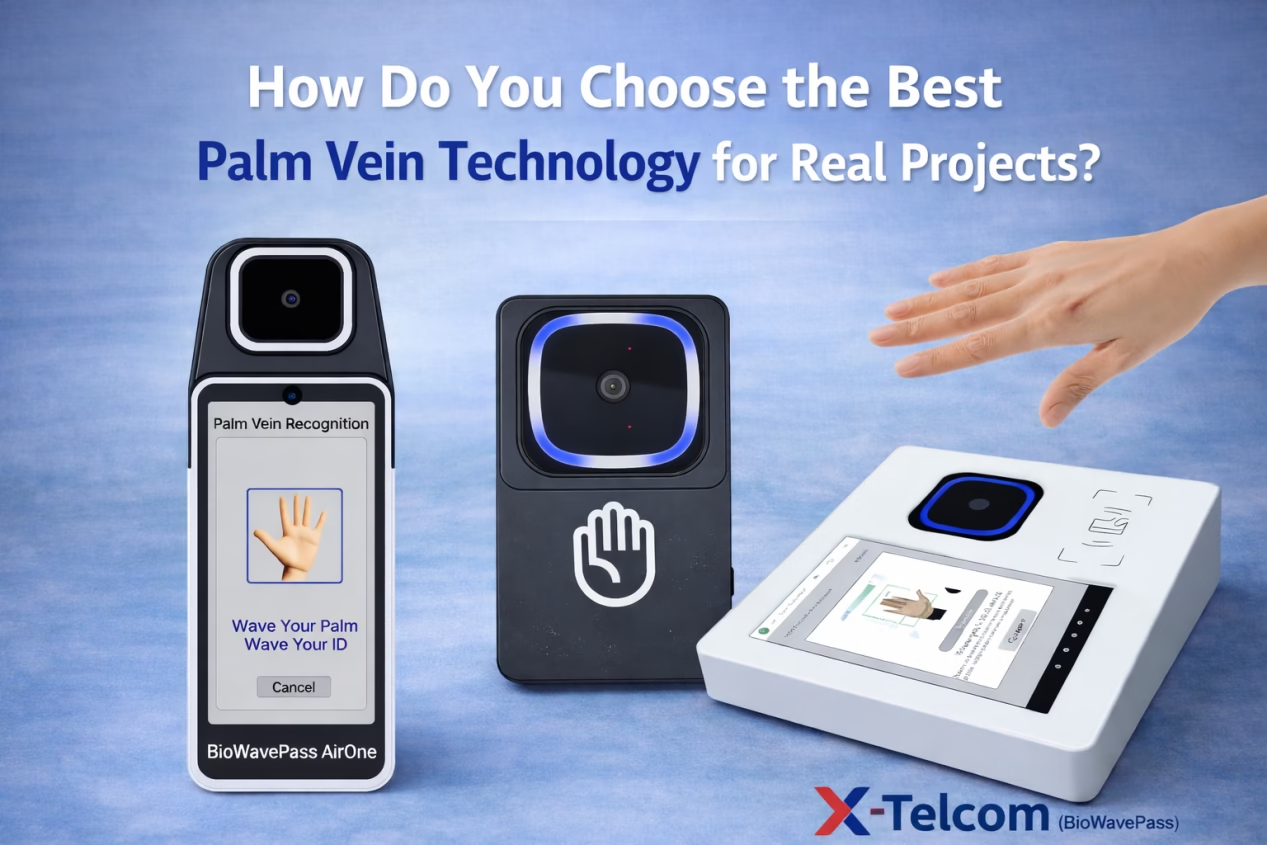
How Do You Choose the Best Palm Vein Technology for Real Projects?
Choosing palm vein technology is not about lab demos.
It is about whether the system works reliably in real environments, at scale, and over many years.
To choose the best palm vein technology, you should evaluate these key areas.
1. Can the Hardware Work Stably in the Field?
IR + RGB palm vein scanning needs at least 5V, 1.5A.
Most phones, POS devices, and industrial terminals cannot provide this through USB.
That is why BioWavePass developed PalmVein01 Pro:
- Self-powered with built-in 3000mAh battery
- No reliance on host device power
- 6 to 8 hours continuous operation
- Works with Android, Windows, and Linux
Stable power is the foundation of real projects.
2. Is the Recognition Technology Truly Advanced?
Modern projects need more than IR only.
BioWavePass uses Dual-Mode Fusion (RGB + IR):
- RGB captures surface palm features
- IR captures sub-surface vein patterns
- Both are fused into one biometric identity
This fusion:
- Improves accuracy
- Increases speed
- Keeps stability under different lighting and usage environments
- Strongly improves anti-spoofing ability
Dual-Mode Fusion Performance
- Combined FRR@FAR: about one in a hundred billion (1e-11)
- The chance of both RGB and IR failing at the same time is extremely low
- Ensures secure and reliable authentication at large scale
3. Is Data Truly Secure and Customer-Owned?
The best technology must protect users and customers.
BioWavePass security design:
- All palm vein data is AES-256 encrypted
- Data is stored only on the customer’s servers
- BioWavePass does not manage any data
- Transmission uses SSL encryption
- Cloud storage uses AES-256 CBC
- Encrypted on write, decrypted on read
Customers fully own their data.
4. Do You Have Real Software Behind the Hardware?
Hardware alone is not enough.
BioWavePass has its own end-to-end software development teams:
- UK software team
- India software team
- Full control of SDK, API, and backend logic
- Long-term support and customization
This means:
- Faster integration
- Better technical support
- Real solution, not just a device
5. Is There Hardware Diversity for Different Scenarios?
Real projects are not all the same.
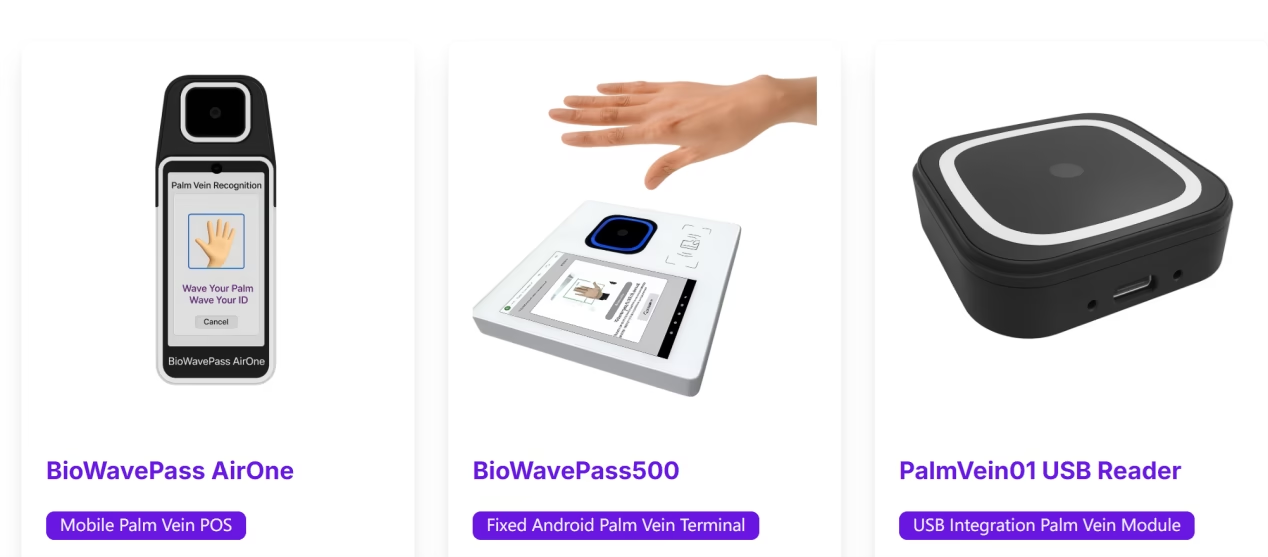
BioWavePass provides multiple hardware types by its own R&D team and production lines:
- Fixed palm vein recognition terminals
- Desktop and counter-top devices
- Self-powered USB palm vein scanners
- Mobile handheld palm vein POS devices
This allows deployment in:
- Banks and retail
- Government services
- Healthcare and education
- Mobile and field operations
Learn more Palm Vein Recoginition Devices in BioWavePass via https://biowavepass.com/biowavepass-palm-vein-scanner-products/
Final Answer
The best palm vein technology for real projects must offer:
- Stable hardware with no power risk
- Advanced dual-mode fusion (RGB + IR)
- Extremely low FAR & FRR
- Strong encryption and customer-owned data
- End-to-end software development capability
- Multiple hardware types for different scenarios
BioWavePass combines all of these.
That is how you choose palm vein technology that truly works in the real world.
Partager cet article
A propos de l'auteur

Vous pourriez aussi aimer
How Does Tokenization Work in Palm Vein Payment Architecture?
Can Palm Registration and Payment Be Done in One Tap? A Practical View from BioWavePass
As a Developer, How Can We Upgrade from a Small Model to a Large Model Palm Vein Recognition Algorithm Without Re-Registering Users?
How Secure Is Palm Vein Technology Against Spoofing Attacks?
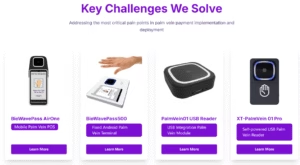
How to Choose the Right Palm Vein Recognition Device for Your Project?
Why Is It Not Recommended to Use a Single Palm Scan for Both Identification and Registration?
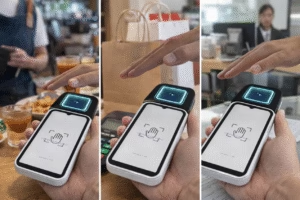
What Is the Next-Gen Contactless Payment Method?
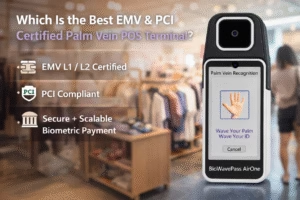
Which Is the Best EMV & PCI Certified Palm Vein POS Terminal?
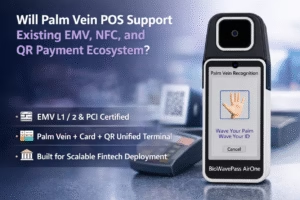
Will Palm Vein POS Support Existing EMV, NFC, and QR Payment Ecosystem?
