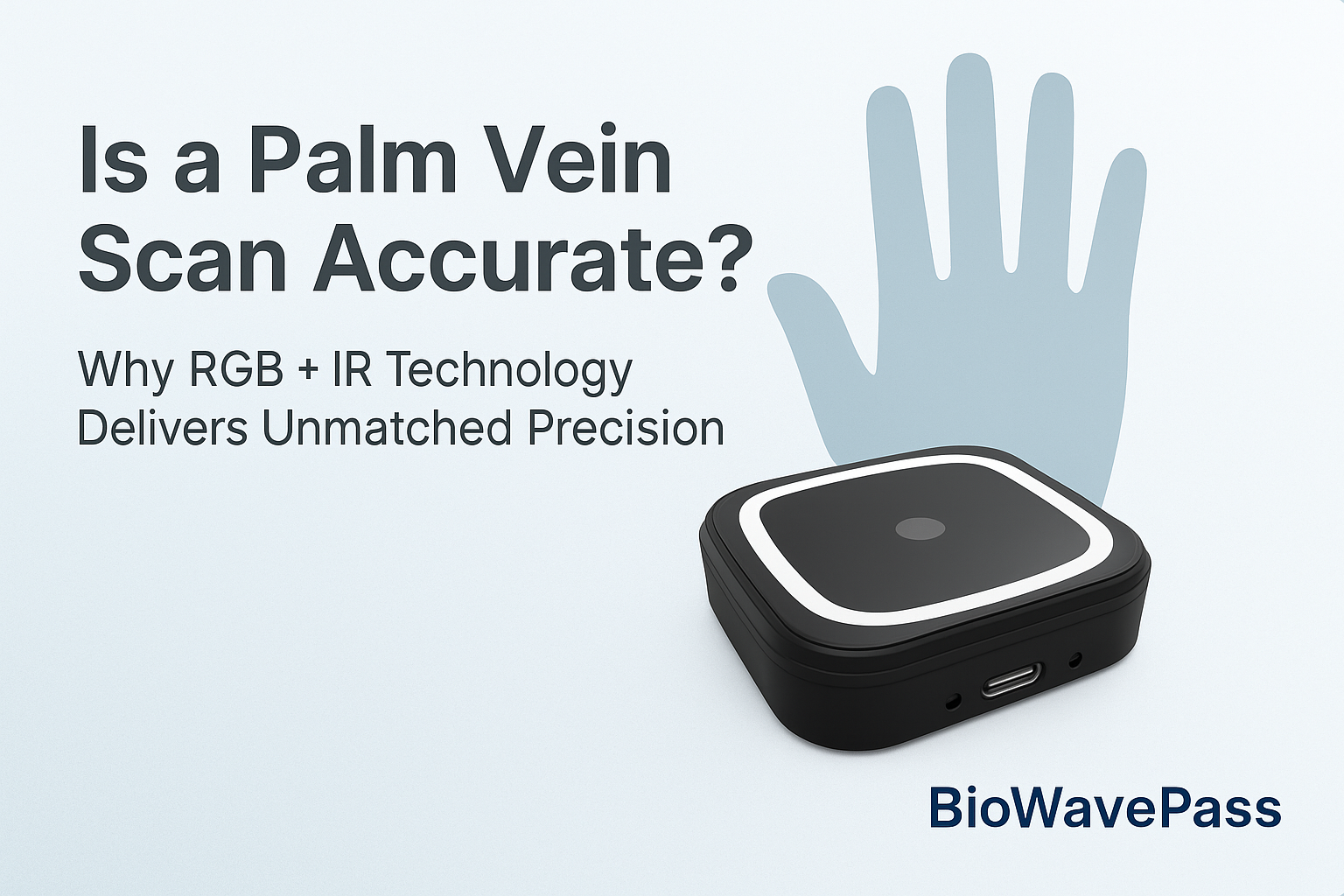
Le lecteur de veines de la main est-il précis ?
Dans le monde de l'authentification biométrique, la précision n'est pas facultative - elle est essentielle à la mission. Quelles sont les performances de la technologie des veines de la main en termes de précision dans le monde réel ?
Voici la réponse : remarquablement bien, surtout lorsqu'il est alimenté par le système BioWavePass balayage à double spectre qui intègre à la fois RVB et infrarouge (IR) pour une intégrité inégalée de l'image.
🔍 Pourquoi le scanner des veines de la paume de la main est si précis
L'authentification par les veines de la paume de la main permet de capturer les structure vasculaire unique à l'intérieur de la paume - c'est-à-dire une signature interne :
- 🔐 Tout à fait unique à chaque individu
- 📆 Stable à vie, non affectée par les changements de surface
- 👁️🗨️ Invisible de l'extérieur, et scanné à l'aide d'une lumière proche de l'infrarouge
Il s'agit donc de l'un des systèmes les plus résistants aux manipulations et les plus efficaces. le plus difficile à usurper solutions biométriques disponibles.
📊 Une précision réelle sur laquelle vous pouvez compter
Chez BioWavePass, notre moteur de reconnaissance a été validé sur des bases de données à haute densité, comportant plusieurs millions d'enregistrements.
| Modalité | Taux de fausses acceptations (FAR) | Taux de faux rejets (FRR) |
|---|---|---|
| Impression palmaire (RGB) | 1 sur 1 000 000 | ✅ ~1.00% |
| Veine de palmier (IR) | 1 sur 1 000 000 | ✅ ~1.52% |
Mais lorsque vous combiner les deux (RVB + IR), la sécurité est multipliée :
Pour qu'une fausse correspondance se produise, les deux modalités doivent échouer simultanément - un événement qui ne se produit qu'une fois par 100 milliards d'euros tentatives.
👉 FAR combiné final : 1 sur 100 000 000 000
💡 L'importance de la précision - au-delà des chiffres
Dans des cas d'utilisation tels que :
- 💳 Biometric Payments & Wallets
- 🏛️ Digital Government Identity Systems
- 🏥 Healthcare Access and Patient Safety
- 🚆 Smart Transport Authentication
…there’s zero tolerance for error.
BioWavePass is built for these critical environments — where one false match could cost millions or lives.
✅ Un matériel qui donne des résultats cohérents
Our palm vein readers are optimized to handle demanding ID systems:
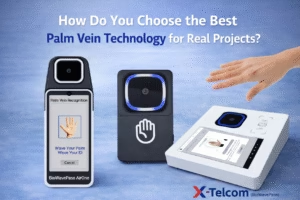
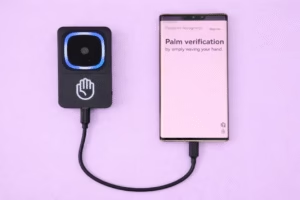
PalmVein 01 USB Reader
Small, embeddable device — ideal for kiosks, access control, and terminals
💻 Supports: Windows / Android / LinuxWavePass500 Android Terminal
Wall-mounted or mobile-ready device with NFC, QR, and biometric modules
📱 OS: Android 11, enterprise firmware
Both models run on dual-camera RGB + IR fusion, with AI-accelerated matching speeds under 0.35 seconds — even with 5 million+ registered users.
🔗 Vous voulez essayer vous-même ?
We provide SDKs, cloud and private deployment options, and remote demo servers for testing before deployment.
Let’s build identity infrastructure that doesn’t compromise — on speed, on privacy, or on precision.
PalmVein #BioWavePass #BiometricSecurity #PalmScanner #IdentityTech #RGB_IR_Scanner #AIbiométrie #HealthcareAccess #eKYC #PaymentBiometrics #ContactlessID
Partager cet article
A propos de l'auteur

Vous pourriez aussi aimer
Which Is the Best EMV & PCI Certified Palm Vein POS Terminal?
Will Palm Vein POS Support Existing EMV, NFC, and QR Payment Ecosystem?

Why Palm Vein Technology Is Emerging as a Payment-Grade Biometric Standard
Where Is Palm Vein Biometric Data Stored and How Is It Secured?
How Do You Choose the Best Palm Vein Technology for Real Projects?
How to Solve Power Issues in Palm Vein Scanner Projects?
What Is Palm Scanning Technology?
How Palm Vein Biometrics Can Be Integrated Into Mobile Payment Systems: A BioWavePass Implementation Guide
How to setup Palm Payment? Designing a Seamless Palm Payment Flow for Fintech and Payment Platforms