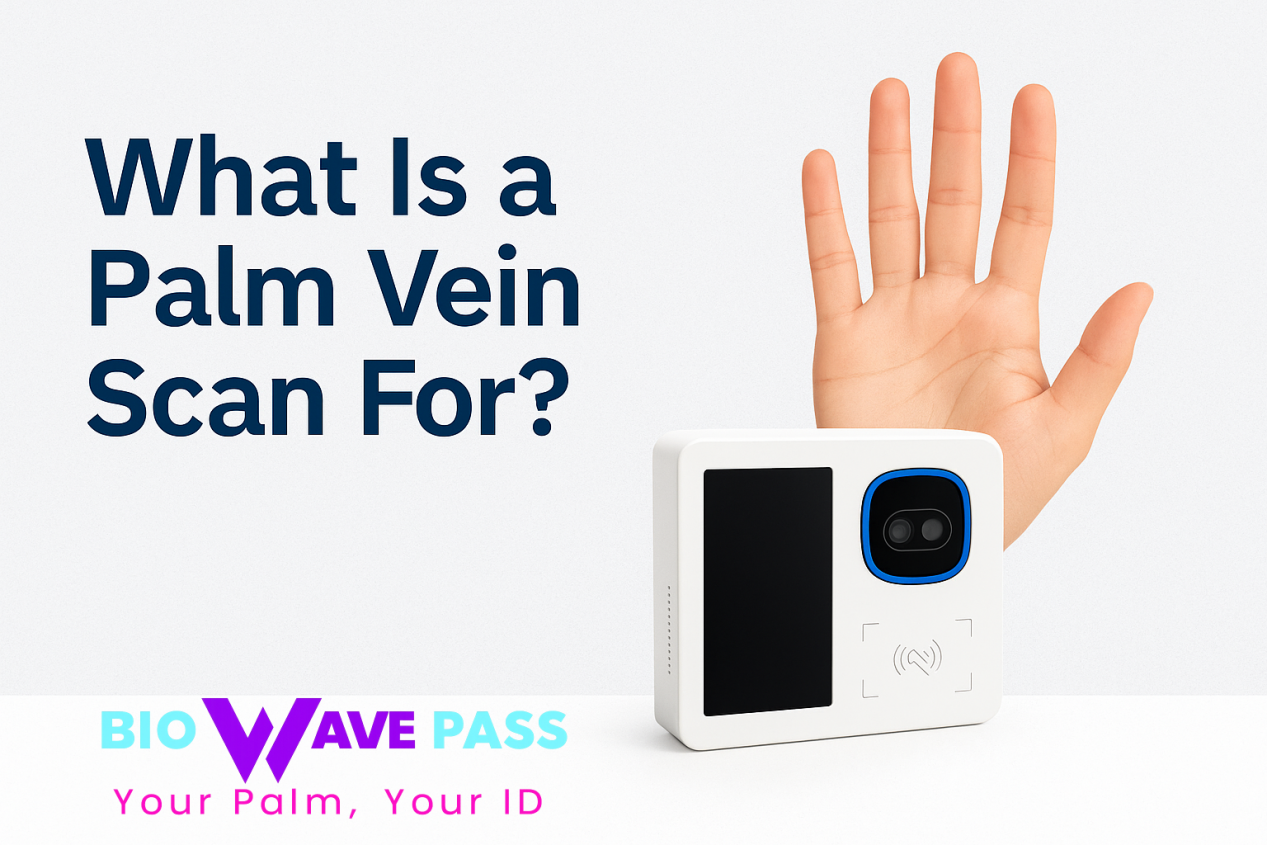
À quoi sert le scanner de la veine palmaire ?
Palm vein scanning is a next-generation biometric technology that uses the unique vascular map beneath the skin to verify identities. But beyond the innovation—what exactly is it used for, and why are industries worldwide switching to this method?
In this post, we’ll explore how BioWavePass palm vein recognition devices are being applied across sectors like finance, eKYC, healthcare, et le contrôle d'accès.
🔍 How Palm Vein Scanning Works
A palm vein scan uses near-infrared (NIR) light to detect the pattern of blood vessels inside your palm — a biological signature that’s invisible, internal, and impossible to copy.
Au BioWavePass, we enhance this with dual-mode scanning (RGB + IR), capturing both:
- Surface palm print (via RGB)
- Subdermal vein structure (via IR)
This multi-layered capture significantly increases accuracy and security, especially in environments requiring anti-spoofing and liveness detection.
🎯 Where It’s Used — Key Applications
1. Secure Financial Transactions
- Enables contactless biometric payments in banks and fintech terminals
- Verifies identity during account access, loan issuance, and ATM services
2. eKYC and Digital Identity
- Used in government onboarding, citizen ID verification, SIM card registration, and fintech apps
3. Healthcare Authentication
- Ensures correct patient access to medical records and services
- Prevents medical fraud and identity mix-ups
4. Enterprise Access & Attendance
- Used in offices, campuses, and factories
- Works better than fingerprint in wet, dusty, or harsh environments
5. Education and Examinations
- Provides secure student ID verification for exam entry or dormitory access
✅ Why Choose Palm Vein Biometrics?
| Feature | Fingerprint | Face ID | Palm Vein |
|---|---|---|---|
| Contactless Hygiene | ❌ | ✅ | ✅ |
| Spoof Resistance | Medium | Medium | High |
| Stable in Harsh Conditions | Low | Medium | High |
| Privacy (Invisible Traits) | ❌ | ❌ | ✅ |
🔐 With dual-mode AI fusion, BioWavePass achieves sub-0.35s match speed on 5M+ records — with over 99% accuracy and no compromise on data privacy.
📦 BioWavePass Devices with Palm Vein Technology
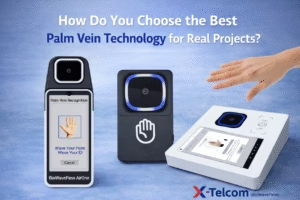
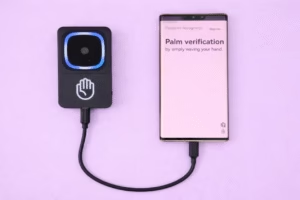
PalmVein 01 – Compact USB palm scanner for kiosks, gates, and terminals
(Supports: Windows, Linux, Android)Passeur d'ondes500 – Android 11 terminal with palm scanner, NFC, QR
(Ideal for embedded or wall-mounted use)
Each product comes with a developer SDK and flexible deployment options — from local matching to secure cloud APIs.
📬 Start Building with Biometric Trust
Whether you’re working on payment solutions, national identity systems, or smart infrastructure, palm vein biometrics from BioWavePass ensure secure, private, and user-friendly Palm Vein authentication.
Let’s power your vision with AI-grade identity Palm Vein Reader technology.
PalmVein #BioWavePass #BiometricVerification #PalmScanner #IdentitySecurity #eKYC #DigitalPayments #HealthcareAccess #PalmAuthentication
Partager cet article
A propos de l'auteur

Vous pourriez aussi aimer
Which Is the Best EMV & PCI Certified Palm Vein POS Terminal?
Will Palm Vein POS Support Existing EMV, NFC, and QR Payment Ecosystem?

Why Palm Vein Technology Is Emerging as a Payment-Grade Biometric Standard
Where Is Palm Vein Biometric Data Stored and How Is It Secured?
How Do You Choose the Best Palm Vein Technology for Real Projects?
How to Solve Power Issues in Palm Vein Scanner Projects?
What Is Palm Scanning Technology?
How Palm Vein Biometrics Can Be Integrated Into Mobile Payment Systems: A BioWavePass Implementation Guide
How to setup Palm Payment? Designing a Seamless Palm Payment Flow for Fintech and Payment Platforms