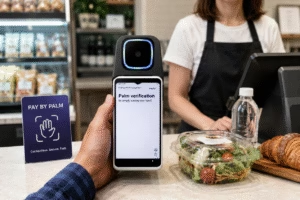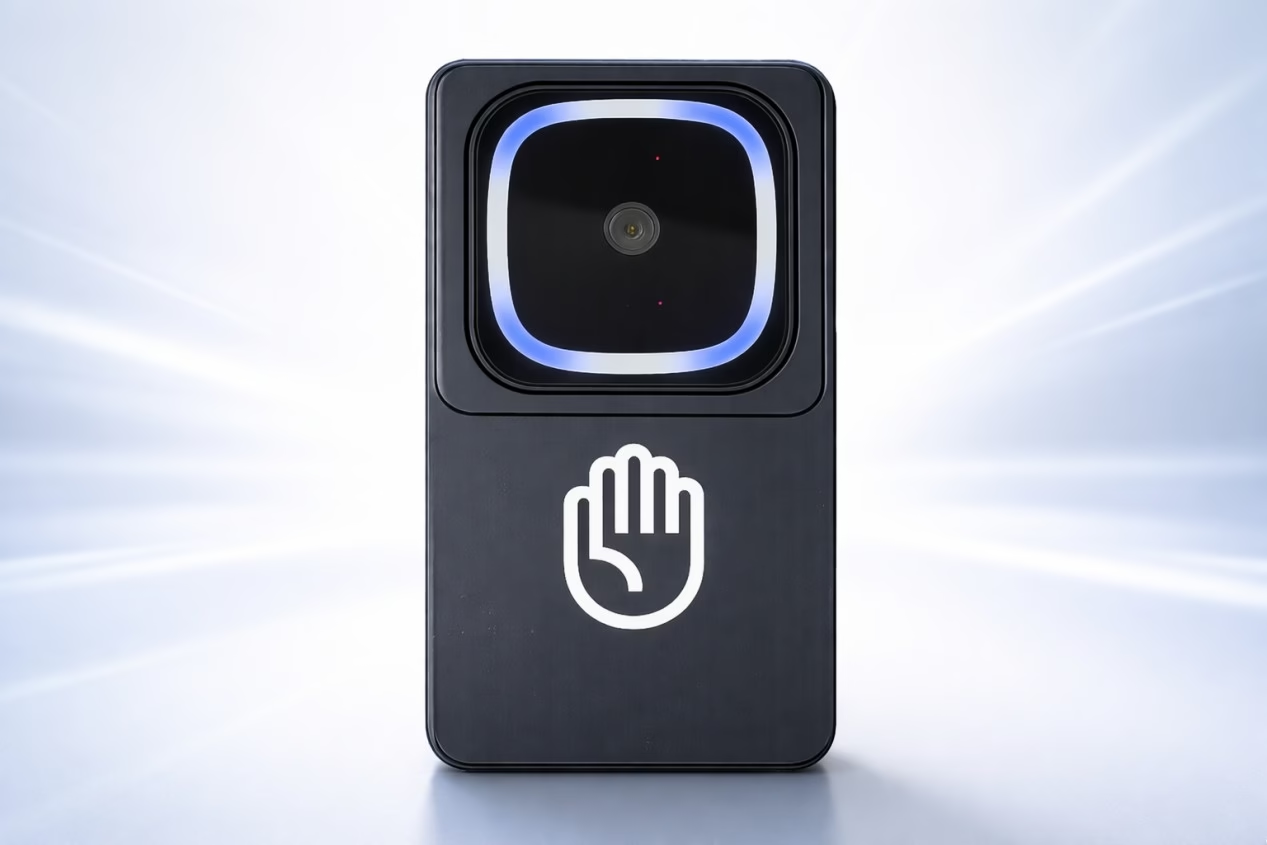
What is Palm Vein Technology Solution? And What Are the Costs?
Introduction
As biometric authentication becomes a core part of digital identity and payment systems,
many businesses are asking a practical question:
What exactly is a palm vein technology solution, and what does it cost to deploy and scale?
Unlike traditional biometric systems, palm vein solutions are not just hardware devices.
They are a complete system combining hardware, algorithm, and scalable infrastructure.
What Is a Palm Vein Technology Solution?
A palm vein technology solution is an end-to-end biometric system designed to:
- Capture palm vein data
- Perform identity verification
- Support large-scale user databases
- Enable real-time authentication
Core Components of the Solution
1. Hardware Layer
This includes palm vein scanning devices such as:
- Fixed terminals (retail, access control, kiosks)
- Mobile devices (eKYC, field operations, payments)
- USB scanners (POS or desktop integration)
These devices are responsible for:
- Capturing Images RVB + IR
- Performing détection de l'existence
- Ensuring consistent data quality
2. Algorithm & SDK Layer
The algorithm layer provides:
- Feature extraction
- Identity matching
- Large-scale database comparison
The SDK enables:
- Device integration
- Data capture
- Communication with backend systems via API
3. Backend & Infrastructure Layer
A complete system typically includes:
- GPU-based servers (parallel computing)
- Vector database (such as Milvus)
- API-based architecture
This layer ensures:
- High-speed matching
- High concurrency performance
- System scalability
Understanding the Cost Structure
The cost of a palm vein technology solution is composed of two main parts:
👉 1. Hardware Cost
👉 2. License Cost
1. Hardware Cost
This is the cost of the physical devices.
It depends on:
- Device type (fixed / mobile / USB)
- Performance specifications
- Certification requirements (e.g., payment-grade devices)
- Order quantity
Key characteristics:
- One-time investment
- Lower unit price at higher volume
- Mobile and certified devices typically cost more
2. License Cost (Algorithm + User ID Capacity)
This is the core factor for scalability.
Palm vein systems use an ID-based licensing model:
- Each registered user consumes one ID
- Deleting a user releases the ID
- The license defines total system capacity
Small Model (Entry Stage)
- Supports up to 10,000 user IDs
- Designed for MVP, pilot, or testing
✅ BioWavePass provides up to 10,000 free ID licenses for MVP and initial deployment
This allows customers to:
- Quickly validate business models
- Complete system integration
- Launch pilot projects without additional algorithm cost
Large Scale Model (Production Stage)
When scaling is required:
👉 Once the system exceeds 10,000 users, additional ID licenses must be purchased
Key characteristics:
- Supports hundreds of thousands to millions of users
- Designed for real commercial deployment
- Requires GPU + vector database architecture
How Licensing Works
- Licenses are typically one-time purchases (lifetime use)
- Available in packages (e.g., 100K, 1M users)
- No transaction-based fees
- Scaling is achieved by adding more ID licenses
Why This Model Supports Scalability
This model ensures:
- Predictable cost structure
- No hidden per-transaction costs
- Flexible expansion aligned with business growth
It also aligns with system architecture:
- Larger user bases require higher computational capacity
- Licensing ensures proper allocation of algorithm resources
Total Cost Breakdown
Initial Stage
- Hardware purchase
- Small model (≤10,000 users)
- ✅ Free ID licenses for MVP
Scaling Stage
- Additional hardware (if needed)
- Purchase of additional ID licenses
- Infrastructure upgrade (GPU, servers)
Real-World Deployment Path
-
Initial Stage
- 5,000–10,000 users
- Free ID license + limited devices
-
Growth Stage
- 100,000+ users
- Expand license capacity
- Increase computing resources
-
Large-Scale Stage
- Million-level deployment
- Multi-node GPU architecture
- Fully optimized system
Why This Solution Enables Long-Term Growth
Palm vein systems are designed with scalability in mind:
- No need to redesign system architecture
- No need for user re-enrollment (if RGB + IR images are stored)
- Smooth upgrade from small to large scale
Conclusion
A palm vein technology solution is not just a device,
but a scalable biometric system built for long-term growth.
Its cost structure is clear:
- Hardware cost → one-time investment
- License cost → scales with user volume
Final Thought
You do not pay for usage.
You scale by users.
This makes palm vein technology one of the most predictable and scalable biometric solutions available today.
CTA
If you are planning to deploy or scale a biometric system,
understanding both hardware and license costs is the first step.
👉 Learn more: https://biowavepass.com/biowavepass-palm-vein-scanner-products/
Partager cet article
A propos de l'auteur

Vous pourriez aussi aimer
Scaling Palm Vein Payment: Single Server or Kubernetes Cluster?
Before You Scale Palm Vein POS: A Terminal Management Checklist
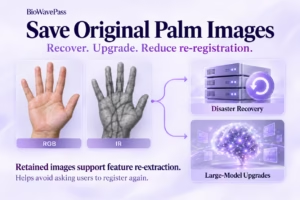
Why Saving Original Palm Images Matters for Biometric Recovery and Future Upgrades By BioWavePass
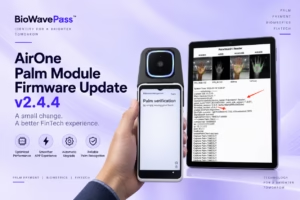
Optimizing Palm Payment Performance: AirOne Palm Module Firmware v2.4.4
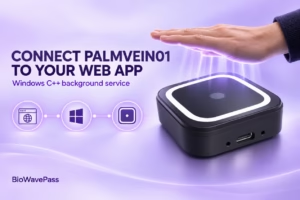
Bringing Palm Vein Scanning into a Web Workflow
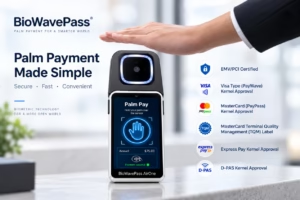
From Palm Payment MVP to Commercial Deployment: Building a Scalable Biometric Payment System
How to Integrate a USB Palm Vein Scanner with a POS Terminal
Palm Payment Goes Live in Azerbaijan: From Biometric Technology to Real-World Payment
From MVP to Market: Scaling Palm Vein Technology with BioWavePass