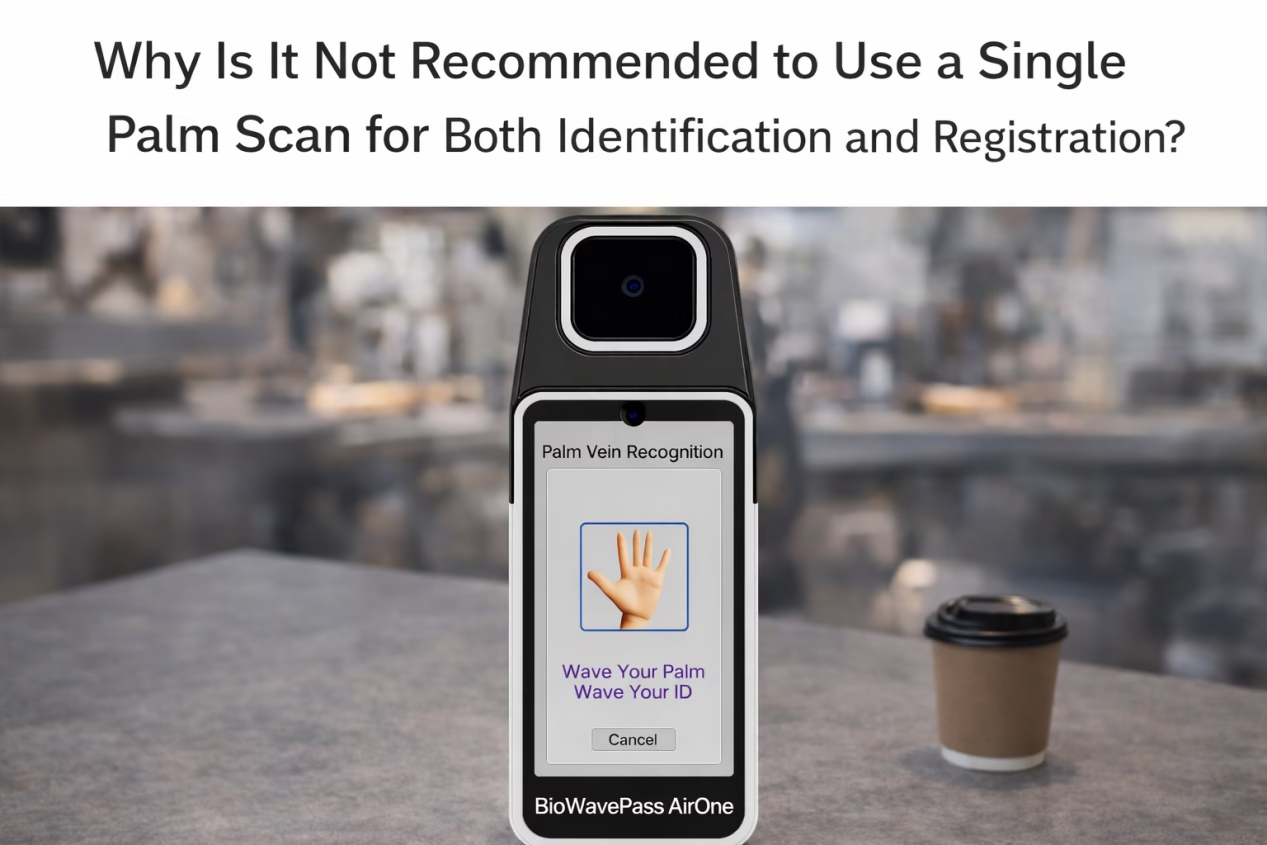
Why Is It Not Recommended to Use a Single Palm Scan for Both Identification and Registration?
As palm vein biometrics become increasingly adopted in fintech, payment systems, and identity platforms, many developers and solution providers ask a seemingly logical question:
Why not use a single palm scan for both identification and registration?
The idea is simple.
A user scans their palm.
If the system cannot find a match, the captured data is automatically used to create a new biometric ID.
From a user experience perspective, this sounds efficient.
One scan. No repetition. Faster onboarding.
Technically, this workflow can be implemented.
However, in real-world biometric deployments, this design is not recommended. The reason is not technical feasibility, but long-term biometric system stability and database integrity.
Identification Failure Does Not Mean a New User
A failed identification attempt does not necessarily mean the person is not already registered.
In palm vein recognition systems, identification may fail for several reasons:
- Palm angle deviation
- Incorrect hand placement
- Partial coverage of the capture area
- Minor hand movement during capture
- Illumination variation
- Conservative matching thresholds
For example, a registered user may place their palm at a slightly different angle.
The system may not confidently match the stored template.
In a properly designed system, the user should simply be prompted to reposition the palm and try again.
However, if the logic were:
Identification fails → Automatically register
the same individual could be registered again as a new biometric identity.
This leads to duplicate biometric IDs in the system.
Why Duplicate Biometric IDs Are a Serious Problem
Biometric authentication systems depend heavily on database integrity.
Once duplicate identities enter the database, several issues begin to appear:
- The same person may have multiple biometric IDs
- Identification confidence decreases
- False rejection rates increase
- Database maintenance becomes difficult
- Large deployments suffer progressive performance degradation
In large-scale deployments such as banking networks, retail payment platforms, or national identity systems, even a small number of duplicate enrollments can significantly impact system reliability.
This is why registration must always be treated as a controlled identity creation process, rather than a fallback step after identification failure.
Identification and Registration Require Different Quality Standards
Although both processes begin with palm capture, they serve fundamentally different purposes.
Identification is a comparison process.
It determines whether the captured sample matches an existing identity.
Inscription, however, creates a permanent biometric identity within the database.
Because of this, enrollment requires stricter controls, including:
- Higher image quality thresholds
- Stable geometric alignment
- Consistent structural feature extraction
- Confirmed liveness detection
- High-confidence duplicate checks across the database
Using identification-grade capture data directly for registration risks permanently storing suboptimal biometric templates.
Once stored, these templates affect future recognition performance across the system.
How BioWavePass Addresses This Challenge
In the BioWavePass palm vein algorithm architecture, registration is never treated as a simple extension of identification.
Although a single capture can technically be reused, the system does not allow automatic enrollment based solely on a failed identification attempt.
Instead, the BioWavePass system applies multiple control layers before a new biometric ID can be created.
These include:
- Multi-layer capture validation
- Palm structural landmark extraction and alignment
- Strict reliability scoring mechanisms
- Enrollment-grade image quality thresholds
- Advanced liveness verification
- Pre-enrollment duplicate detection
These safeguards ensure that identification remains seamless while registration is protected against duplicate or low-quality biometric entries.
The BioWavePass Design Philosophy
Palm vein authentication systems must balance two critical objectives:
- Simple user experience
- Long-term biometric system stability
The BioWavePass architecture achieves this balance by separating identification logic from enrollment authorization logic, even when the user interaction appears seamless.
From the user’s perspective, the process remains intuitive.
Behind the scenes, strict biometric governance protects the database from duplicate identities and low-quality templates.
Final Thoughts
Using a single palm scan for both identification and registration may appear efficient, but in large-scale biometric deployments, it introduces unnecessary risk.
Responsible biometric architecture must prioritize:
- Database integrity
- Identity uniqueness
- Enrollment quality control
- Fraud resistance
- Long-term recognition stability
This is why BioWavePass palm vein systems apply strict enrollment validation rather than automatic registration after identification failure.
User experience should be simple.
Biometric integrity must never be compromised.
Learn more from: https://biowavepass.com/biowavepass-palm-vein-scanner-products/
Partager cet article
A propos de l'auteur

Vous pourriez aussi aimer
How Does Tokenization Work in Palm Vein Payment Architecture?
Can Palm Registration and Payment Be Done in One Tap? A Practical View from BioWavePass

As a Developer, How Can We Upgrade from a Small Model to a Large Model Palm Vein Recognition Algorithm Without Re-Registering Users?
How Secure Is Palm Vein Technology Against Spoofing Attacks?
How to Choose the Right Palm Vein Recognition Device for Your Project?

What Is the Next-Gen Contactless Payment Method?

Which Is the Best EMV & PCI Certified Palm Vein POS Terminal?

Will Palm Vein POS Support Existing EMV, NFC, and QR Payment Ecosystem?

Why Palm Vein Technology Is Emerging as a Payment-Grade Biometric Standard