Why Palm Vein Biometrics Deliver the Reliability Fintech Platforms Need for High Frequency Transactions?
Introduction
High frequency transaction environments place enormous pressure on authentication systems. Fintech platforms must verify users quickly, consistently, and with minimal downtime, all while protecting sensitive financial data. BioWavePass provides a reliable palm vein authentication framework designed specifically for these demanding conditions.
While many biometrics struggle in fast paced retail, billing, or service scenarios, palm vein recognition stands out due to its internal structure, environmental stability, and resistance to external noise. BioWavePass brings these strengths into a cloud compatible, developer friendly ecosystem.
Why Reliability Matters in Fintech Authentication
Fintech operations often rely on multiple devices across different merchant locations. Variations in lighting, temperature, device angle, or user movement can create inconsistencies for many traditional biometric methods.
Common challenges include:
- inaccurate readings in poor lighting
- environmental reflections interfering with surface biometrics
- changes in user appearance affecting recognition
- slow processing time creating queue buildup
BioWavePass eliminates these weaknesses by using subdermal vascular patterns that do not change with external conditions. This makes palm vein technology one of the most dependable options available for real world fintech and payment systems.
Engineered for Stable Performance Across All Environments
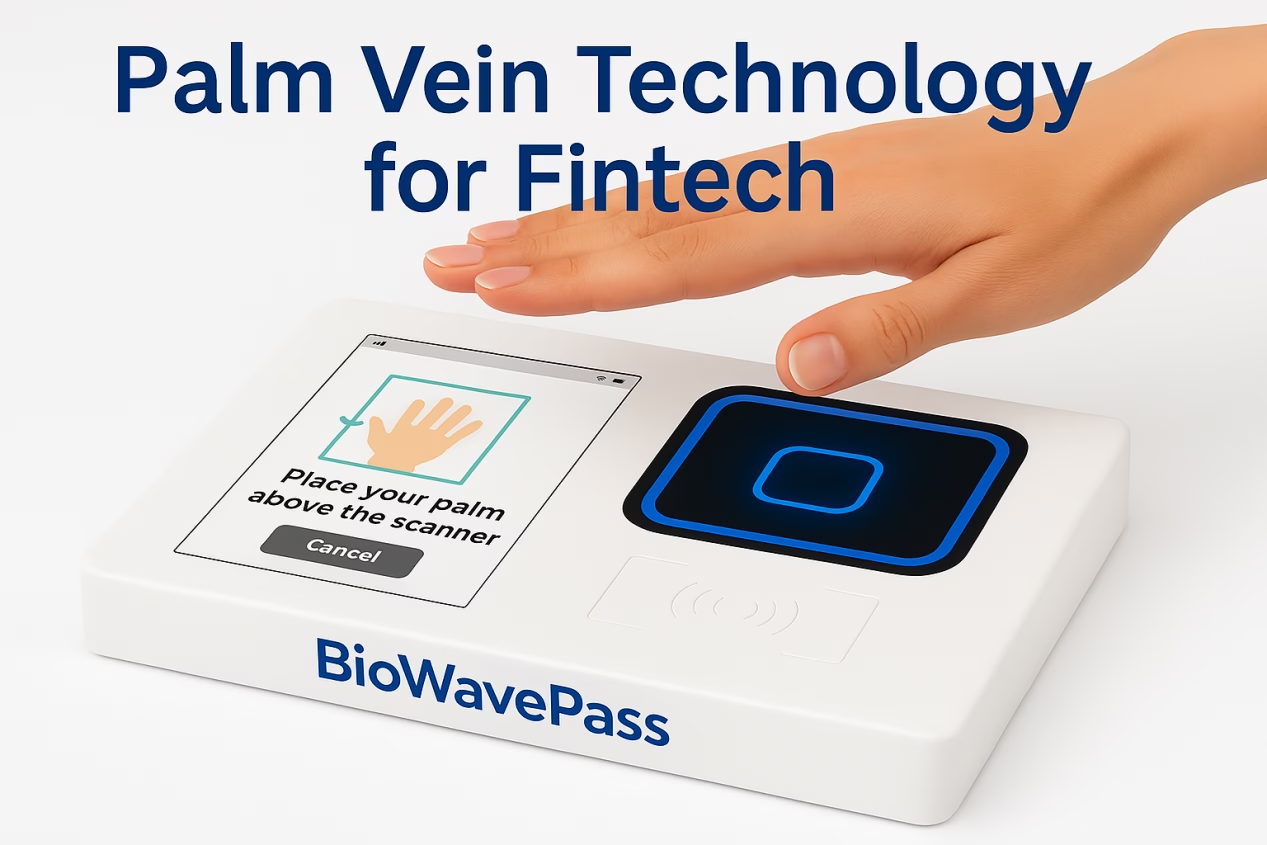
BioWavePass devices, including the PalmVein01 USB Scanner et WavePass500 Android Terminal, are designed to maintain high recognition accuracy regardless of the deployment environment.
RGB plus IR dual mode imaging
The RGB sensor captures surface structure while the IR module reads the internal vascular network. This combination ensures clear data capture even when lighting varies throughout the day.
Minimum power requirement ensures consistent scanning
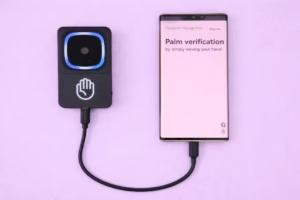
The PalmVein01 requires 1.5A 5V power to operate both RGB and IR sensors simultaneously. This prevents underpowered devices from producing low quality images and ensures consistency across all merchant hardware.
Fast capture with low error rate
Recognition occurs in approximately 0.35 seconds, allowing high frequency transaction flows without interruptions or delays.
Built for Cloud Identity plus Payments Platforms
BioWavePass fits naturally into fintech platforms that rely on cloud identity architectures. Developers can integrate palm vein verification without altering their existing POS or merchant hardware.
Workflow summary:
- Palm image captured locally
- Device encrypts and processes the biometric data
- Template transmitted to the cloud via WiFi
- Identity API handles the verification request
- Payments API processes the transaction based on verified identity
This creates a unified, cloud driven authentication pipeline that is both scalable and secure.
Deployment That Fits Existing Merchant Infrastructure
Fintech teams often need to deploy authentication upgrades quickly without replacing existing devices. BioWavePass solves this by offering a straightforward communication model:
- USB handles image capture and power
- WiFi connects the Android terminal to the cloud
- No need for RS232 ports, OTG adapters, or Bluetooth pairing
- Compatible with Android tablets, POS systems, and kiosks
This eliminates integration friction and allows developers to focus on API level authentication logic instead of hardware modifications.
Reliable at Scale for Growing Fintech Ecosystems
As fintech platforms expand, authentication must remain stable across increasing numbers of devices, merchants, and transactions. BioWavePass is optimized for this growth.
Key advantages:
- consistent performance across hundreds or thousands of terminals
- stable identification even as user databases expand
- uniform authentication logic across different hardware models
- centralized identity management through the cloud
This makes BioWavePass ideal for long term deployment in retail payments, subscription billing, digital onboarding, and identity verification environments.
Conclusion
BioWavePass delivers the reliability fintech systems require by combining palm vein biometrics, dual mode imaging, and a simple USB plus WiFi integration model. Its strong environmental resistance, consistent recognition accuracy, and cloud friendly architecture make it a dependable authentication layer for high frequency payment ecosystems.
As fintech platforms continue to scale and demand stronger identity assurance, BioWavePass provides a stable and future proof solution that supports both security and operational efficiency.
Learn more from: Palm Vein Payment Solutions - BioWavePass Paiement biométrique et eKYC
Partager cet article
A propos de l'auteur

Vous pourriez aussi aimer
Which Is the Best EMV & PCI Certified Palm Vein POS Terminal?
Will Palm Vein POS Support Existing EMV, NFC, and QR Payment Ecosystem?

Why Palm Vein Technology Is Emerging as a Payment-Grade Biometric Standard
Where Is Palm Vein Biometric Data Stored and How Is It Secured?
How Do You Choose the Best Palm Vein Technology for Real Projects?
How to Solve Power Issues in Palm Vein Scanner Projects?
What Is Palm Scanning Technology?
How Palm Vein Biometrics Can Be Integrated Into Mobile Payment Systems: A BioWavePass Implementation Guide
How to setup Palm Payment? Designing a Seamless Palm Payment Flow for Fintech and Payment Platforms