How BioWavePass Simplifies Palm Vein Integration for Fintech Platforms Building Identity plus Payments Ecosystems?
Introduction
Fintech developers face increasing pressure to deliver stronger authentication, seamless customer journeys, and unified Identity plus Payments workflows. Yet, adding biometrics to existing systems often requires hardware redesign, complex protocols, or custom firmware. BioWavePass was created to remove these barriers and provide a clean, developer friendly approach to palm vein authentication.
By combining reliable hardware, a lightweight SDK, and direct compatibility with cloud based APIs, BioWavePass helps fintech teams extend their current billing and POS infrastructure without disrupting existing devices or software logic.
Designed for Fintech Platforms with Cloud Identity Architecture
The modern fintech ecosystem depends on cloud coordination, where
- Identity APIs manage user profiles, authentication, and authorization
- Payments APIs process the transaction lifecycle
- Merchant devices simply act as endpoints
BioWavePass aligns precisely with this design.
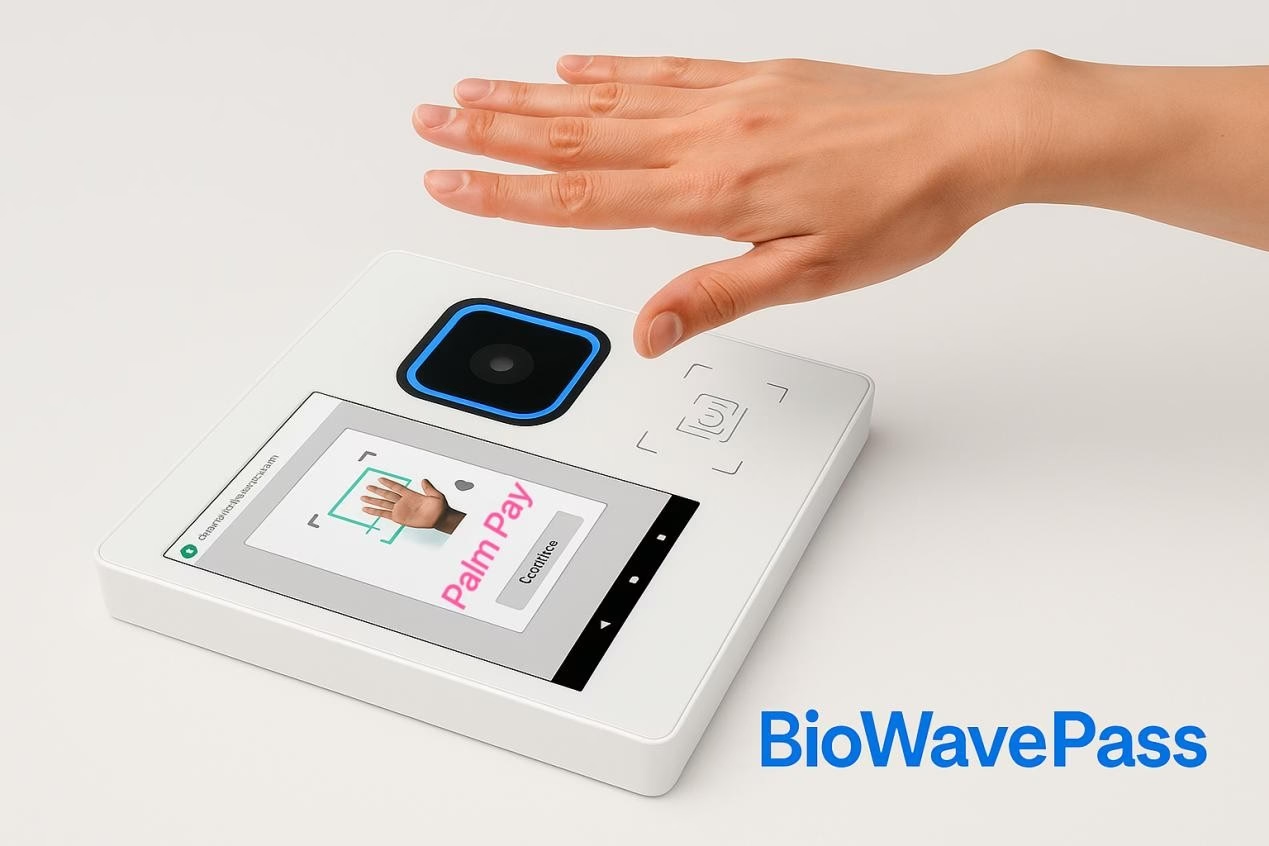
PalmVein01 USB scanners and WavePass500 Android terminals authenticate through the same account credential as the merchant’s billing software. This shared credential, often called a PairID, allows the system to keep user identity, transaction data, and biometric verification in one flow.
This eliminates the need for separate local databases or custom interfaces, making palm vein verification as easy as adding another API event inside the existing structure.
Hardware Built Around Practical Fintech Requirements
Fintech deployments demand stable power, consistent communication, and predictable device behavior across different merchant locations. BioWavePass devices address these requirements at the hardware level.
- PalmVein01 USB Scanner supports direct plug in to Android tablets and terminals
- Requires minimum 1.5A 5V current, ensuring stable dual mode RGB plus IR capture
- WavePass500 integrates scanning, display, and Android OS into one device
- Both devices transmit encrypted templates for cloud based verification
Instead of relying on fragile connections like OTG adapters or unpredictable Bluetooth transmissions, BioWavePass uses USB for imaging and WiFi for cloud communication. This ensures consistency across merchant networks and prevents pairing failures or latency spikes.
Why USB plus WiFi Enables Efficient Biometric Operation
Fintech developers often ask why BioWavePass uses USB plus WiFi instead of Bluetooth or RS232. The answer comes down to stability, speed, and scale.
USB provides
- reliable constant current for the dual mode sensor
- fast image transfer
- predictable data flow across all Android devices
WiFi provides
- easy cloud connectivity
- full compatibility with Identity plus Payments APIs
- lower integration overhead compared to specialized ports
This simple model is what makes BioWavePass ideal for retrofitting existing merchant tablets and payment terminals already used in retail, billing, and service environments.
SDK Tools That Reduce Integration Time
BioWavePass offers a clear SDK structure for Android, Linux, and Windows, enabling developers to
- capture palm images
- perform local pre processing
- upload encrypted templates to the cloud
- trigger verification through their own API logic
The SDK is lightweight, modular, and easy to embed inside existing merchant apps. Since the system does not require firmware customization, fintech developers can integrate biometric authentication in days rather than months.
Scalable Across Merchant Networks
Once integrated, BioWavePass scales effortlessly.
- Ideal for early pilot deployments with fewer than 10 devices
- Easily expands across large merchant networks
- Maintains recognition performance with growing user databases
- Supports multiple scanning terminals linked to one Identity API
Whether deployed in retail checkout flows, subscription billing systems, or service based payment environments, BioWavePass ensures that user identity remains consistent across all endpoints.
Conclusion
BioWavePass offers fintech platforms a practical, secure, and developer friendly method to add palm vein biometrics to existing Identity plus Payments systems. With USB powered imaging, WiFi cloud communication, dual mode RGB plus IR capture, and a straightforward SDK, fintech teams can build a complete biometric authentication layer without modifying their hardware ecosystem.
BioWavePass transforms palm vein authentication from a complex engineering challenge into a simple plug in enhancement that strengthens security and improves user experience across modern payment environments.
Share this article
About the Author

You might also like
Which Is the Best EMV & PCI Certified Palm Vein POS Terminal?
Will Palm Vein POS Support Existing EMV, NFC, and QR Payment Ecosystem?

Why Palm Vein Technology Is Emerging as a Payment-Grade Biometric Standard
Where Is Palm Vein Biometric Data Stored and How Is It Secured?
How Do You Choose the Best Palm Vein Technology for Real Projects?
How to Solve Power Issues in Palm Vein Scanner Projects?
What Is Palm Scanning Technology?
How Palm Vein Biometrics Can Be Integrated Into Mobile Payment Systems: A BioWavePass Implementation Guide
How to setup Palm Payment? Designing a Seamless Palm Payment Flow for Fintech and Payment Platforms