How Does Tokenization Work in Palm Vein Payment Architecture?
Palm vein payment is quickly becoming a leading solution in biometric authentication, offering a seamless and highly secure user experience. By identifying unique vascular patterns beneath the skin, it removes the need for cards, passwords, or mobile devices.
But behind this simplicity lies a critical mechanism:
How does tokenization function within a palm vein payment architecture?
For fintech companies, banks, and system integrators, understanding this mechanism is key to building a secure and scalable solution.
Understanding Tokenization in Palm Vein Payment
Tokenization refers to the process of replacing sensitive data with a secure, non-meaningful identifier (Token) that can safely be used in transactions.
Within a palm vein payment system:
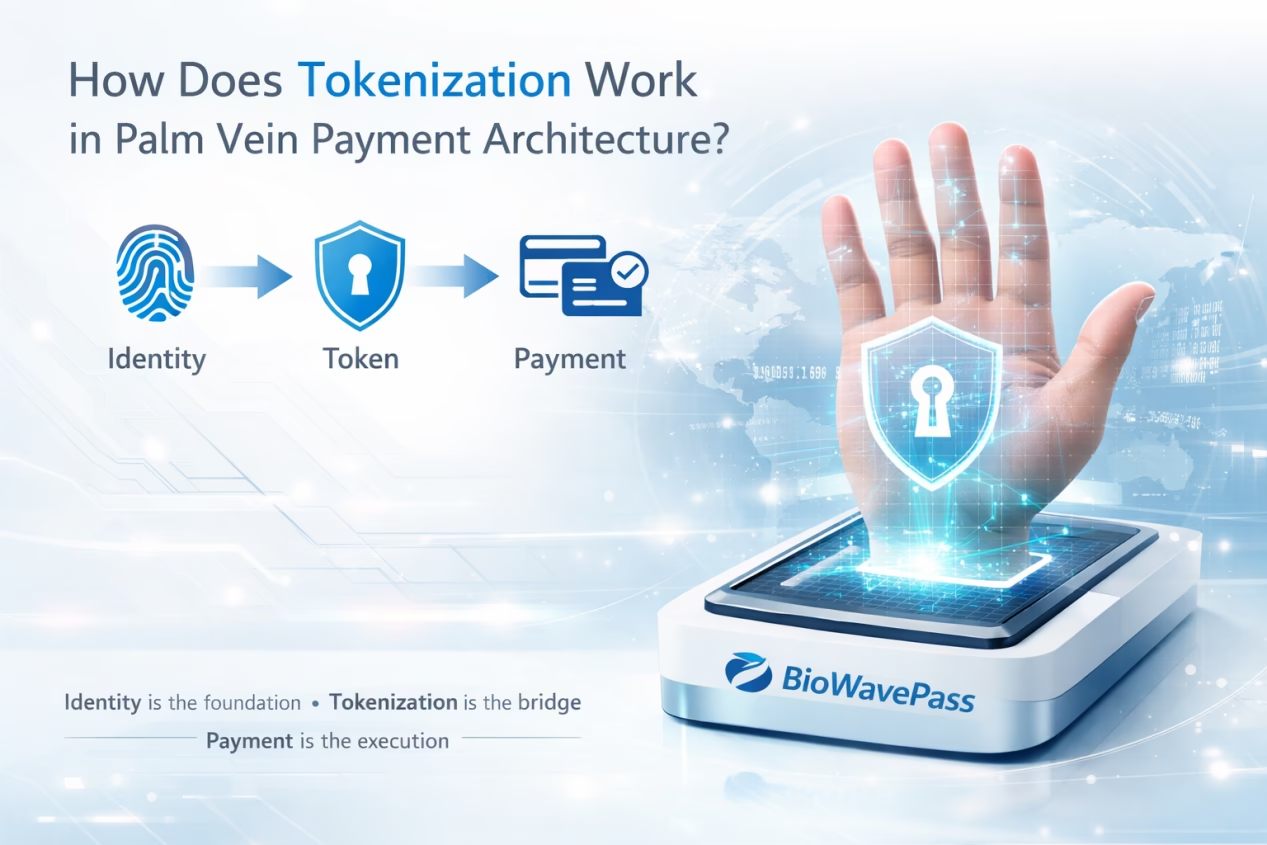
- Biometric recognition → confirms the user’s identity
- Identity (Palm ID) → is linked to a Payment Token
- Token → becomes the only credential used for payment
👉 This architecture ensures:
- Biometric data is never exposed during transactions
- Financial data is not shared across systems
- Payments are executed through secure token references
Tokenization Within the System Architecture
Palm vein payment operates through a structured three-layer model, each with a distinct responsibility.
1. Identity Layer — Biometric Verification
This layer is responsible for identifying the user.
In the BioWavePass solution, it includes:
- RGB + IR palm vein data capture
- Liveness detection to prevent spoofing
- Feature extraction into biometric vectors
- Fast matching across large-scale databases
All palm vein data and images are encrypted with AES-256 and stored only on the client’s own infrastructure. BioWavePass does not manage or store any user data.
Result:
👉 A verified identity (Palm ID)
2. Tokenization Layer — Authorization Mechanism
Once identity is confirmed, the system needs a way to translate it into a payment-ready format.
This is achieved through tokenization.
- Palm ID
→ is converted into - A secure Payment Token
This token is associated with:
- A user wallet
- A bank account
- Or another payment instrument
Token properties:
- Cannot be reversed into original data
- Contains no biometric or financial information
- Functions only within the authorized payment environment
3. Transaction Layer — Payment Execution
The final stage handles the financial operation.
Using the token:
- Payment requests are triggered
- Transactions are processed
- Settlement is completed
This layer typically connects to:
- Payment gateways
- Banking infrastructure
- Digital wallet platforms
Practical Flow of Tokenization in Palm Vein Payment
A real-world transaction follows these steps:
- The user scans their palm
- BioWavePass verifies the identity
- A Palm ID is generated
- The system converts the Palm ID into a Token
- The Token is sent to the payment system
- The transaction is completed
👉 At no stage is biometric data directly involved in the payment process
Why Tokenization Matters
1. Safeguarding Biometric Identity
Biometric data cannot be reset or replaced.
Tokenization prevents:
- Exposure of sensitive biometric information
- Long-term risks in case of system compromise
2. Enabling Secure Transactions at Scale
Tokens act as secure references:
- No real account data is transmitted
- Systems can support large user bases
- Transaction speeds remain efficient
3. Meeting Compliance Requirements
Tokenization supports global standards such as:
- PCI DSS
- GDPR
- Local data protection regulations
Because:
- Sensitive data is isolated from transaction systems
- Clients maintain full control over user data
BioWavePass’s Position in the Ecosystem
Clear role definition is essential in any payment architecture.
What BioWavePass Delivers
- Palm vein biometric identity layer
- Hardware devices and SDK
- Recognition algorithms and matching engine
- Integration capabilities
What BioWavePass Does Not Handle
- Tokenization systems
- Payment processing platforms
- Financial transaction operations
How We Support Our Partners
- Co-development of tokenization frameworks
- API and SDK integration support
- Payment system connectivity guidance
- End-to-end solution architecture consulting
A Key Concept to Remember
The architecture can be summarized simply:
Your palm is not your payment — your token is.
Palm vein recognition determines:
👉 Who the user is
Tokenization defines:
👉 What the user is authorized to do
Payment systems execute:
👉 The financial transaction
Conclusion
Tokenization plays a central role in transforming biometric identity into a secure and usable payment credential.
BioWavePass provides a robust identity layer, enabling partners to design flexible, compliant, and scalable payment systems built on token-based architecture.
By separating identity, authorization, and transaction layers, organizations can achieve:
- Enhanced security
- Regulatory compliance
- Seamless integration across systems
Final Thought
In palm vein payment, identity is the foundation,
tokenization is the bridge, and payment is the execution.
Learn more from: https://biowavepass.com/palm-vein-payment-solutions/
Share this article
About the Author

You might also like
Can Palm Registration and Payment Be Done in One Tap? A Practical View from BioWavePass
As a Developer, How Can We Upgrade from a Small Model to a Large Model Palm Vein Recognition Algorithm Without Re-Registering Users?
How Secure Is Palm Vein Technology Against Spoofing Attacks?
How to Choose the Right Palm Vein Recognition Device for Your Project?
Why Is It Not Recommended to Use a Single Palm Scan for Both Identification and Registration?
What Is the Next-Gen Contactless Payment Method?
Which Is the Best EMV & PCI Certified Palm Vein POS Terminal?
Will Palm Vein POS Support Existing EMV, NFC, and QR Payment Ecosystem?

Why Palm Vein Technology Is Emerging as a Payment-Grade Biometric Standard