Why RGB plus IR Dual Mode Technology Is Essential for Large Scale eKYC and Financial Authentication?
Introduction
Biometric authentication is becoming a core infrastructure element in modern financial and eKYC systems. However, as user volumes grow and security standards rise, traditional single spectrum biometrics struggle with accuracy, spoof resistance, and environmental stability. RGB plus IR dual mode technology solves these challenges by capturing both surface and subdermal characteristics in a single scan, providing a more complete and reliable biometric signature.
BioWavePass integrates this dual mode technology across its palm vein devices, enabling enterprises to achieve higher accuracy, stronger security, and better compliance at scale.
Why Single Spectrum Biometrics Fall Short
Systems relying on a single imaging mode often encounter limitations such as
- inconsistent lighting
- surface reflections
- environmental interference
- limited anti spoof capability
- reduced accuracy on diverse skin tones
For financial grade authentication, these inconsistencies create risks. False approvals, false rejections, and inconsistent performance reduce trust in the overall identity process.
This is why an advanced dual spectrum approach is required.
How RGB plus IR Dual Mode Technology Works
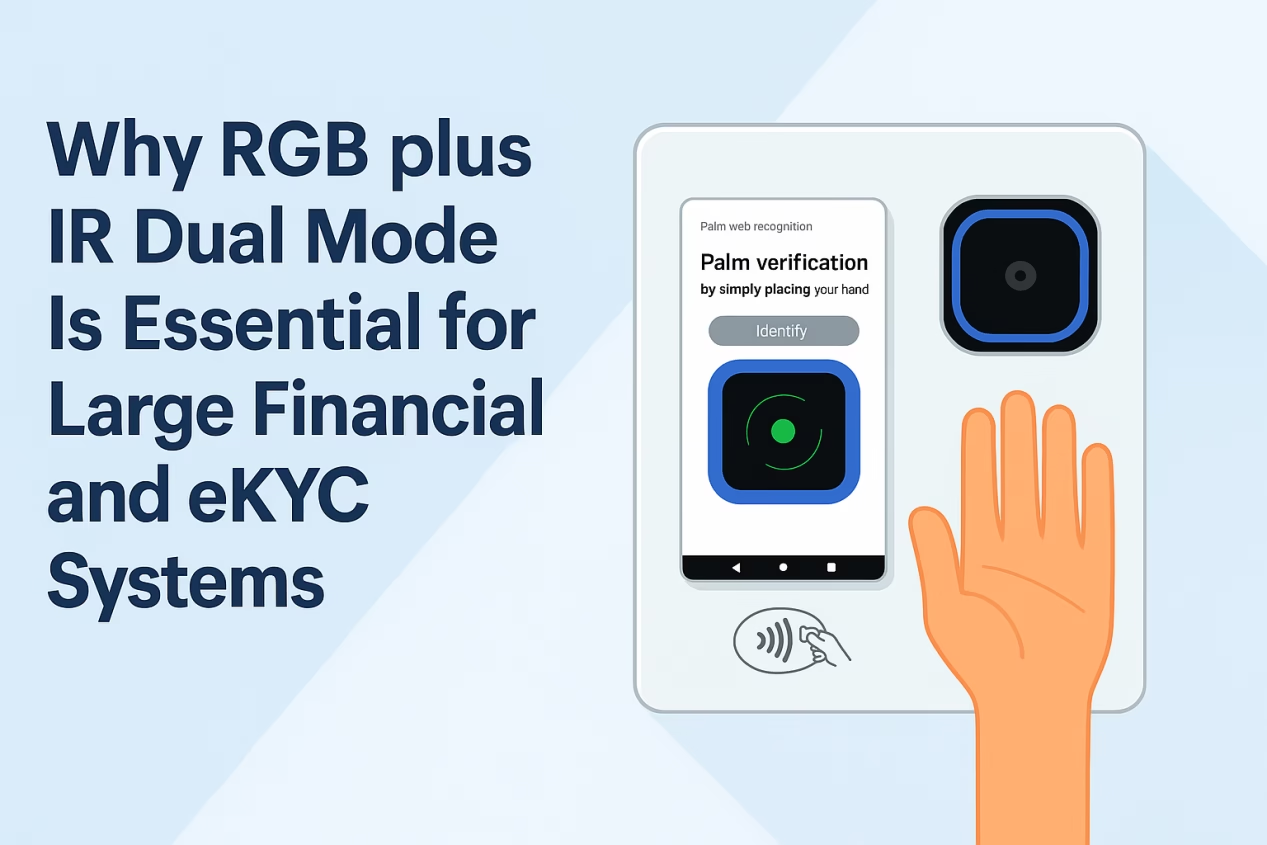
BioWavePass uses a combination of RGB imaging and near infrared imaging to capture two complementary layers of biometric data.
RGB Imaging
- captures the visible surface of the palm
- records texture and shape patterns
- stabilizes image alignment and positioning
- supports high precision contactless interaction
IR Imaging
- penetrates beneath the skin
- reveals the unique vein architecture of the palm
- provides an internal biometric signature
- delivers strong resistance against spoofing attempts
By combining these two modes, the system creates a multi dimensional biometric profile that is far more accurate and secure than single spectrum solutions.
Benefits for Large Scale Financial and eKYC Systems
1. Higher Accuracy Across Large Databases
The dual mode structure reduces noise and increases matching precision.
BioWavePass demonstrates
- up to 99 percent success rate
- recognition speeds as fast as 0.35 seconds
even in large identity databases.
2. Strong Anti Spoof Performance
Vein patterns cannot be photographed, printed, or copied.
RGB plus IR ensures
- internal tissue validation
- temperature consistency
- liveness detection
providing a robust defense against forgery.
3. Stable Performance in Different Environments
Dual mode imaging reduces fluctuations caused by
- bright light
- shadows
- hand movement
- different skin characteristics
This stability is essential for physical payment points and identity verification kiosks.
4. Privacy Protection
Because IR captures internal vein structure rather than an external biometric, the user’s identity cannot be harvested or observed without consent.
This aligns with strict privacy expectations.
Seamless Integration in Cloud Based Identity Systems
When paired with a cloud Identity API, RGB plus IR dual mode devices enable
- secure template generation
- encrypted transmission through WiFi
- storage in protected databases
- fast verification against millions of records
Templates are encrypted using AES256 and communicated over SSL, ensuring full compliance with industry security standards.
BioWavePass devices such as PalmVein01 and WavePass500 integrate easily via USB for local data capture and WiFi for cloud communication.
Why Dual Mode Technology Is the Future of Biometric Payments
For biometric payments and eKYC workflows, accuracy and security must scale with usage. RGB plus IR dual mode technology achieves this by combining the strengths of surface imaging with the reliability of subdermal recognition. This synergy provides a powerful foundation for
- fast checkout
- secure authentication
- fraud prevention
- long term operational stability
As the need for strong identity verification continues to grow, dual mode palm vein technology stands out as the most consistent and future ready solution.
Conclusion
RGB plus IR dual mode imaging represents a critical step forward in biometric authentication. By merging visible and infrared data, BioWavePass enables financial and eKYC systems to achieve higher accuracy, better anti spoof protection, and more stable performance at scale. This technology ensures that each identity verification is secure, privacy friendly, and reliable enough for enterprise environments.
BioWavePass continues to lead with a biometric architecture designed for modern authentication needs, where precision and security matter most.Learn more from: www.biowavepass.com
Share this article
About the Author

You might also like
Which Is the Best EMV & PCI Certified Palm Vein POS Terminal?
Will Palm Vein POS Support Existing EMV, NFC, and QR Payment Ecosystem?

Why Palm Vein Technology Is Emerging as a Payment-Grade Biometric Standard
Where Is Palm Vein Biometric Data Stored and How Is It Secured?
How Do You Choose the Best Palm Vein Technology for Real Projects?
How to Solve Power Issues in Palm Vein Scanner Projects?
What Is Palm Scanning Technology?
How Palm Vein Biometrics Can Be Integrated Into Mobile Payment Systems: A BioWavePass Implementation Guide
How to setup Palm Payment? Designing a Seamless Palm Payment Flow for Fintech and Payment Platforms