Why USB Remains the Best Choice for Palm Vein Recognition Communication?
In biometric technology, one common question of USB Palm Vein Scanner is: Can we make it wireless?
Many partners have recently asked if the BioWavePass USB Palm Vein Module can be customized to use Bluetooth instead of USB. Technically, it’s possible, but practically, it’s much more complex than it seems. Let’s explore why.
1. The Bandwidth Limitation
Palm vein recognition depends on high-speed image transmission.
Our USB 2.0 interface delivers a theoretical speed of 480 Mbps, sufficient for dual-mode (RGB + IR) palm image streaming and real-time processing.
Bluetooth 4.0, by comparison, offers only around 2 Mbps, which is far too low to transmit large image data continuously and reliably.
This speed gap results in latency, frame drops, and unstable authentication performance—issues that are unacceptable in secure financial or identity verification systems.
2. Two Possible Solutions
There are two practical technical approaches to this problem:
| Option | Description | Advantages | Limitations |
|---|---|---|---|
| A. Keep USB Architecture | The module sends palm image data via USB, and the Android device runs the algorithm and feature extraction. | Fast, stable, and easy to integrate with existing SDKs. | Requires a wired USB connection. |
| B. Build an Integrated Bluetooth Device | Add CPU, memory, and Bluetooth module inside the device. The internal processor handles the entire recognition process and only sends results via Bluetooth. | Enables wireless usage and compact form factor. | Requires full hardware redesign, firmware development, and longer production cycle. |
Simply adding a Bluetooth chip is not enough. The system architecture must change completely because Bluetooth cannot handle the same level of continuous data transfer as USB.
3. Why “Result Transmission” Changes Everything
Bluetooth can efficiently transmit small packets, such as verification results (match success or failure).
However, it cannot handle large continuous image streams in real time.
To use Bluetooth effectively, all the image processing, feature extraction, and matching must happen inside the device itself, which requires an integrated CPU, firmware, and encryption module.
4. Why USB Still Leads
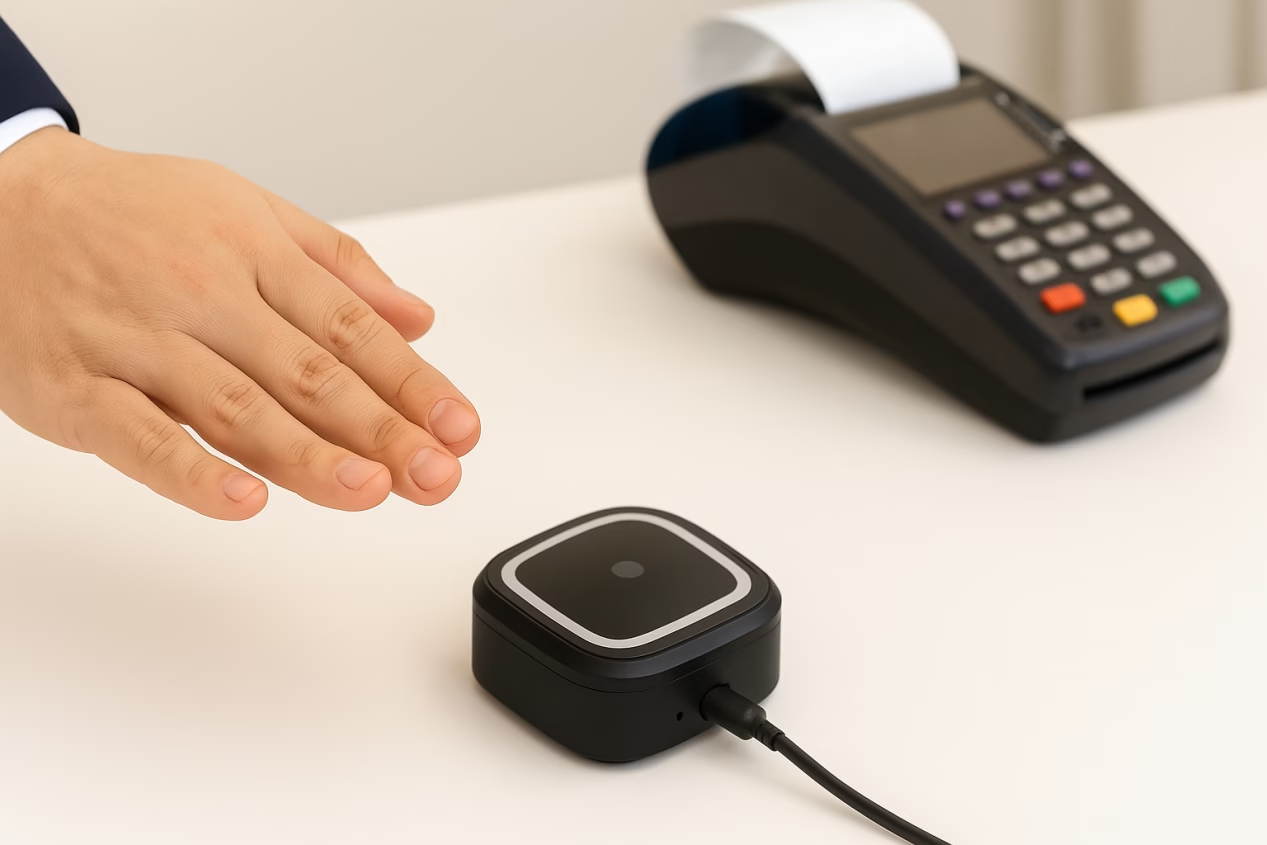
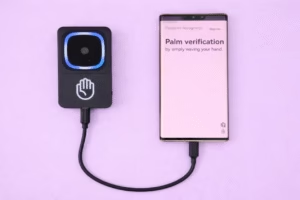
The BioWavePass500 is a complete palm vein device that communicates with Android through the USB interface.
During this process, the palm vein algorithm runs on the Android CPU, where it performs feature point extraction and matching.
This structure maintains the high speed and stability of USB communication while leveraging the powerful processing capability of Android systems. It can connect with clients’ existing POS/ Cashier device via WIFI/ Series ports/ RJ45 communication way too.
It ensures real-time recognition, high accuracy, and smooth integration across fintech, healthcare, and government ID platforms.
Until wireless protocols evolve to match USB in speed and reliability, USB remains the most practical and secure communication method for professional biometric applications.
5. Looking Ahead
At BioWavePass, our R&D team is developing new Bluetooth-enabled palm vein solutions, where all image processing and security algorithms are handled internally.
This innovation will allow plug-and-play wireless operation without compromising speed, accuracy, or privacy.
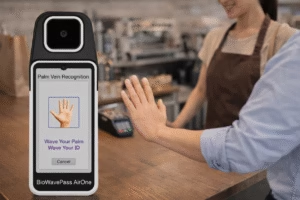
And there’s more good news — the BioWavePass portable Palm Pay device, AirOne model, will be launched soon, offering a compact, high-performance experience that brings palm vein recognition into the next generation of portability and intelligence.
Ready to explore BioWavePass integration?
Contact us to discuss your project or request technical documentation.
Share this article
About the Author

You might also like
Which Is the Best EMV & PCI Certified Palm Vein POS Terminal?
Will Palm Vein POS Support Existing EMV, NFC, and QR Payment Ecosystem?

Why Palm Vein Technology Is Emerging as a Payment-Grade Biometric Standard
Where Is Palm Vein Biometric Data Stored and How Is It Secured?
How Do You Choose the Best Palm Vein Technology for Real Projects?
How to Solve Power Issues in Palm Vein Scanner Projects?
What Is Palm Scanning Technology?
How Palm Vein Biometrics Can Be Integrated Into Mobile Payment Systems: A BioWavePass Implementation Guide
How to setup Palm Payment? Designing a Seamless Palm Payment Flow for Fintech and Payment Platforms