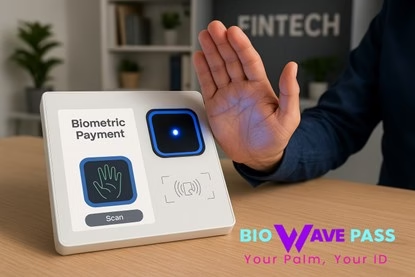
كيف يمكن للماسح الضوئي البيومتري لراحة اليد أن يساعد شركات التكنولوجيا المالية في الانتقال إلى مستقبل المدفوعات؟
💡 How Can a Biometric Palm Scanner Help Fintechs Transition to the Future of Payments?
The future of payments is biometric, but the present still depends on legacy banking systems — from ISO7816 contact cards to NFC-based wallets.
For fintech innovators, the challenge isn’t just building the next big thing, but ensuring compatibility with what already exists.
That’s exactly what the BioWavePass WavePass500 delivers:
a future-ready yet backward-compatible Biometric POS Terminal designed to help fintechs migrate smoothly from card-based to Palm Vein-based payment ecosystems.
🔐 The Dual Reality of Payments
Today’s payment landscape operates in two worlds:
💳 The Present
Millions of users and banks still rely on IC chip cards, EMV-certified systems, و magstripe fallback methods.
Security risks and friction remain high — yet the infrastructure is deeply embedded.
🖐️ The Future
Biometric technologies such as التعرف على عروق النخيل promise faster, safer, and fraud-proof transactions.
They remove dependence on cards, passwords, or mobile networks — all you need is your palm.
بايو وايف باس bridges both worlds with the WavePass500, empowering fintechs to evolve without disruption.
🖐️ Why WavePass500 Balances Both
1️⃣ Palm Vein Biometrics: Secure & Contactless
WavePass500 uses RGB + IR dual-spectrum imaging to authenticate users through subcutaneous palm vein patterns.
Each vein pattern is unique, invisible, and impossible to forge — ensuring maximum Palm Payment security.
2️⃣ Legacy Card Support: Inclusive & Familiar
While enabling palm-based payments, WavePass500 still supports:
- IC Contact Cards (ISO7816, EMV L1/L2 Certified)
- NFC Contactless Cards (ISO14443, Mifare, Visa PayWave, MasterCard PayPass)
This ensures banks and fintech platforms can serve both traditional and next-generation users simultaneously.
3️⃣ Gradual Migration Path
Fintechs can start with hybrid deployments — allowing الدفع بعرق النخيل alongside traditional card transactions.
Over time, the system can evolve fully into Palm Pay ecosystems as user adoption grows.
⚙️ Technical Highlights
| Feature | المواصفات | Advantage |
|---|---|---|
| Dual-Mode Authentication | Palm Vein + Card | Flexible for banks and fintechs |
| Platform | Android 11 with customizable SDK | Easy app integration |
| الأمن | AES-256 encryption, GDPR-ready | Protects sensitive user data |
| السرعة | 0.35-second biometric verification | Ideal for retail & fintech |
| الواجهات | USB, RS232, RJ45, Wi-Fi, Bluetooth | Seamless system connectivity |
WavePass500 is designed not just as hardware, but as a complete Palm Vein Technology solution — compatible with fintech APIs, SDKs, and cloud verification frameworks.
🌍 Why Fintechs Are Moving Toward Palm Payment Technology
As fraud, data leaks, and fake identities rise, fintech platforms need authentication that is both secure and human-centered.
Palm Vein Recognition ensures that every transaction is verified by a real, living identity — not a card or a device.
Key Benefits for Fintechs:
- 🚀 Reduce fraud and chargebacks
- 🔒 Eliminate dependency on PINs, passwords, or cards
- 💡 Enable true Contactless Payment without phones
- 🌐 Build interoperability between traditional and biometric systems
✅ Conclusion
WavePass500 ensures no one is left behind as fintechs move into biometric payment systems.
It’s the perfect transition bridge — combining modern biometric innovation with proven legacy compatibility.
👉 A future-proof Biometric POS that supports today’s cards و tomorrow’s Palm Payment Technology.
Because the future of payments isn’t just contactless — it’s palm vein-based.
Learn More About BioWavePass’s حلول الدفع بوريد النخيل
شارك هذه المقالة
نبذة عن الكاتب

قد يعجبك أيضاً
Bringing Palm Vein Scanning into a Web Workflow
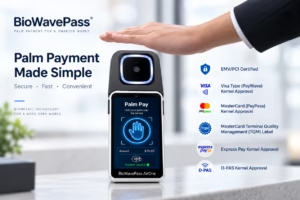
From Palm Payment MVP to Commercial Deployment: Building a Scalable Biometric Payment System
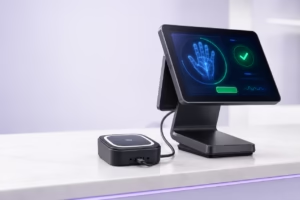
How to Integrate a USB Palm Vein Scanner with a POS Terminal
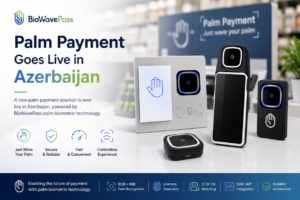
Palm Payment Goes Live in Azerbaijan: From Biometric Technology to Real-World Payment
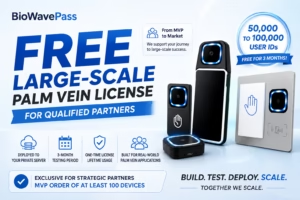
From MVP to Market: Scaling Palm Vein Technology with BioWavePass
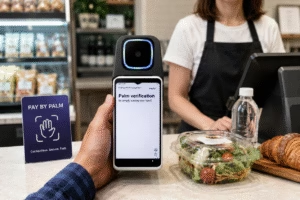
Palm Vein Payment: How Biometric Payments Work Without Cards or Phones
Palm Vein vs Fingerprint vs Face Recognition: Why Palm Vein Is Emerging for High-Security Biometrics
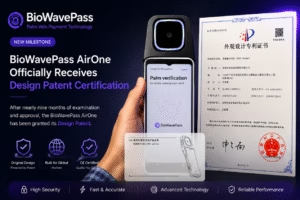
BioWavePass Palm Vein Scanner Products Receive Design Patent Certification
Palm Vein Authentication: The Future of Secure Digital Identity and Payments