في أي نظام بيومتري، تحدد جودة التسجيل دقة وموثوقية التحقق المستقبلي.
في بايو وايف باس, ، لدينا تقنية وريد النخيل مبني على الدقة، وقابلية التوسع، والاتساق.
التوفير صور وريد النخيل (RGB + IR) أثناء التسجيل ليس أمرًا اختياريًا - فهو ضروري للحفاظ على الدقة على المدى الطويل والأداء المستقر لـ FAR/FRRR.
✋ لماذا حفظ صور وريد النخيل؟
عندما يقوم المستخدمون بالتسجيل في الماسح الضوئي لوريد النخيل, يلتقط النظام صورتين متزامنتين لكل يد:
- صورة RGB: يسجل قوام بصمة النخيل السطحية
- صورة الأشعة تحت الحمراء: يلتقط تراكيب الأوردة تحت الجلد
على الرغم من أن متجهات السمات المستخرجة (RGB + IR) كافية للمطابقة الفورية,
عدم حفظ الصور الأصلية يعني أن النظام لا يمكنه إعادة استخراج الميزات أو إعادة معايرتها أثناء ترقيات الخوارزمية أو استبدال الأجهزة.
عن طريق حفظ النسخة الأصلية RGB + IR الصور، يمكن للنظام دائمًا العودة إلى مصدر القياسات الحيوية الأصلي -
التأكد من أن معدل القبول الخاطئ (FAR) و معدل الرفض الخاطئ (FRR) تظل خطوط الأساس دون تغيير بمرور الوقت.
⚙️ ضمان اتساق معدل العائد على الاستثمار الأجنبي المباشر ومعدل العائد على الاستثمار الأجنبي المباشر
✅ أثناء ترقيات الخوارزمية:
إعادة استخراج الميزات من الصورة الأصلية تحت خط أساس التقييم نفسه للحفاظ على دقة متسقة.
✅ عبر الأجهزة والبيئات:
تساعد الصور الأصلية في إعادة معايرة الاختلافات الناتجة عن الإضاءة أو لون البشرة أو اختلاف الأجهزة.
✅ أثناء توسعة النظام:
حتى مع نمو قواعد البيانات وأعداد المستخدمين، تضمن البيانات الأصلية دقة مطابقة متطابقة.
لا يؤدي حفظ صور وريد راحة اليد تقليل FAR/FRRR - تضمن بقاء هذه المعايير القياسية ثابت وقابل للتكرار ويمكن التحقق منه.
🧩 نظرة عامة على مقارنة النماذج
| نوع الموديل | استخراج الميزات | طريقة المطابقة | استخدام الصورة | سلوك الدقة |
|---|---|---|---|---|
| الطراز المدمج | يستخرج الجهاز بصمة الكف + ميزات الوريد (RGB + IR) | المقارنة عن بُعد | غير مطلوب | يحافظ على خط أساس الدقة الحالي |
| Enhanced Model | Device + cloud re-extract from stored RGB + IR images | Combined comparison | Required | Keeps the same FAR/FRR baseline after upgrade |
If only feature vectors are stored without the original images,
future algorithms cannot reprocess data for validation, which may lead to inconsistency or even require user re-registration.
🧠 توصية التنفيذ
The current BioWavePass Palm Vein Scanner demo supports two-hand registration,
but in real-world deployments, customers may choose to register only one hand depending on their application scenario.
Regardless of registering one or two hands, each hand corresponds to two images (RGB + IR).
It is strongly recommended that developers:
✅ Add the image-saving function early in the software development phase
✅ Include user attribute fields such as phone number or unique user ID
✅ Store palm images (RGB + IR) as part of the user’s information record for consistent feature management and traceability
This approach ensures data completeness, supports algorithm evolution, and simplifies future system expansion.
🔒 أمن البيانات والامتثال لها
All palm images are securely stored using AES-256-CBC encryption,
with timestamping, access control, and log tracking to ensure compliance with global data protection standards (GDPR, ISO/IEC 27001).
Palm images are not accessed during normal operations — they are only used during algorithm upgrades, calibration, or verification when authorized.
🌍 القيمة طويلة الأجل لحفظ الصور على المدى الطويل
Saving palm vein images is not just a technical detail —
it’s the foundation for maintaining consistent biometric accuracy throughout the system’s life cycle.
Whether for fintech, eKYC, healthcare, or identity verification,
BioWavePass Palm Vein Technology ensures reliable, contactless, and future-ready biometric authentication —
with accuracy that remains stable, measurable, and consistent
Learn More:https://x-telcom.com/why-does-palm-vein-recognition-outperform-fingerprint-and-facial-biometrics
شارك هذه المقالة
نبذة عن الكاتب

قد يعجبك أيضاً
Bringing Palm Vein Scanning into a Web Workflow
From Palm Payment MVP to Commercial Deployment: Building a Scalable Biometric Payment System
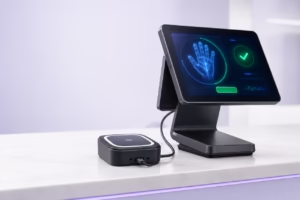
How to Integrate a USB Palm Vein Scanner with a POS Terminal
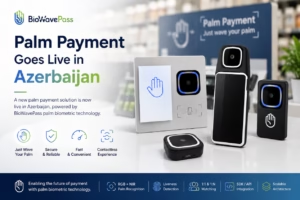
Palm Payment Goes Live in Azerbaijan: From Biometric Technology to Real-World Payment
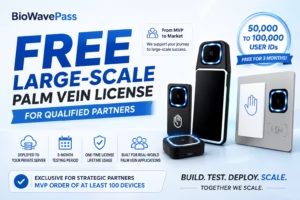
From MVP to Market: Scaling Palm Vein Technology with BioWavePass
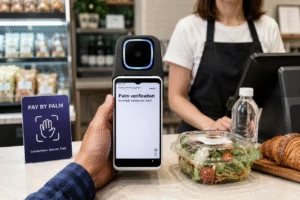
Palm Vein Payment: How Biometric Payments Work Without Cards or Phones
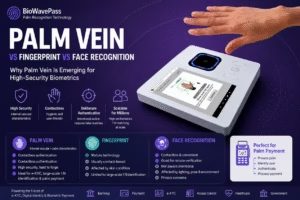
Palm Vein vs Fingerprint vs Face Recognition: Why Palm Vein Is Emerging for High-Security Biometrics
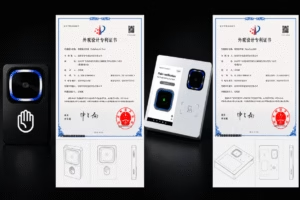
BioWavePass Palm Vein Scanner Products Receive Design Patent Certification
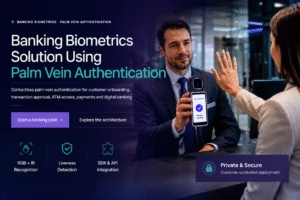
Palm Vein Authentication: The Future of Secure Digital Identity and Payments