Beyond Authentication: How Palm Vein Technology Prevents Duplicate Digital Identities
As biometric technology continues to expand into palm vein payment, digital identity verification, banking, and FinTech platforms, one challenge is becoming increasingly important:
How can organisations ensure that one biometric identity is not registered multiple times?
A secure biometric system should not only answer:
"Who is this user?"
It should also answer:
"Has this biometric identity already been registered?"
For large-scale identity platforms, preventing duplicate biometric registration is essential to maintaining trusted customer databases, improving security, and reducing identity-related risks.
This is why biometric similarity search and duplicate detection are becoming important capabilities for the future of palm vein authentication.
Palm Vein Recognition Requires More Than Accurate Matching
Palm vein technology provides a secure and convenient way to verify identity by using the unique vascular patterns inside an individual’s palm.
Unlike passwords, cards, or mobile devices, palm vein characteristics are:
- Unique to each individual;
- Difficult to replicate;
- Always available with the user.
However, as biometric systems scale from thousands to millions of users, identity registration becomes a critical challenge.
Recognition accuracy answers:
"Can we verify this user?"
But a complete digital identity system must also answer:
"Should this biometric identity be allowed to register again?"
Preventing Duplicate Digital Identities During Registration
During biometric onboarding, a palm vein system can perform similarity analysis before creating a new user identity.
The process includes:
- Capturing the user’s palm vein information;
- Extracting biometric feature templates;
- Comparing the new feature data against existing biometric records;
- Identifying whether a similar biometric identity already exists;
- Allowing registration or triggering additional verification.
This additional security layer helps organisations prevent:
- Duplicate customer registrations;
- Multiple accounts linked to the same biometric identity;
- Incorrect identity associations;
- Potential fraudulent activity.
Why Duplicate Detection Matters for Palm Vein Payment
For palm vein payment applications, biometric identity becomes directly connected with customer accounts and financial transactions.
A reliable payment ecosystem requires confidence that:
- Each palm vein identity belongs to the correct customer;
- One biometric identity is not repeatedly registered;
- Customer records remain accurate and trusted.
BioWavePass provides biometric duplicate detection capabilities to support secure identity registration workflows for:
- Palm vein payment platforms;
- Digital banking applications;
- FinTech solutions;
- Customer identity verification systems.
How BioWavePass Supports Biometric Duplicate Detection
BioWavePass palm vein technology provides different approaches to duplicate detection depending on the biometric model architecture.
The system can analyse biometric feature similarity during the registration process and identify whether a similar palm vein template already exists.
If a potential duplicate is detected, the application can define the appropriate business process:
- Reject the registration;
- Request additional verification;
- Send the case for manual review.
This gives organisations greater control over identity security and customer onboarding processes.
Feature Similarity Search for Large-Scale Identity Systems
For large-scale deployments, similarity search technology enables biometric features to be compared against existing identity records.
Instead of checking only one specific user, the system performs a broader search:
"Does this palm vein feature already exist within the registered database?"
This approach is particularly valuable for:
- Financial institutions;
- Payment service providers;
- Digital identity platforms;
- Large customer authentication systems.
By identifying similar biometric records before registration is completed, organisations can maintain a cleaner and more reliable identity database.
Multi-Feature Biometric Validation
Palm vein systems can also use multiple biometric feature channels to improve registration security.
By analysing different biometric data characteristics, the system can provide additional confidence during identity enrollment.
This helps developers and solution providers build registration workflows that are:
- More secure;
- More accurate;
- Better suited for large-scale deployment.
Supporting Local and Private Deployment
Many financial institutions and enterprises require full control of biometric data because of security, privacy, and regulatory considerations.
BioWavePass supports flexible deployment options, including local infrastructure environments.
With local deployment:
- Biometric processing can remain within the customer’s environment;
- Data management can follow organisational security policies;
- Systems can operate without dependency on external cloud services.
This allows organisations to balance biometric innovation with their own compliance and security requirements.
Building Trusted Digital Identity Infrastructure
The future of biometric authentication is not only about recognising users faster.
It is about building trust throughout the entire identity lifecycle.
A complete biometric ecosystem requires:
- Accurate recognition;
- Secure registration;
- Duplicate identity detection;
- Reliable data management;
- Flexible deployment options.
BioWavePass palm vein technology is designed to help organisations build secure and scalable solutions for:
- Palm vein payment;
- Digital identity;
- FinTech authentication;
- Secure customer onboarding.
The Future of Palm Vein Authentication
As biometric payments and digital identity services continue to grow, organisations need technology that goes beyond simple authentication.
The key question is no longer only:
"Can we recognise this person?"
It is also:
"Can we trust this identity has not already been used?"
By combining palm vein recognition with biometric similarity search and duplicate detection, BioWavePass helps create safer, more reliable, and scalable digital identity ecosystems for the future of FinTech.
تعرّف على المزيد من: https://biowavepass.com/
شارك هذه المقالة
نبذة عن الكاتب

قد يعجبك أيضاً
Bringing Palm Vein Scanning into a Web Workflow
From Palm Payment MVP to Commercial Deployment: Building a Scalable Biometric Payment System
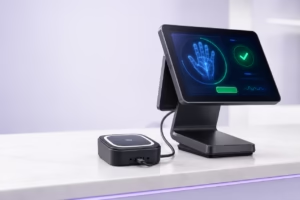
How to Integrate a USB Palm Vein Scanner with a POS Terminal
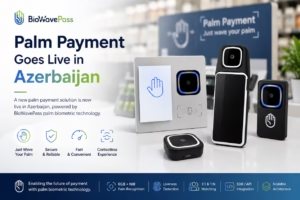
Palm Payment Goes Live in Azerbaijan: From Biometric Technology to Real-World Payment
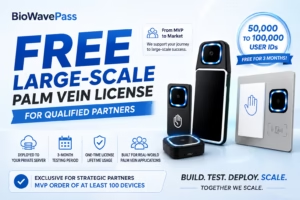
From MVP to Market: Scaling Palm Vein Technology with BioWavePass
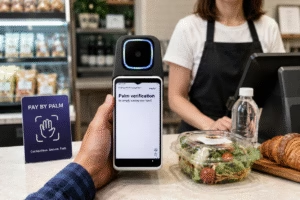
Palm Vein Payment: How Biometric Payments Work Without Cards or Phones
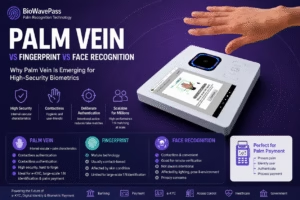
Palm Vein vs Fingerprint vs Face Recognition: Why Palm Vein Is Emerging for High-Security Biometrics
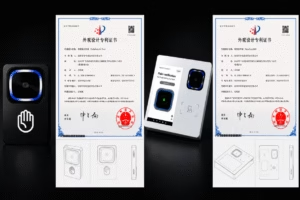
BioWavePass Palm Vein Scanner Products Receive Design Patent Certification
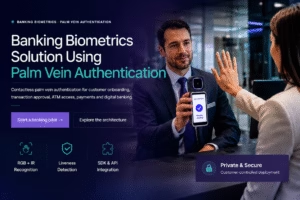
Palm Vein Authentication: The Future of Secure Digital Identity and Payments