Optimizing Palm Payment Performance: AirOne Palm Module Firmware v2.4.4
In a palm payment system, recognition accuracy is important, but the overall user experience also depends on how efficiently the biometric technology works together with the payment application.
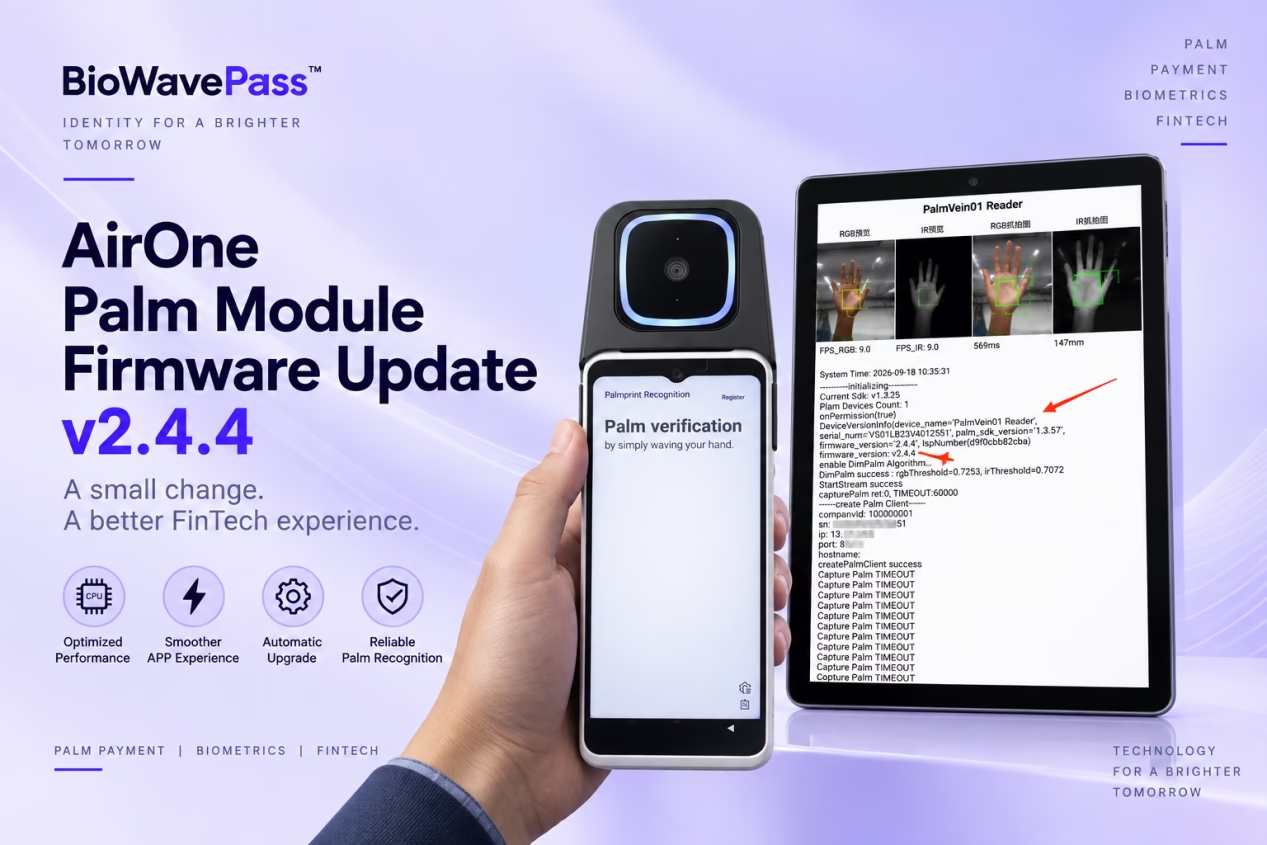
BioWavePass has introduced a new non-streaming firmware, v2.4.4, for the palm recognition module used in the AirOne Palm Payment POS.
The change itself is small: instead of continuously streaming camera data, the palm module now streams data when a palm is detected.
But behind this small change is an important principle for real-world biometric payment:
Use limited system resources where they matter most.
Why Does CPU Performance Matter in Palm Payment?
A financial POS terminal has limited CPU and memory resources.
Unlike a standalone palm vein scanner, a palm payment terminal may need to run multiple processes at the same time, including:
- Banking or FinTech applications
- Payment-related services
- Palm detection
- RGB and infrared image processing
- Palm biometric algorithms
- Backend communication
- Android system processes
Palm recognition therefore cannot be considered separately from the rest of the payment environment.
If the biometric module continuously consumes CPU resources when palm recognition is not required, fewer resources remain available for the banking APP, payment APP and biometric algorithm.
This is exactly what the new firmware is designed to optimize.
What Changes with Palm Module Firmware v2.4.4?
With the new non-streaming firmware, the palm recognition module does not continuously stream camera data unnecessarily.
Instead, streaming is activated when a palm is detected.
The principle is simple:
Less unnecessary data streaming → Lower unnecessary CPU usage → More resources for palm recognition and FinTech applications
This allows the limited processing resources inside the POS terminal to be used more efficiently.
For users, the technical change happens in the background.
What matters is the result: a smoother interaction between the palm biometric module, recognition algorithm and payment application.
A Small Change Can Have a Big Impact on User Experience
In payment technology, milliseconds and application responsiveness matter.
A user does not care how CPU resources are allocated inside a POS terminal. They care about whether the interaction feels fast, natural and reliable.
A typical palm payment interaction may involve:
Palm Detection → Palm Capture → Biometric Processing → Payer Identification → Backend Communication → Payment Processing
Each stage needs to work smoothly with the others.
Optimizing unnecessary processing at the palm module level gives the overall system more room to perform the functions that actually matter during the transaction.
This is why a relatively small firmware optimization can create a noticeable improvement in the real-world palm payment experience.
Does v2.4.4 Affect Existing AirOne Applications?
No.
The new palm module firmware does not require customers to redevelop their existing AirOne applications.
Customers who have already completed their:
- Palm recognition SDK integration
- Banking APP development
- FinTech APP development
- Payment platform integration
can continue using their existing applications after the palm module firmware upgrade.
This is particularly important for commercial deployments where software integration has already been completed.
Automatic Palm Module Firmware Upgrade
The upgrade process has also been designed to remain simple.
Once AirOne detects the palm recognition module, the APK can automatically perform the firmware upgrade without additional manual operations.
After a successful upgrade, the palm module firmware version will display:
v2.4.4
This makes it easy for technical teams to confirm whether the latest firmware has been installed.
How Does AirOne Palm Payment Work?
AirOne combines a financial POS platform with BioWavePass palm biometric recognition technology.
The biometric layer is responsible for determining who the payer is.
The actual financial transaction remains within the bank, FinTech company or payment provider’s own payment infrastructure.
A simplified architecture can therefore be understood as:
Palm → Biometric Recognition → User ID → Payment Platform → Transaction
This separation allows payment companies to integrate palm recognition into their existing payment ecosystem while maintaining control of their own accounts, transaction logic and user data.
Palm Print and Palm Vein Recognition
BioWavePass palm recognition technology uses RGB palmprint and infrared palm vein information for biometric recognition.
Combining palm surface and subcutaneous vein information provides multiple biometric characteristics from a single contactless palm interaction.
The objective is not simply to capture a palm image.
The objective is to create a practical biometric identity layer that can be integrated into applications such as:
- Palm payment
- الأعمال المصرفية
- التكنولوجيا المالية
- Digital identity
- Membership systems
- Closed-loop payment
- Biometric user verification
For payment applications, however, biometric performance must work together with the financial application rather than compete with it for system resources.
Firmware v2.4.4 is another optimization toward that goal.
Frequently Asked Questions
What is AirOne palm module firmware v2.4.4?
Firmware v2.4.4 is a non-streaming firmware update for the palm recognition module used in AirOne Palm Payment POS.
It optimizes when the module streams data to reduce unnecessary system resource consumption.
What does "non-streaming" mean?
Instead of continuously streaming camera data, the palm module starts streaming when a palm is detected.
This helps reduce unnecessary CPU processing.
Why is this important for palm payment?
A palm payment POS may simultaneously run biometric algorithms, banking or FinTech applications, payment services and network communication.
Reducing unnecessary processing gives these functions more access to the device’s available CPU resources.
Does the firmware change the existing palm recognition SDK integration?
No. Existing AirOne applications and integrations can continue to operate without redevelopment because of this firmware upgrade.
Can existing AirOne devices be upgraded?
Yes. Customers who previously purchased AirOne can contact X-Telcom or BioWavePass regarding the v2.4.4 palm module firmware upgrade.
Does BioWavePass process the financial transaction?
No.
BioWavePass palm biometric technology provides the identity recognition layer that determines who the user or payer is.
The actual payment transaction is managed by the customer’s bank, FinTech platform or payment backend.
Building Better Palm Payment Experiences
Palm payment is not only about replacing a card or phone with a palm.
For biometric payment to become part of everyday financial services, the entire interaction must feel fast and natural.
That requires continuous optimization across hardware, firmware, biometric algorithms and software integration.
AirOne palm module firmware v2.4.4 is a small technical change with a simple objective: reduce unnecessary processing and make better use of the resources already available inside the payment terminal.
For existing AirOne customers, the new firmware is available for upgrade without requiring redevelopment of previously integrated applications.
For new palm payment projects, BioWavePass supports palm biometric hardware, SDK/API integration, private server deployment and scalable 1:N palm identification.
Palm Payment | Palm Vein Recognition | Palm Biometrics | Biometric Identification
شارك هذه المقالة
نبذة عن الكاتب

قد يعجبك أيضاً

Scaling Palm Vein Payment: Single Server or Kubernetes Cluster?

Before You Scale Palm Vein POS: A Terminal Management Checklist

Why Saving Original Palm Images Matters for Biometric Recovery and Future Upgrades By BioWavePass

Bringing Palm Vein Scanning into a Web Workflow

From Palm Payment MVP to Commercial Deployment: Building a Scalable Biometric Payment System

How to Integrate a USB Palm Vein Scanner with a POS Terminal

Palm Payment Goes Live in Azerbaijan: From Biometric Technology to Real-World Payment

From MVP to Market: Scaling Palm Vein Technology with BioWavePass

Palm Vein Payment: How Biometric Payments Work Without Cards or Phones