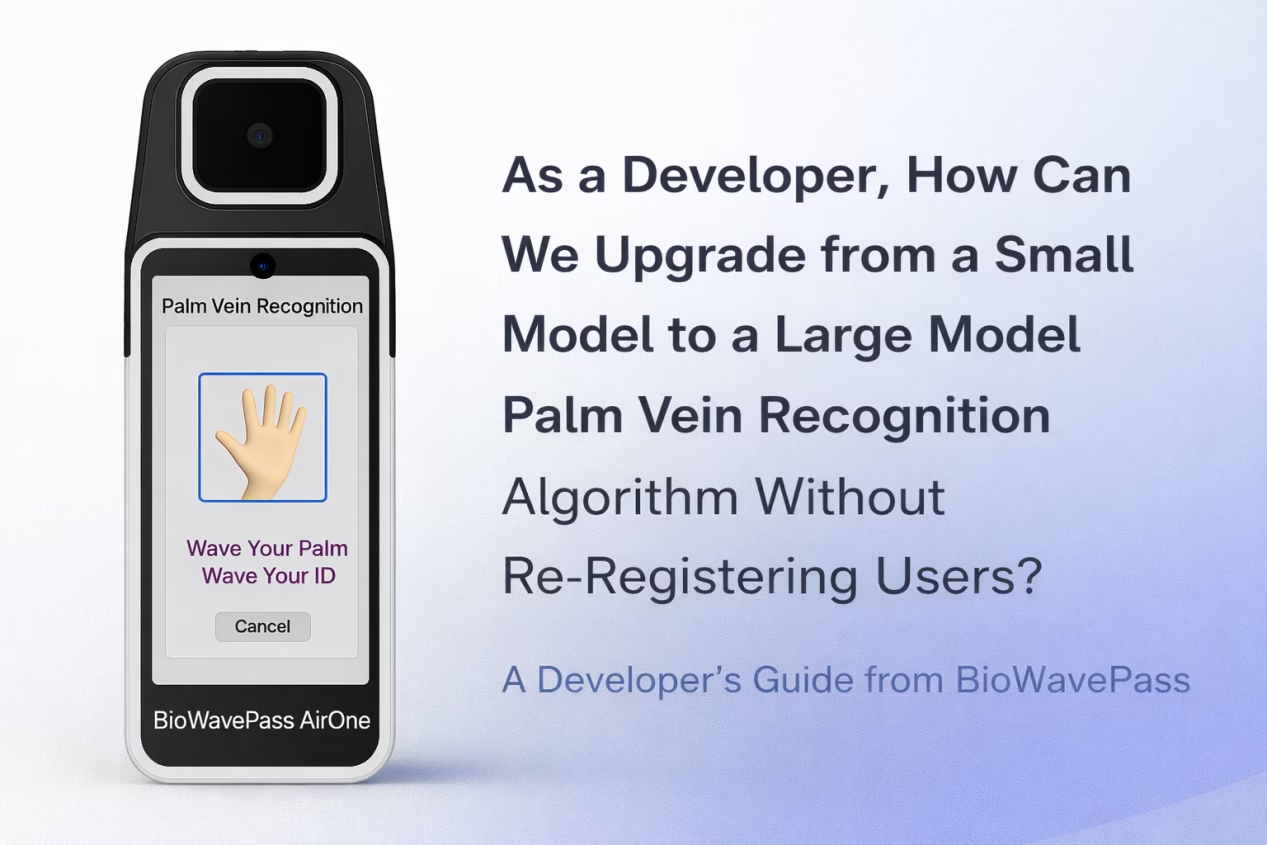
As a Developer, How Can We Upgrade from a Small Model to a Large Model Palm Vein Recognition Algorithm Without Re-Registering Users?
When building a biometric system, developers often face an important architectural question:
If we start with a small model palm vein recognition algorithm, how can we upgrade to a larger AI model later without forcing users to register their palms again?
For developers integrating BioWavePass palm vein technology, this is a critical design decision during the early stage of system development.
If the biometric data architecture is designed correctly from the beginning, upgrading the algorithm later can be completed smoothly without affecting existing users.
This article explains the recommended approach from a developer and system integration perspective.
Starting with the Small Model During Development
Most biometric systems begin with a small model palm vein recognition algorithm during development and early deployments.
This model is ideal for:
- System integration
- Pilot deployments
- Proof-of-concept testing
- Small or medium-scale projects
The verification workflow typically follows these steps:
- The BioWavePass palm vein device captures RGB and IR palm data
- The SDK extracts two biometric feature vectors
- RGB Palm Print Feature
- IR Palm Vein Feature
- The feature vectors are sent to the application server
- The server compares the vectors with stored user data
In this architecture, verification relies mainly on device-side feature extraction, which keeps the system lightweight and efficient.
At this stage, image data is not required for matching.
A Key Developer Decision: Should We Store Palm Images?
Although the small model only requires feature vectors, BioWavePass engineers strongly recommend storing RGB and IR palm images during user registration.
Each registered hand typically generates:
- 1 RGB palm image
- 1 IR palm vein image
The SDK performs image quality verification during the registerPalm process, ensuring that only images that meet the required standards are stored. :contentReference[oaicite:0]{index=0}
From a developer’s perspective, storing images early provides several advantages:
- Avoids requiring users to register again later
- Enables seamless algorithm upgrades
- Preserves original biometric data
- Supports future AI improvements
If palm images are not stored during registration, upgrading to a new AI recognition algorithm later may require collecting biometric data again from every user.
What Changes When the System Upgrades to the Large Model?
As biometric systems grow or security requirements increase, developers can upgrade to a large model palm vein recognition algorithm.
Unlike the small model, the large model introduces server-side AI feature extraction.
Verification then combines four types of biometric data:
- Device-side RGB palm print feature
- Device-side IR palm vein feature
- Server-side palm print feature extracted from stored RGB images
- Server-side palm vein feature extracted from stored IR images
The algorithm server re-extracts features from the stored images and combines them with device-side features.
This architecture significantly improves:
- Recognition accuracy
- Reliability in large databases
- Resistance to spoofing
Because the original biometric images are stored, the system can generate new features without requiring users to re-register. :contentReference[oaicite:1]{index=1}
The Upgrade Process from a Developer’s Perspective
From an integration standpoint, upgrading the algorithm is relatively simple.
Typical steps include:
- Deploying the large model algorithm service on the server
- Configuring the service based on the deployment documentation
- Updating the application server API endpoint
- Performing minor interface adjustments if necessary
Since the biometric data already exists in the database, the system can begin operating with the large model immediately after deployment.
In most cases, the upgrade requires only minimal changes to the application layer.
Recommended Biometric Data Structure
When designing the biometric database, developers should consider storing the following data:
- User ID or phone number
- RGB palm image
- IR palm image
- RGB palm feature vector
- IR palm vein feature vector
For deployments with 10,000 users or fewer, storing feature vectors may technically be sufficient for the small model.
However, storing RGB and IR images is still recommended so that when the system upgrades to the large model later, existing users will not need to register again.
For larger deployments exceeding 10,000 users, storing both images and feature vectors becomes essential to support AI-based verification and maintain high recognition accuracy. :contentReference[oaicite:2]{index=2}
Designing Biometric Systems That Can Evolve
For developers building biometric systems, scalability is not only about infrastructure capacity but also about algorithm flexibility.
Palm vein recognition technology will continue evolving as AI models improve.
By storing biometric images during registration and designing the system architecture correctly from the start, developers can ensure that their systems can:
- Upgrade algorithms smoothly
- Improve recognition accuracy over time
- Scale from pilot deployments to large-scale biometric systems
En BioWavePass, our goal is to provide palm vein technology that enables developers to build secure, scalable, and future-ready biometric platforms.
Learn more about BioWavePass palm vein technology:
https://biowavepass.com/biowavepass-palm-vein-scanner-products/
Comparte este artículo
Sobre el autor

También le puede interesar
Bringing Palm Vein Scanning into a Web Workflow
From Palm Payment MVP to Commercial Deployment: Building a Scalable Biometric Payment System
How to Integrate a USB Palm Vein Scanner with a POS Terminal

Palm Payment Goes Live in Azerbaijan: From Biometric Technology to Real-World Payment
From MVP to Market: Scaling Palm Vein Technology with BioWavePass
Palm Vein Payment: How Biometric Payments Work Without Cards or Phones
Palm Vein vs Fingerprint vs Face Recognition: Why Palm Vein Is Emerging for High-Security Biometrics
BioWavePass Palm Vein Scanner Products Receive Design Patent Certification

Palm Vein Authentication: The Future of Secure Digital Identity and Payments