Blogs de BioWavePass
Perspectivas e innovaciones en la tecnología de las venas de las palmeras
Scaling Palm Vein Recognition from 100,000 to One Million Users: What Changes?
Your palm vein project is preparing for growth. More customers will register, more terminals will be deployed and more locations may use the service. Does reaching one million registered users mean rebuilding the terminal application? Within BioWavePass’s Large Model, an increase in user count alone does not require changing the default device SDK. The main changes concern server resources, licensed...
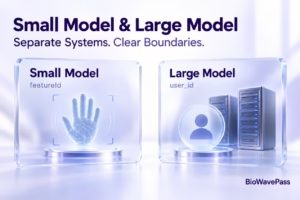
Small Model and Large Model Palm Vein Systems: What Developers Must Keep Separate
Your team has tested a palm vein reader with the Small Model. Now you are evaluating the Large Model for a broader project. Can you keep the same identifiers? Add the new SDK alongside the existing one? Point your application at a different server and continue using the same registrations? These questions share an important starting point: BioWavePass’s Small Model...
Can a Palm Vein SDK Capture Data Without an Algorithm Server?
“We already have our own backend. Can the terminal simply scan a palm and return the biometric data for us to process?” This is a practical question for teams building palm vein payment, customer identification or access applications. Many developers expect a biometric SDK to work like a camera interface: capture the data, return it to the application and let...
Palm Vein Image Encryption: Why AES-256-GCM Alone Does Not Guarantee Compatibility
Your development team has implemented AES-256-GCM encryption. The algorithm server also uses AES-256-GCM. Yet an encrypted palm image still fails to process. Why? Using the same encryption algorithm does not automatically mean that the client and server exchange data in the same format. For a BioWavePass large-scale palm vein integration, successful image encryption depends on three things working together: the...
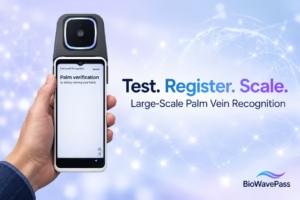
Large-Scale Palm Vein Recognition: How to Test the SDK and Plan for Growth
Before investing in a large-scale palm vein recognition system, product and development teams need to answer a practical question: How can we test the technology before purchasing an algorithm licence? BioWavePass provides a public-cloud test environment, a large-scale SDK and a Demo so customers can evaluate the registration and identification workflow before purchasing the large-model algorithm package. Once the team...
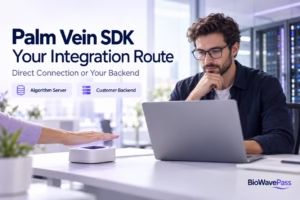
Palm Vein Payment SDK: Direct Algorithm Server Integration or Your Own Backend?
BioWavePass’s large-scale palm vein SDK supports two integration routes: connecting directly to the Algorithm Server, or connecting through your own backend. Both require a valid server URL and the response format expected by the SDK. This choice determines where requests are routed and how your development team connects biometric registration and identification to its business platform. For companies building palm...
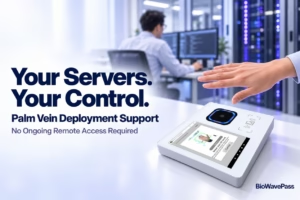
Palm Vein Deployment Support: Who Can Access Your Servers?
Before introducing palm vein authentication into a production environment, IT teams need to know who will access their servers, what permissions are required and whether that access will continue after installation. These questions are especially relevant when a palm vein payment platform connects biometric terminals with customer accounts and payment workflows. BioWavePass provides free remote deployment support for its large-model...
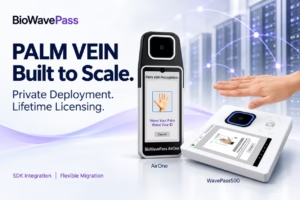
Scaling Palm Vein Payment: Single Server or Kubernetes Cluster?
A palm vein payment pilot may begin with a few terminals and a limited group of users. As the project grows, one infrastructure question becomes increasingly important: Should your palm vein recognition system run on a single server or a Kubernetes cluster? The answer starts with your expected registered user population and expansion plans. A larger infrastructure investment is not...
Before You Scale Palm Vein POS: A Terminal Management Checklist
Your pilot has demonstrated the user experience. The next question is how to operate the terminals across multiple locations. Who will prepare new devices? How will applications be distributed? What can a support team do when a terminal needs attention? Can the management platform run on your own infrastructure? For a BioWavePass project, these questions should be answered alongside hardware...
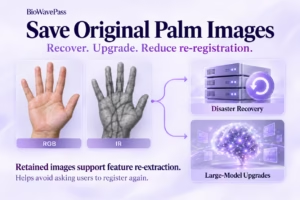
Why Saving Original Palm Images Matters for Biometric Recovery and Future Upgrades By BioWavePass
A successful Palm Vein Recognition deployment needs to support more than today’s matching requirements. It should also be prepared for server failures, lost biometric feature data and future algorithm upgrades. One integration decision can support all three: securely retain the original RGB and infrared palm images during registration. These images provide the source data needed to extract biometric features again....