Capture readiness
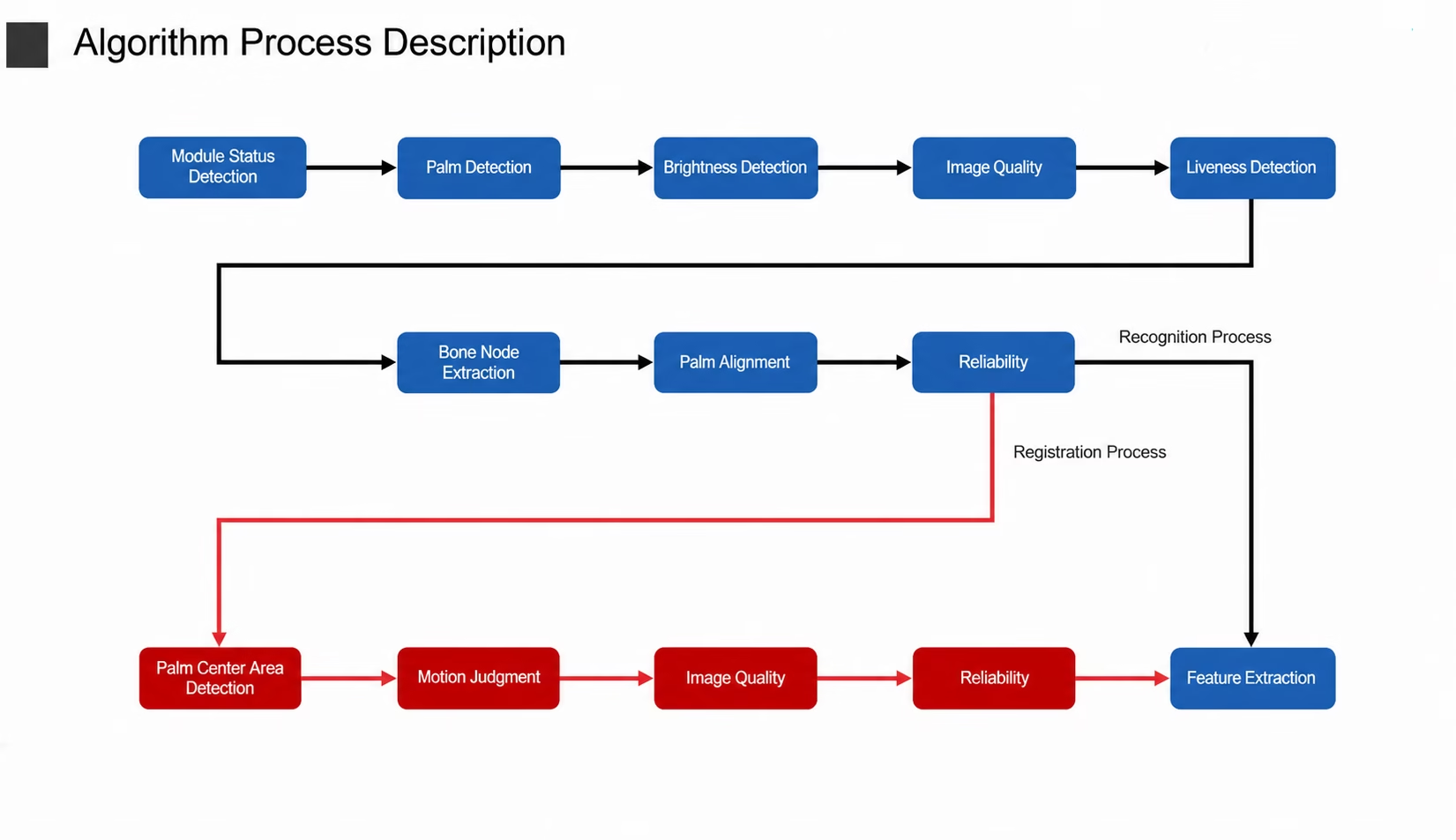
Module status, palm position and illumination are checked before biometric processing begins.
BioWavePass evaluates palmprint and palm vein authentication against common and advanced spoofing methods—combining dual-spectrum imaging with layered security for payment scenarios.
The device incorporates dual-spectrum RGB and NIR liveness detection technology to mitigate presentation attacks such as photos, video replays and prosthetic replicas. Each capture must progress through multiple independent checks.
Module status, palm position and illumination are checked before biometric processing begins.
Surface and sub-surface observations help distinguish living tissue from displayed, printed or fabricated inputs.
Palm geometry is aligned and sample reliability is assessed before recognition or registration.
Palmprint texture and palm vein features are evaluated alongside enrollment and account controls.
RGB paper images do not reproduce sub-surface vein information.
Printed infrared imagery lacks corresponding surface palmprint detail.
Adhesive traces and aliased print/vein signals expose mixed samples.
Visible screen light cannot reproduce near-infrared vein imaging.
Material response and missing dynamic vascular signals distinguish prosthetics.
Material differences remain observable; transparent gloves reveal the wearer.
Image-to-feature extraction is irreversible; encrypted transport adds protection.
Dried animal skin differs from living human tissue and lacks vascular dynamics.
The palm registration and recognition workflow shows how capture controls, liveness, alignment and reliability decisions connect before feature extraction.
A more realistic fake demands specialist materials, target biometric data and success across every security checkpoint. In most payment scenarios, cost rises faster than likely return.
Estimated attack-cost bands from the BioWavePass internal assessment. Values are indicative and scenario-dependent.
Common print, replay, splice and ordinary prosthetic attacks are addressed by established defensive coverage. Advanced attacks remain theoretically possible, but must satisfy liveness, palmprint, palm vein, image quality, enrollment and account checks at the same time.
* Findings summarize “Testing of Spoofing Attack Methods — Focusing on Payment Scenarios,” an internal BioWavePass assessment. ISO/IEC 30107-3 is referenced only as a methodology framework informing algorithm training and internal PAD testing. BioWavePass does not claim ISO/IEC 30107-3 certification, formal conformance or third-party PAD evaluation. Results are scenario-dependent and are not an absolute guarantee against every attack.