What Is the Difference Between Enrollment and Identification?
Palm vein systems operate in two fundamentally different stages:
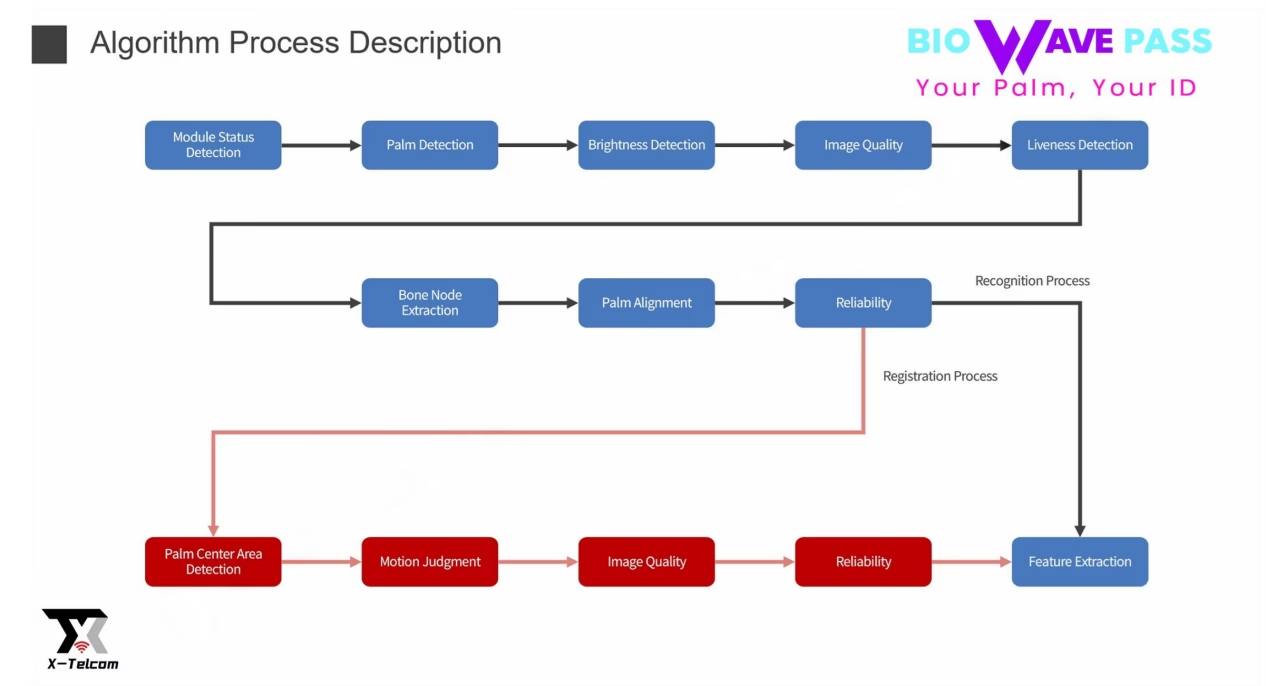
Enrollment (Registration)
Builds the biometric identity baseline
Captures standardized RGB + IR data
Ensures long-term data consistency
Identification (Recognition)
Matches live palm scans with stored data
Optimized for speed and real-time response
Designed for high-frequency usage scenarios
Key Principle:
Enrollment defines data quality — Identification consumes that data.
Why Must Enrollment and Identification Be Separated?
These two processes are designed for completely different system objectives:
Enrollment vs Identification Differences
| Aspecto | Enrollment | Identification |
|---|---|---|
| Objective | Build high-quality baseline | Fast matching |
| Quality Requirement | Strict | Lenient |
| Computing Load | High | Lightweight |
| Error Tolerance | Zero tolerance | Acceptable margin |
| Tiempo de respuesta | Longer acceptable | <1 second |
Conclusión
A single process cannot satisfy both requirements simultaneously.
What Happens During Enrollment (That Identification Does Not Do)?
Enrollment includes critical quality control steps:
Quality Control Steps
Palm center region detection
Motion judgment (anti-blur)
Multi-dimensional reliability verification
Multi-frame capture and validation
These Steps Ensure
Standardized image input
Stable RGB + IR data
Reliable long-term database
Key Insight:
You cannot fix poor enrollment data during identification.
Why "One-Tap Registration + Payment" Does Not Work
Use registration-quality images for identification
Slower matching speed
Increased latency during payment
Poor user experience
Dual-capture in one tap
Requires significantly higher hardware computing power
Increases processing latency
Reduces system efficiency
Temporarily cache biometric data during registration
Critical Security Concerns
Temporary storage of biometric data significantly increases the risk of data breaches and may violate data protection regulations such as GDPR.
Biometric data must follow principles of data minimization and immediate processing or deletion.
Caching biometric data, even briefly, introduces security exposure and compliance risks.
All three approaches present significant technical or security challenges
What Is the Correct System Design for Real Deployment?
Step 1: Enrollment
Dedicated registration flow
High-quality biometric baseline
Completed once per user
Step 2: Identification
Fast palm verification (~0.3 seconds)
Used for payment or authentication
Optimized for real-time experience
System Design Flow
Enrollment
One-time Setup
Identification
Real-time Usage
Result
This ensures stable performance and better long-term user experience.
Why This Matters for Scaling and Commercial Success
If Enrollment is Weak
Database inconsistency
Declining recognition accuracy
Poor scalability
If Designed Correctly
Stable accuracy
Predictable scaling
Easier system upgrades
Final Insight:
Enrollment defines the ceiling of system performance.
Build a Scalable Palm Vein System from Day One
Avoid long-term accuracy issues
Ensure compliance and security
Prepare for real-world deployment
Contact our team for integration support.
Get expert guidance for your palm vein implementation