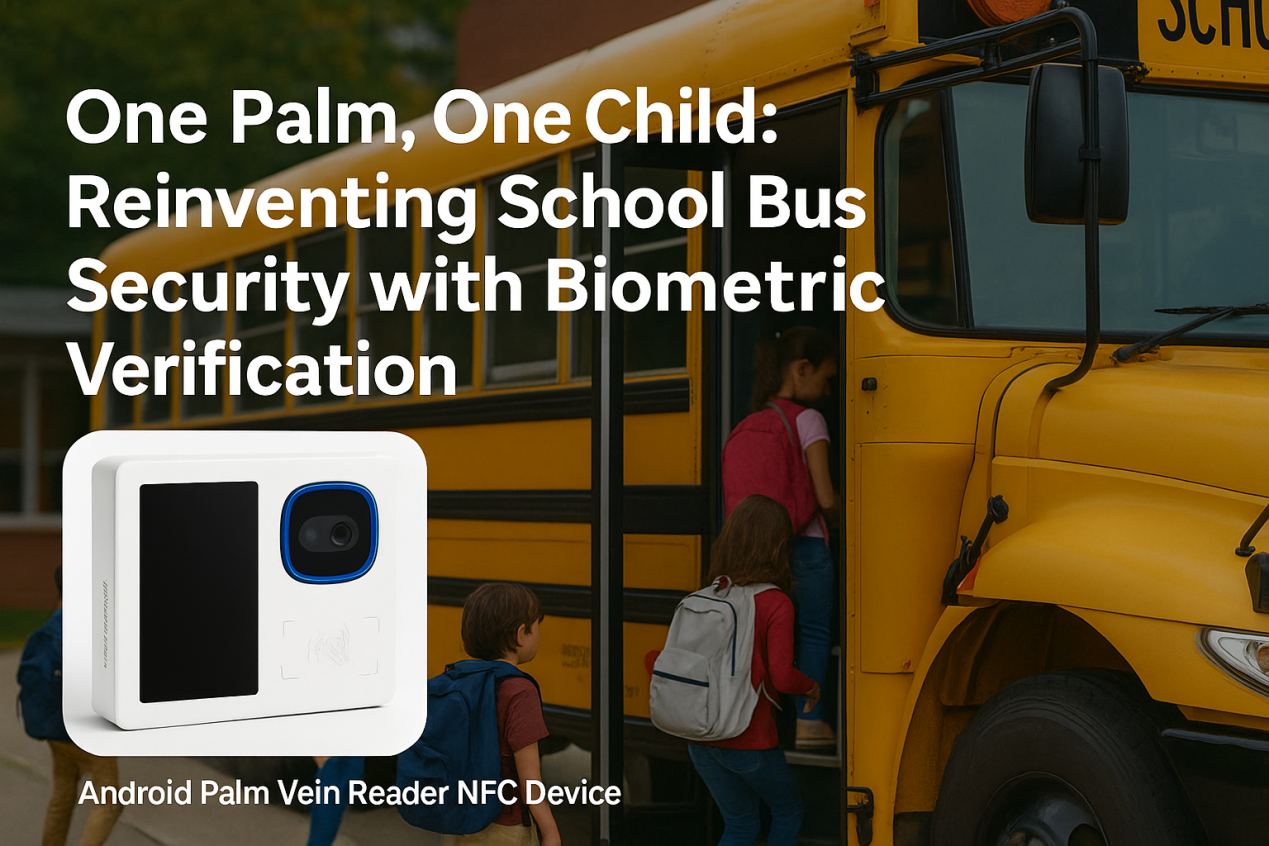
One Palm, One Child: Reinventing School Bus Security with Biometric Palm Vein Verification
Published by BioWavePass | July 2025
Every school day, millions of children ride buses to and from school—but how can we be sure each child boards safely, reaches the correct location, and is accounted for in real time?
The answer lies in a child’s palm.
With BioWavePass500, a powerful palm vein scanner, schools are revolutionizing how they manage school bus attendance, turning every boarding into a secure, contactless biometric event—giving parents peace of mind and schools full visibility.
🖐️ Why Palm Vein is the Future of Student Safety
Unlike fingerprints or ID cards, palm vein recognition uses invisible, internal vein patterns that can’t be faked, stolen, or worn out. It’s:
- Non-contact — ideal for kids’ hygiene and convenience
- Highly secure — subdermal data makes it nearly impossible to spoof
- Ultra-accurate — >98% match success rate
- Private — no visible biometric capture
That makes the biometric palm scanner the ideal solution for school transportation safety.
🚍 How BioWavePass500 Works on School Buses
The WavePass500 is an Android-based palm vein reader designed for field-ready deployments. Here’s how it transforms the daily school bus routine:
- Student boards bus, hovers palm over the scanner.
- Device identifies the student in under 1 second.
- Attendance is logged and sent to the cloud or school server.
- Parents are notified instantly: “Emma boarded Bus #7 at 07:41 AM.”
⚡ Built for School Buses: Ready for Car-Charging Power
One standout feature: BioWavePass500 supports 12V–36V car-charging input, making it fully compatible with vehicle-based power systems. This allows direct mounting on school buses without external adapters or voltage converters—perfect for stable, in-vehicle use cases.
🔍 Inside the Device
- Dual-mode recognition: Palm Vein + Palm Print (RGB + IR)
- 5” Touchscreen with Android OS
- Built-in NFC reader and QR code scanner
- Wi-Fi + USB communication
- AES-256 encryption + SSL security
- Ready for on-bus power input (12V–36V, surge-protected chipset)
- Full SDK + Free license for ≤10,000 users
🎯 Why Schools Love It
- ✅ No cards to forget or lose
- ✅ Real-time dashboards for admins and parents
- ✅ No-touch biometric check-in
- ✅ Fully mobile, car-powered, and cloud-ready
- ✅ Tamper-proof, secure, and child-safe
🧪 Start a Pilot Today
Schools can begin with just 1–2 units of BioWavePass500 to run a full MVP test—onboard SDK, quick integration, and no license cost for early-stage users.
📞 Contact Us to Learn More
Let BioWavePass500 secure every ride, every day—with car-ready installation, real-time attendance, and biometric precision.
📧 Email: [email protected]
📱 WhatsApp: +86 198 6084 3404
Share this article
About the Author

You might also like
Bringing Palm Vein Scanning into a Web Workflow
From Palm Payment MVP to Commercial Deployment: Building a Scalable Biometric Payment System
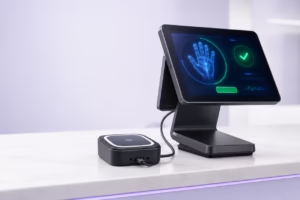
How to Integrate a USB Palm Vein Scanner with a POS Terminal
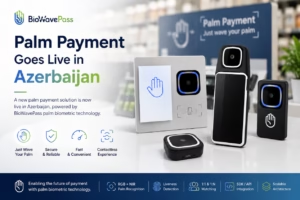
Palm Payment Goes Live in Azerbaijan: From Biometric Technology to Real-World Payment
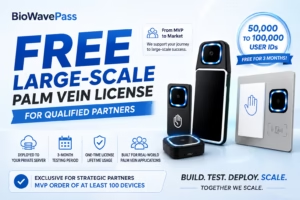
From MVP to Market: Scaling Palm Vein Technology with BioWavePass
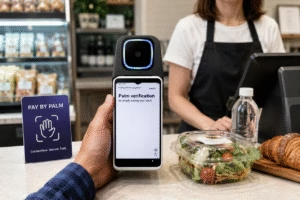
Palm Vein Payment: How Biometric Payments Work Without Cards or Phones
Palm Vein vs Fingerprint vs Face Recognition: Why Palm Vein Is Emerging for High-Security Biometrics
BioWavePass Palm Vein Scanner Products Receive Design Patent Certification
Palm Vein Authentication: The Future of Secure Digital Identity and Payments