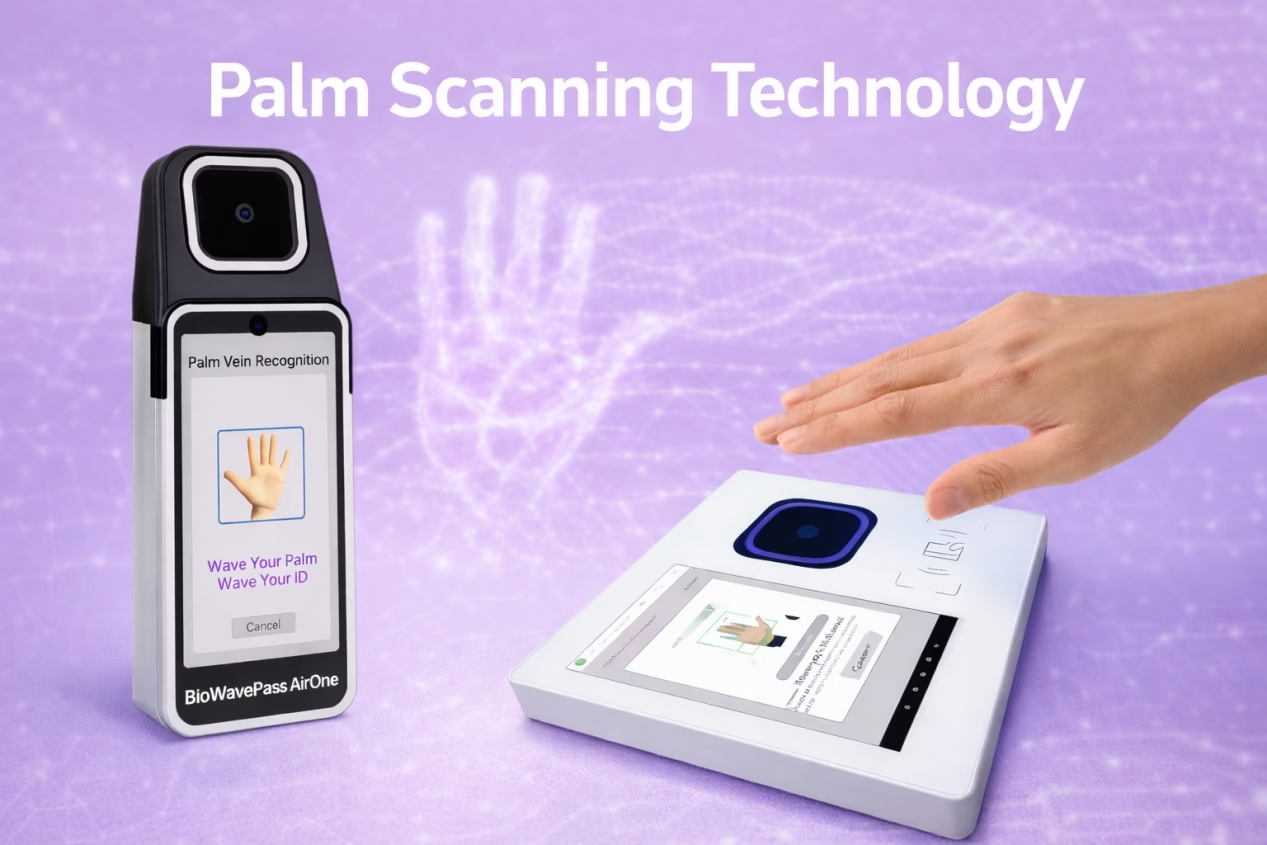
Palm Scanning Technology (Palm Vein Recognition)
Hardware + Software Solutions
High-security, contactless palm vein recognition terminals with SDK integration support for Banking, Government, Telecom, and Enterprise systems
Global Presence
China, UK, Ghana, Middle East, Brazil
Key Industries
Fintech, Bank, Enterprise, Government
Delivery Excellence
Mass Production, Quality Control, On-time Delivery
What Are You Looking For?
Find the information you need about palm scanning technology and solutions
What is Palm Scanning Technology?
Palm scanning typically refers to "palm vein recognition" - a sophisticated biometric technology that captures internal vein patterns for secure identification
Palm Vein Recognition Technology
Palm vein recognition uses near-infrared imaging to capture the unique vein distribution patterns inside the palm. The system creates a digital template from these internal vascular structures and uses it for highly accurate biometric comparison and identification.
Palm Vein Scanning Technology in BioWavePass
RGB Imaging (Surface Layer)
- Captures the visible palm texture, lines, and shape to help with positioning, anti-spoofing, and overall image quality.
- FRR@FAR: 1.002%@1e-6
Infrared Vein Imaging (Sub-Surface Layer)
- Detects the unique palm vein pattern beneath the skin, which cannot be seen by the human eye and is extremely difficult to replicate.
- FRR@FAR: 1.52%@1e-6
Dual-Mode Fusion (RGB + IR)
- Combines surface and sub-surface biometric features to improve accuracy, speed, and stability across different lighting and usage environments, ensuring secure and reliable authentication.
- Combined FRR@FAR: one in a hundred billion
How It Works- Palm Vein Scanning Technology Process
Understanding the deployment logic and technical workflow for procurement and project managers
Hand Positioning
The user places their palm above the scanner. The RGB camera assists with accurate positioning and captures the visible palm surface to support anti-spoofing.
Vein Pattern Capture (Infrared Imaging)
An infrared sensor scans beneath the skin to detect the unique palm vein pattern formed by deoxygenated blood absorbing infrared light.
Feature Extraction
The system converts the captured palm vein image into encrypted biometric feature data. Only mathematical feature points are used for identity matching.
Matching and Verification
The live feature data is compared with the enrolled template to confirm identity with high accuracy and fast response time.
Secure Storage
All palm vein data is AES-256 encrypted and stored only on the customer’s servers. BioWavePass does not manage any data. Transmission is SSL secured, and cloud storage uses AES-256 CBC with encryption on write and decryption on read.
Why Choose Palm Vein Scanning Technology
Transform security with measurable advantages that deliver real business value and procurement confidence
High Security and Accuracy
Palm vein patterns are internal to the human body and invisible to the naked eye, making them extremely difficult to copy or forge. Dual-mode RGB + IR imaging further enhances matching accuracy and reliability.
Contactless and Hygienic
Users simply hold their hand above the device without physical contact. This enables clean, comfortable, and touch-free authentication, ideal for healthcare, banking, retail, and public environments.
Stable and Consistent
Palm vein patterns remain stable throughout a person’s lifetime and are far less affected by surface conditions such as dirt, dryness, sweat, or minor skin damage.
Fast User Experience
Advanced image processing and AI-based matching deliver rapid identity verification while maintaining extremely low false acceptance and false rejection rates.
Privacy and Data Protection
All palm vein data is AES-256 encrypted and stored only on the customer’s servers. BioWavePass does not manage any data. Transmission is SSL secured, and cloud storage uses AES-256 CBC with encryption on write and decryption on read.
Device-Free and Effortless Authentication
No phone, passwords, or physical cards are required. Users simply wave their palm to verify their e-wallet or ID, enabling a seamless, secure, and contactless experience.
Palm Vein Technology Use Cases
Proven industry applications demonstrating the versatility and reliability of palm vein authentication across diverse sectors
Government Digital Identity
Document fraud, identity theft, long queues at service centers
Service counters, self-service kiosks, mobile registration units
National ID systems, e-governance platforms, citizen databases
Banking & High-Risk Transactions
Account fraud, KYC compliance, transaction security
Teller counters, ATMs, mobile banking units, VIP lounges
Core banking systems, KYC platforms, fraud detection systems
Telecom SIM Registration
SIM card fraud, regulatory compliance, identity verification
Retail stores, self-service terminals, mobile registration vans
Customer management systems, regulatory databases, KYC platforms
Election & Voting Systems
Voter fraud, duplicate voting, election integrity
Polling stations, voter registration centers, mobile voting units
Electoral databases, voter registration systems, audit platforms
HR & Payroll Systems
Time theft, buddy punching, payroll inaccuracies
Office entrances, workstations, mobile time clocks
HRIS systems, payroll platforms, ERP solutions
Mobile Workforce Tracking
Location fraud, driver verification, safety compliance
Vehicle terminals, construction sites, mobile apps with GPS
Fleet management systems, GPS tracking, workforce apps
Access Control & Security
Unauthorized access, card sharing, security breaches
Entry gates, turnstiles, secure zones, data centers
Access control systems, CCTV platforms, security management
Healthcare Patient ID
Patient misidentification, medical errors, insurance fraud
Registration desks, bedside terminals, pharmacy counters
EMR systems, patient databases, insurance platforms
Ready to Implement Palm Vein Technology?
Our proven track record across these industries demonstrates the versatility and reliability of palm vein authentication. Contact us to discuss your specific use case and deployment requirements.
BioWavePass Palm Vein Scanning Products
Comprehensive palm vein scanner solutions designed for various security scenarios and commercial applications
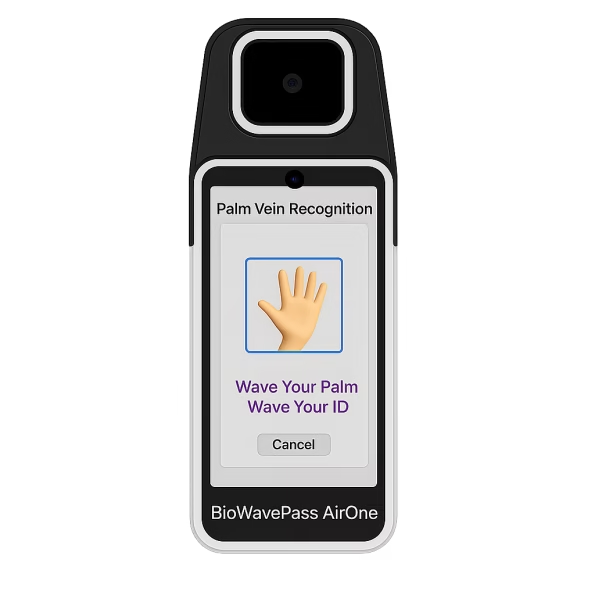
BioWavePass AirOne
Key Features:
- Mobile palm scanning technology for field use
- EMV and PCI architecture ready
- Supports 4G, WiFi, Bluetooth, and USB-C
- Compatible with Palm Vein Wallet, Palm Pay, and e-KYC on the move
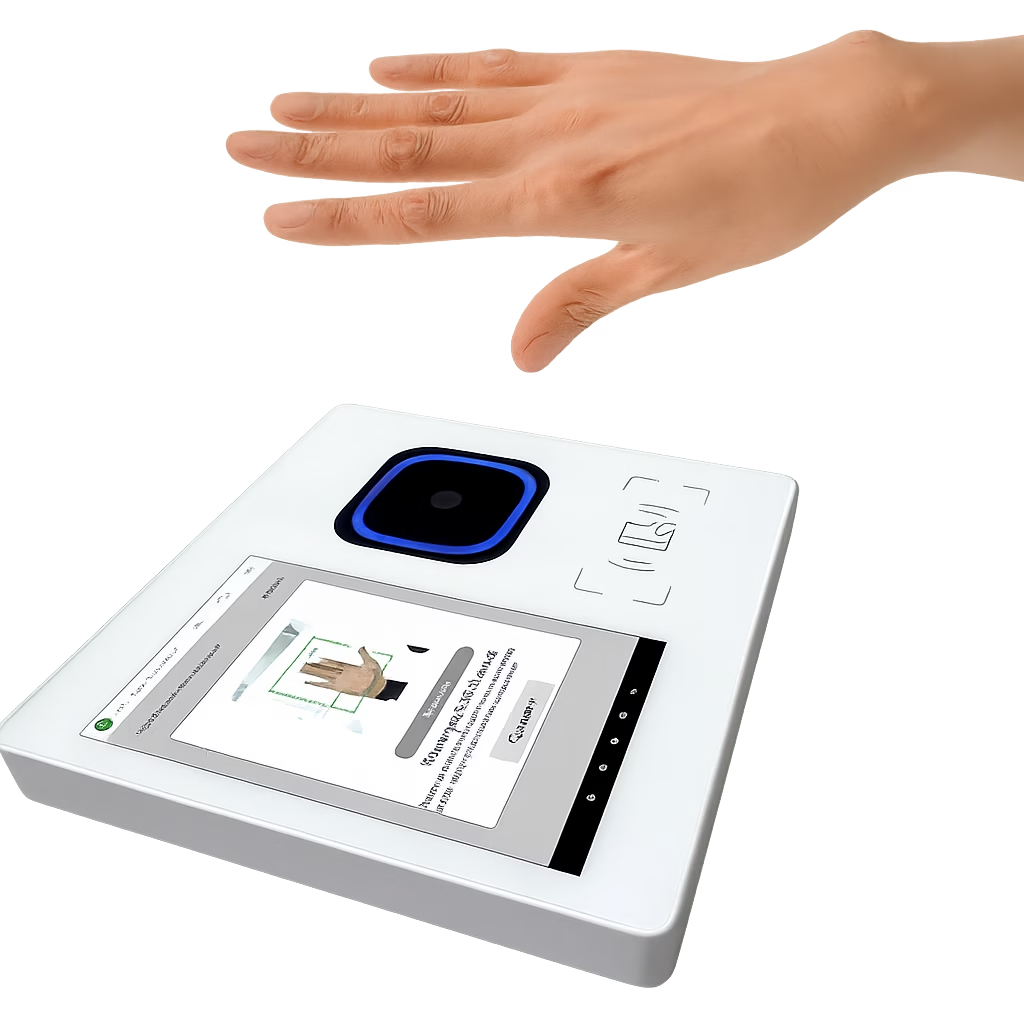
BioWavePass500
Key Features:
- Android all-in-one form factor, fixed installation
- Supports USB-C and WiFi for easy cloud connectivity
- Suitable for in-store payments, membership authentication, and e-KYC at service windows
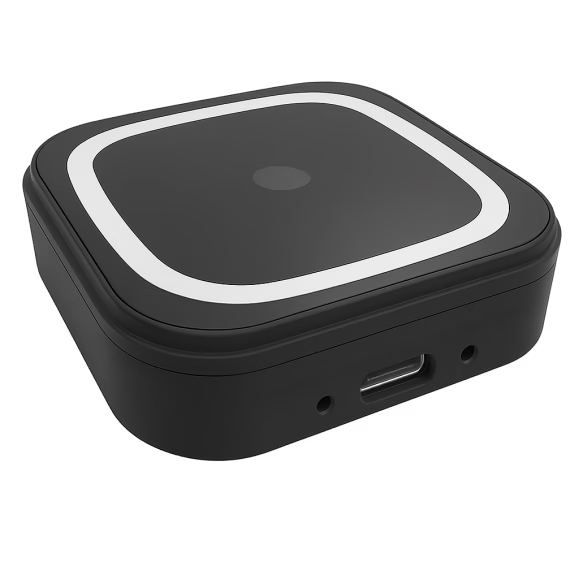
PalmVein01 USB Reader
Key Features:
- USB connection
- Supports multiple platform SDKs: Android, Linux, Windows
- Deep integration with proprietary terminals and systems
Device Comparison Table
| Palm Vein Scanner Product Line | Functions | Platform | Sandbox Demo | Flutter SDK | End-to-End Palm Pay Solution | Usage Scenario |
|---|---|---|---|---|---|---|
| BioWavePass AirOne | Palm Vein, EMV Chip Reader, NFC, QR Scanner | Android 13 Mobile POS | Yes | Yes | Yes | Mobile |
| BioWavePass500 | Palm Vein, QR, IC Card, NFC | Android 11 | Yes | Yes | Yes | Fixed Terminal |
| PalmVein01 USB Reader | USB RGB + IR Biometrics | Android / Windows / Linux | Yes | Yes | Yes | Fixed Device Integration |
Flexible Partnership Models
Local Representative
Exclusive agency agreements for regional market representation and business development
Distribution Partnership
Reseller agreements for partners with existing customer platforms and integration capabilities
OEM/ODM Solutions
White-label and customized solutions for local branding and market-specific requirements
Ready to Partner on Your Next Project?
Let's discuss how we can support your tender requirements and project delivery needs
Frequently Asked Questions
Get answers to common questions about palm vein scanning technology, implementation, and our solutions.
1. What is palm vein recognition technology? −
BioWavePass Palm Vein scanning technology goes beyond traditional IR-only systems. It supports both IR and RGB imaging at the same time, capturing internal vein patterns together with external palm features. By combining IR vein data with RGB surface features, the system builds richer biometric data, improving recognition accuracy, speed, and resistance to spoofing in large-scale databases.
2. How does the RGB + IR dual-mode system work? +
3. Is palm vein scanning contactless? +
4. How secure is palm vein data? +
5. What happens if my hand is dry, dirty, or slightly injured? +
Still have questions?
Our technical team is ready to help you find the right palm vein solution for your project.