Why Is There a License Fee for Palm Vein Recognition Algorithms?
FAQ Guide by BioWavePass
Palm vein recognition is becoming an important biometric technology for payment, identity verification, access control, attendance, fintech platforms, healthcare systems, and large-scale user authentication.
However, some customers may ask a very reasonable question:
“If the palm vein data is stored on our own server, why do we still need to pay for an algorithm license?”
This article explains the logic in a simple and practical way.
1. What Is a Palm Vein Algorithm License?
A Palm Vein Algorithm License is the commercial usage right to use the palm vein recognition engine inside a customer’s own platform or system.
It is not a data storage fee.
It is not simply a hardware fee.
It is the license that allows the customer to use BioWavePass palm vein recognition technology for real biometric identification, including palm image processing, feature extraction, palm vein matching, database comparison, SDK/API integration, and commercial deployment.
In simple terms:
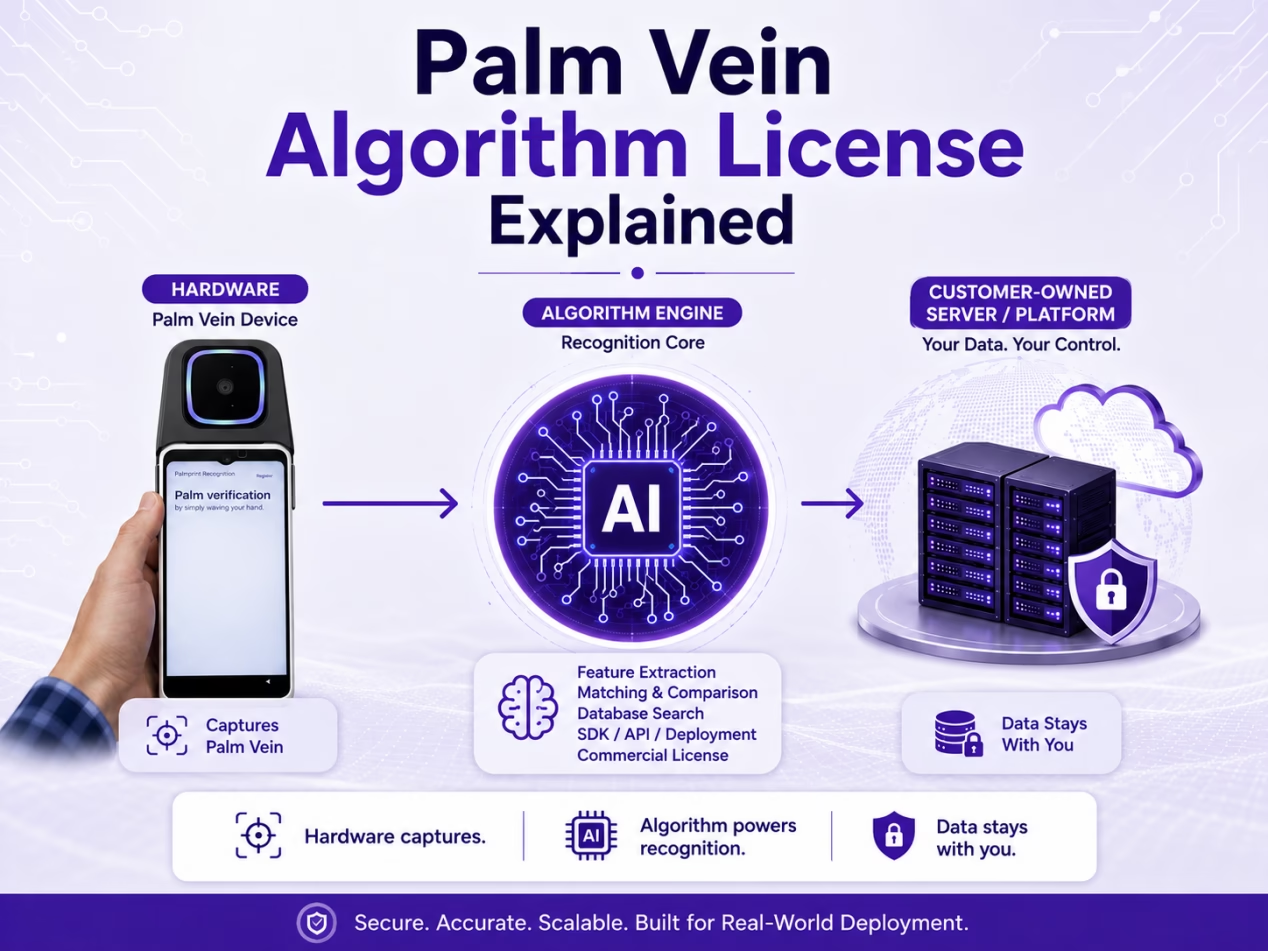
The palm vein device captures the palm image.
The customer’s own server stores and controls the data.
The algorithm license allows the system to recognize and verify users accurately.
Without the algorithm license, the device can capture palm data, but the customer cannot commercially use the BioWavePass recognition engine for large-scale identity verification, payment, access control, attendance, or other biometric applications.
2. Is the License Fee Charged for Data Storage?
No.
The license fee is not charged for data storage.
At BioWavePass, palm vein data and photos are encrypted with AES-256 and stored only on the customer’s own system. BioWavePass does not manage the customer’s database, does not control user data, and does not participate in data operation.
The customer owns and controls the system and data.
The license fee is charged for the palm vein recognition algorithm service package.
3. What Does the Palm Vein Device Do?
The palm vein device is the hardware capture tool.
Its main role is to capture palm images and palm vein data through RGB and NIR imaging. The device helps collect high-quality biometric information from the user’s palm.
But the device itself is not the full recognition system.
Hardware captures the image.
The algorithm makes recognition possible.
4. What Is Included in the Algorithm License Package?
The BioWavePass palm vein algorithm license package includes the core biometric recognition capability required for commercial deployment.
This includes:
- Palm vein feature extraction
- Palm print and palm vein matching
- Database comparison
- SDK/API integration support
- Algorithm deployment package
- Technical documentation
- Commercial usage rights
- Large-scale recognition support
In simple terms, the license is not just a “user ID fee”.
It is the commercial right to use the core palm vein recognition engine inside the customer’s own platform.
5. Why Is a License Still Required If the System Is Deployed on the Customer’s Own Server?
Because deployment location and commercial usage rights are two different things.
A simple example:
Microsoft charges for Windows or Office licenses, even if the software is installed on your own computer.
Google Maps charges businesses for API usage when the map service is integrated into commercial platforms.
OCR providers charge for text recognition capability, not for the scanner itself.
AI recognition platforms charge for the recognition engine, not for the camera hardware.
Palm vein recognition follows the same logic.
The customer’s own server stores the data.
But the algorithm license allows the customer to commercially use the recognition engine.
6. Is the License Fee Related to Who Owns the Data?
No.
The customer owns the data.
BioWavePass provides the hardware, SDK, algorithm deployment package, and technical support.
The license fee is related to the commercial use of the biometric recognition algorithm, not to data ownership.
This is an important distinction.
Data ownership belongs to the customer.
Algorithm usage rights are licensed by BioWavePass.
7. Why Is Palm Vein Recognition Not Just a Hardware Business?
Palm vein recognition is not only about scanning a hand.
For real commercial deployment, the system must support:
- Stable recognition accuracy
- Fast matching speed
- Secure biometric data processing
- Reliable SDK/API integration
- Large-scale database comparison
- Long-term deployment support
- Smooth upgrade from POC to commercial rollout
This is why the algorithm layer is critical.
The real value of biometric technology is not only in the device, but also in the algorithm, integration, and scalable deployment capability.
8. Does BioWavePass Support POC and MVP Testing?
Yes.
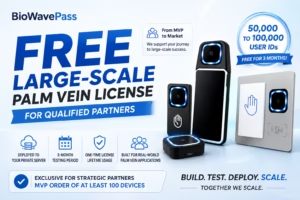
For POC and MVP testing, BioWavePass supports customers with a free license for up to 10,000 user IDs.
This allows customers to test the device, SDK, integration process, and business model before moving into larger commercial deployment.
When the project enters commercial rollout, the customer can purchase a larger algorithm license package based on the required user ID volume.
9. Final Summary
The palm vein device captures the image.
The customer’s own server stores and controls the data.
The BioWavePass algorithm powers the recognition.
Therefore, the license fee is not a data storage fee.
It is the commercial license for using the palm vein recognition algorithm service package inside the customer’s own platform.
For customers building palm payment, identity verification, access control, workforce attendance, fintech, healthcare, or large-scale authentication systems, the algorithm license is what enables the solution to move from basic testing into real commercial deployment.
Contact BioWavePass
To learn more about BioWavePass palm vein devices, SDK integration, and algorithm license packages, please contact us through:
Share this article
About the Author

You might also like
Scaling Palm Vein Payment: Single Server or Kubernetes Cluster?
Before You Scale Palm Vein POS: A Terminal Management Checklist
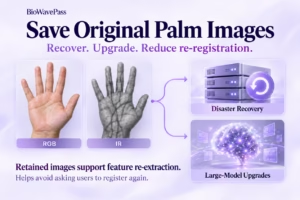
Why Saving Original Palm Images Matters for Biometric Recovery and Future Upgrades By BioWavePass
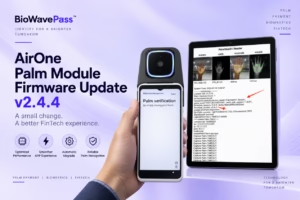
Optimizing Palm Payment Performance: AirOne Palm Module Firmware v2.4.4
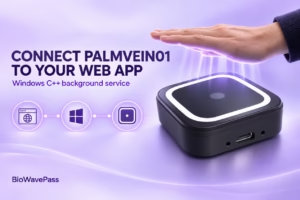
Bringing Palm Vein Scanning into a Web Workflow
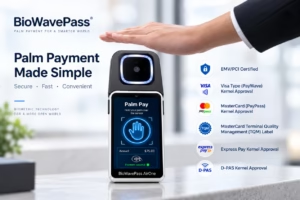
From Palm Payment MVP to Commercial Deployment: Building a Scalable Biometric Payment System
How to Integrate a USB Palm Vein Scanner with a POS Terminal
Palm Payment Goes Live in Azerbaijan: From Biometric Technology to Real-World Payment
From MVP to Market: Scaling Palm Vein Technology with BioWavePass