Why Palm Vein Technology Is Emerging as a Payment-Grade Biometric Standard
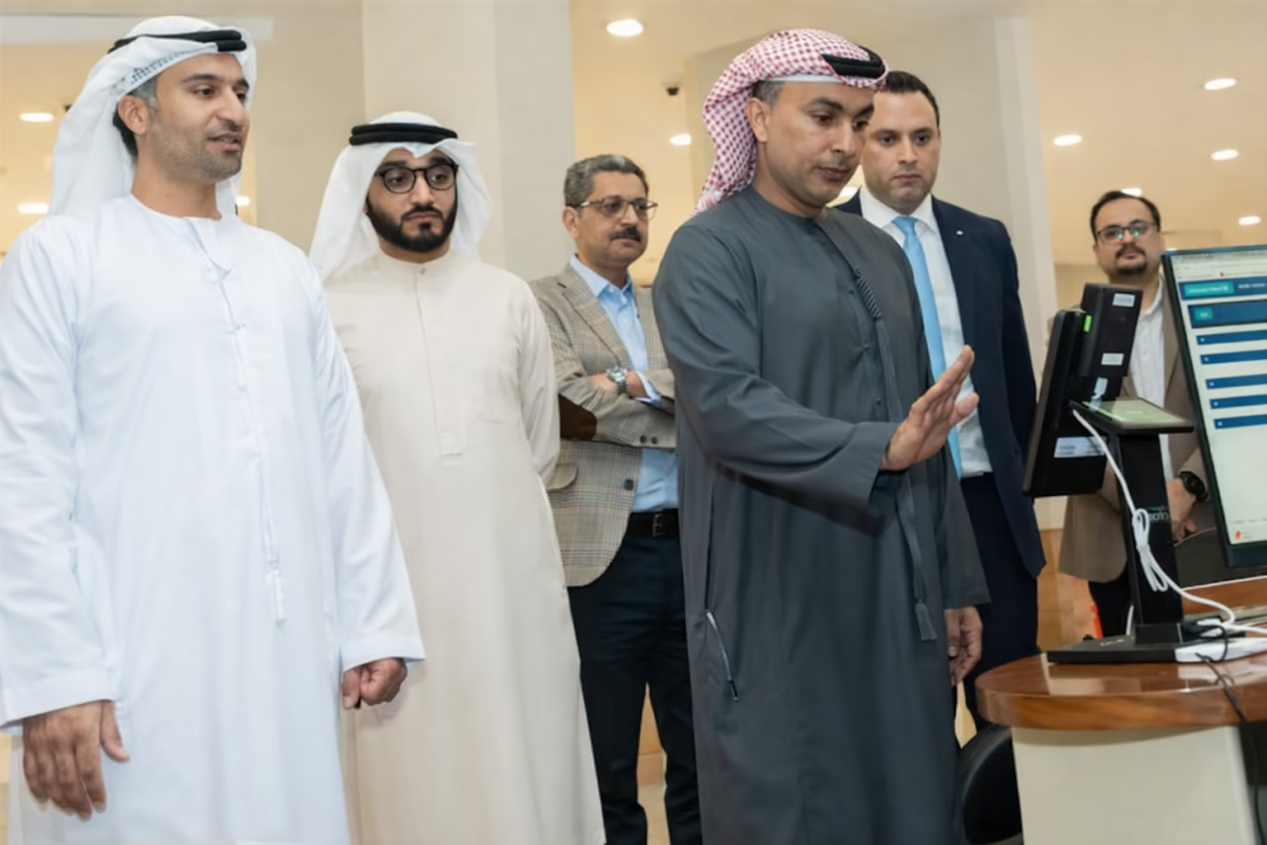
The recent announcement that the UAE Central Bank has launched the Middle East’s first central bank–led biometric payment proof of concept marks an important milestone for the region’s payment ecosystem.
As biometric payments move from isolated pilots into regulator-led validation, one question is becoming increasingly clear: not all biometric technologies are suitable for payment-grade systems.
At BioWavePass, we focus on palm vein technology because it directly addresses the core challenges faced by banks, wallets, and government-backed payment initiatives. These challenges are not about novelty or speed alone. They are about security, scalability, governance, and long-term trust.
Payment-Grade Biometrics Are Fundamentally Different
Biometric systems used for access control or attendance are typically designed for low-risk environments. Payment systems are not.
A payment-grade biometric system must support:
- High-frequency, real-world usage
- Large and growing user databases
- Integration with existing payment and wallet platforms
- Clear data ownership and regulatory compliance
Palm vein technology operates in this higher security tier by design.
Why Palm Vein Technology Fits Financial and Government Use Cases
Palm vein authentication relies on sub-dermal vascular patterns rather than surface-level features. This provides inherent advantages for payment and identity applications:
- Non-contact authentication, suitable for public and high-traffic environments
- Low spoofing risk, as vein patterns are internal and dynamic
- Stable biometric features across age groups and physical conditions
- Consistent performance for both enrollment and verification
These characteristics make palm vein technology particularly well suited for financial services, e-KYC, and government-scale identity systems.
Designed for Scale, Not Just Demonstrations
Many biometric payment pilots fail when transitioning from demonstration to deployment. The challenge is rarely the sensor itself. It is the system architecture behind it.
BioWavePass is designed to support:
- Large-scale biometric databases
- High-throughput authentication workflows
- Multi-device and multi-location deployments
- Seamless upgrades from small-scale pilots to enterprise environments
Projects can start small and scale without re-enrollment or data migration, which is critical for national or multi-institution rollouts.
Data Ownership and Security by Design
In payment and government projects, biometric data governance is not optional.
BioWavePass follows a strict data ownership and security model:
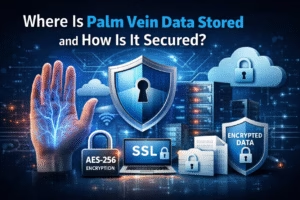
- All palm vein data is stored on customer-controlled local servers or customer cloud environments
- BioWavePass does not store, access, or manage customer biometric data
- Encrypted transmission using HTTPS and SSL
- Cloud and local storage encryption using AES-256-CBC
- Data is encrypted on writing and decrypted only during authorized read operations
This architecture aligns with regulatory expectations and reduces long-term compliance risk.
Integration Over Replacement
Palm vein technology does not replace existing payment systems. It strengthens them.
BioWavePass is designed to integrate with:
- Existing POS infrastructures
- Digital wallets and payment platforms
- e-KYC and identity verification systems
By acting as a biometric authentication layer, palm vein technology enhances security while preserving existing payment workflows and prior investments.
The Road Ahead
Across the Middle East and other regions, regulators and financial institutions are actively evaluating biometric payments within controlled environments. The direction is clear.
Biometric payments are moving toward regulator-approved, payment-grade implementations, where technology is evaluated not by novelty, but by security, scalability, and governance.
BioWavePass is built for this future.
Final Thought
Palm vein technology is not about faster checkouts or futuristic demos.
It is about building trustworthy biometric authentication for the next generation of payment and identity systems.
شارك هذه المقالة
نبذة عن الكاتب

قد يعجبك أيضاً
How Does Tokenization Work in Palm Vein Payment Architecture?
Can Palm Registration and Payment Be Done in One Tap? A Practical View from BioWavePass
As a Developer, How Can We Upgrade from a Small Model to a Large Model Palm Vein Recognition Algorithm Without Re-Registering Users?
How Secure Is Palm Vein Technology Against Spoofing Attacks?
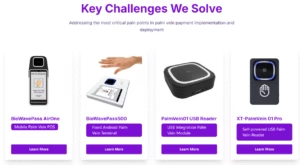
How to Choose the Right Palm Vein Recognition Device for Your Project?
Why Is It Not Recommended to Use a Single Palm Scan for Both Identification and Registration?
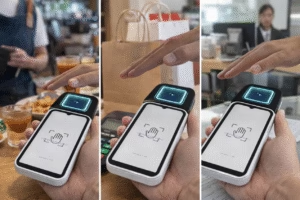
What Is the Next-Gen Contactless Payment Method?
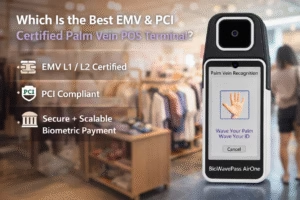
Which Is the Best EMV & PCI Certified Palm Vein POS Terminal?
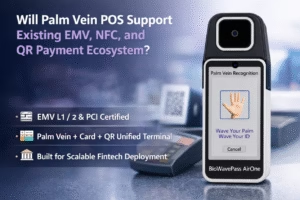
Will Palm Vein POS Support Existing EMV, NFC, and QR Payment Ecosystem?