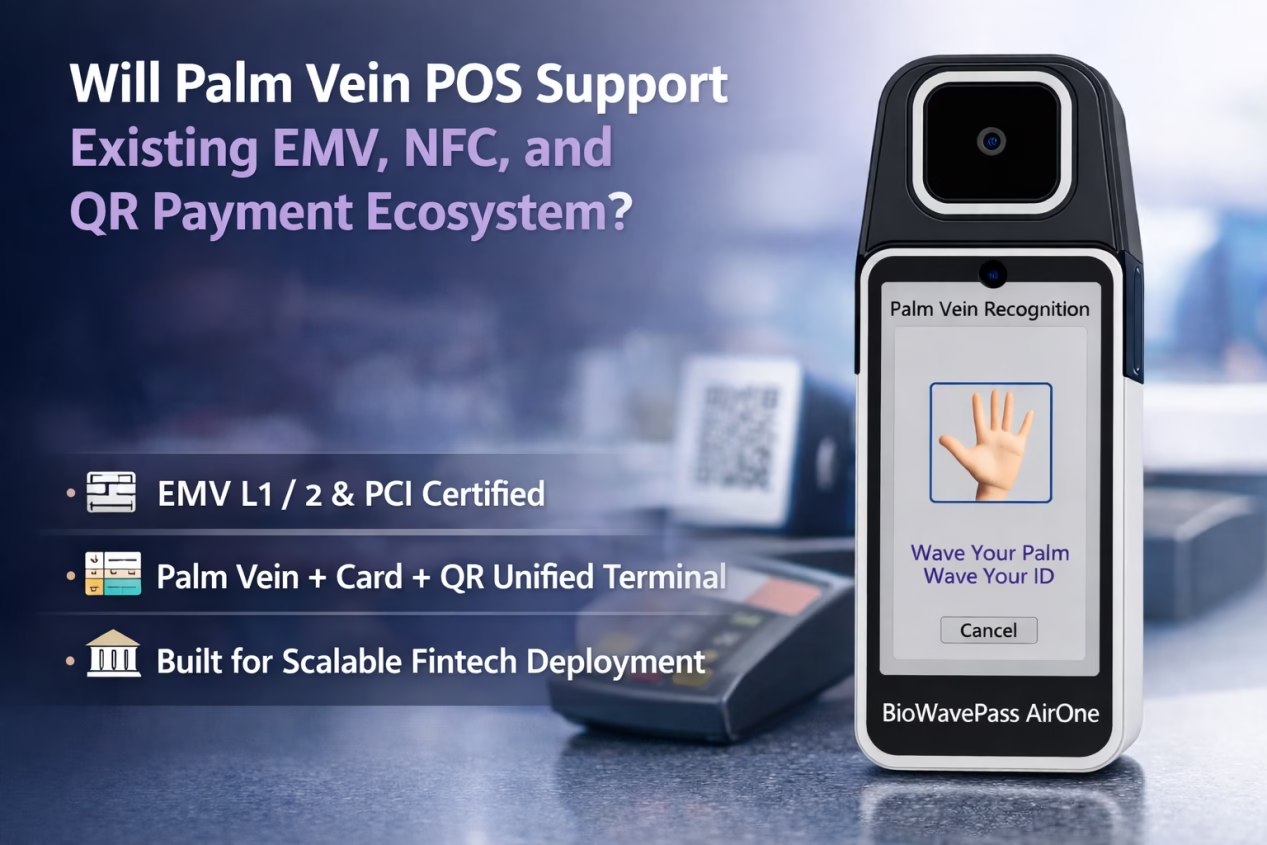
Will Palm Vein POS Support Existing EMV, NFC, and QR Payment Ecosystem?
For banks, fintech platforms, and e-wallet providers, introducing biometric authentication is never about replacing what already works.
It is about strengthening it.
The key question is simple:
Can palm vein authentication integrate seamlessly into our existing EMV, NFC, and QR payment infrastructure without disruption?
إن BioWavePass AirOne mobile palm vein POS was designed precisely for this reality.
Does AirOne Replace or Complement Existing Payment Methods?
AirOne complements your existing ecosystem. It does not replace it.
The device supports:
- EMV chip transactions
- EMV contactless payments
- NFC-based payments
- QR code payments
- Palm vein biometric authentication
This means your customers can continue using traditional cards and QR wallets while palm vein becomes an additional authentication or payment option.
For banks and fintech providers, that flexibility is essential.
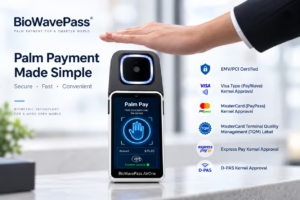
Is AirOne EMV and PCI Certified?
Yes.
AirOne is certified with:
- EMV Level 1
- EMV Level 2
- PCI compliance
This ensures the terminal meets international payment standards required for financial-grade deployment.
From a compliance and risk perspective, this significantly reduces integration barriers.
How Does Palm Vein Fit into the Payment Flow?
AirOne runs on Android and integrates into your existing payment application via SDK and API.
Palm vein authentication can be configured as:
- A primary authentication method
- A second-factor verification layer
- A biometric login for e-wallet payments
- A secure alternative to PIN entry
Your development team defines how biometric verification fits within your backend, settlement, and risk engine architecture.
BioWavePass provides:
- Android Native Java SDK (free)
- Android Flutter SDK (paid)
- API documentation
- Private server deployment guidance
What About Data Governance and Regulatory Compliance?
For regulated financial institutions, data control is critical.
BioWavePass provides the algorithm and device-level SDK only.
All palm vein templates and transaction-related data can be stored on:
- Your own local servers
- Your private cloud infrastructure
BioWavePass does not manage, store, or access end-user biometric data.
This structure allows banks and fintech companies to align with GDPR and other regional payment regulations based on their own compliance frameworks.
Can It Scale for Large User Bases?
Yes.
Licensing is structured to support pilot programs and national rollouts:
- 10,000 user IDs free for testing
- 100,000 user ID license package
- 1 million user ID license package
- No upper limit on total registrations
This makes AirOne suitable for:
- City-level pilots
- National e-wallet ecosystems
- Government digital payment initiatives
Scalability depends on your backend infrastructure, not device limitations.
What Connectivity Options Are Available?
AirOne supports:
- 4G connectivity
- Wi-Fi
- Bluetooth
This allows deployment in retail environments, banking branches, transport systems, and mobile field operations.
Is This a Plug-and-Play Consumer Device?
No.
Palm vein payment is part of a broader payment ecosystem.
Successful deployment requires:
- A mature payment software platform
- Backend settlement infrastructure
- An e-wallet or banking application
- A capable development team
BioWavePass typically partners with banks and fintech companies that already operate payment systems.
Final Perspective: Evolution, Not Replacement
EMV, NFC, and QR payments remain core to modern payment ecosystems.
Palm vein authentication adds:
- Stronger identity verification
- Reduced fraud risk
- A frictionless biometric experience
The BioWavePass AirOne enables biometric integration without disrupting your existing payment infrastructure.
It supports what you already operate.
It strengthens transaction security.
It scales with your growth strategy.
For banks and fintech leaders evaluating biometric payment integration, compatibility with existing systems is not optional.
AirOne was built with that priority in mind.
تعرّف على المزيد من: https://biowavepass.com/mobile-palm-vein-pos-terminal/
شارك هذه المقالة
نبذة عن الكاتب

قد يعجبك أيضاً
Scaling Palm Vein Payment: Single Server or Kubernetes Cluster?
Before You Scale Palm Vein POS: A Terminal Management Checklist
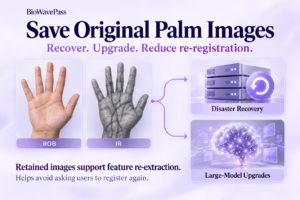
Why Saving Original Palm Images Matters for Biometric Recovery and Future Upgrades By BioWavePass
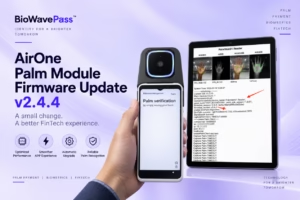
Optimizing Palm Payment Performance: AirOne Palm Module Firmware v2.4.4
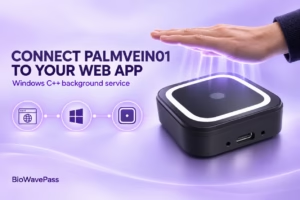
Bringing Palm Vein Scanning into a Web Workflow
From Palm Payment MVP to Commercial Deployment: Building a Scalable Biometric Payment System
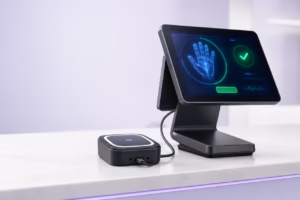
How to Integrate a USB Palm Vein Scanner with a POS Terminal
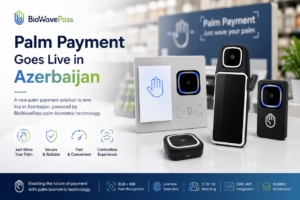
Palm Payment Goes Live in Azerbaijan: From Biometric Technology to Real-World Payment
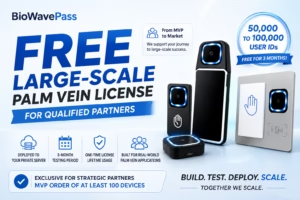
From MVP to Market: Scaling Palm Vein Technology with BioWavePass