What Is the Next-Gen Contactless Payment Method?
Contactless payment has evolved rapidly over the past decade. From tap-to-pay cards to mobile wallets and QR codes, consumers have grown accustomed to faster and more convenient transactions. However, most of these systems still depend on something the user carries — a card, a phone, or a wearable device.
The next generation of contactless payment moves beyond devices. It focuses on identity itself.
From Device-Based to Identity-Based Payment
Traditional contactless methods verify a payment instrument. A card chip is authenticated. A smartphone token is validated. A QR code is scanned.
Next-generation contactless payment verifies the person.
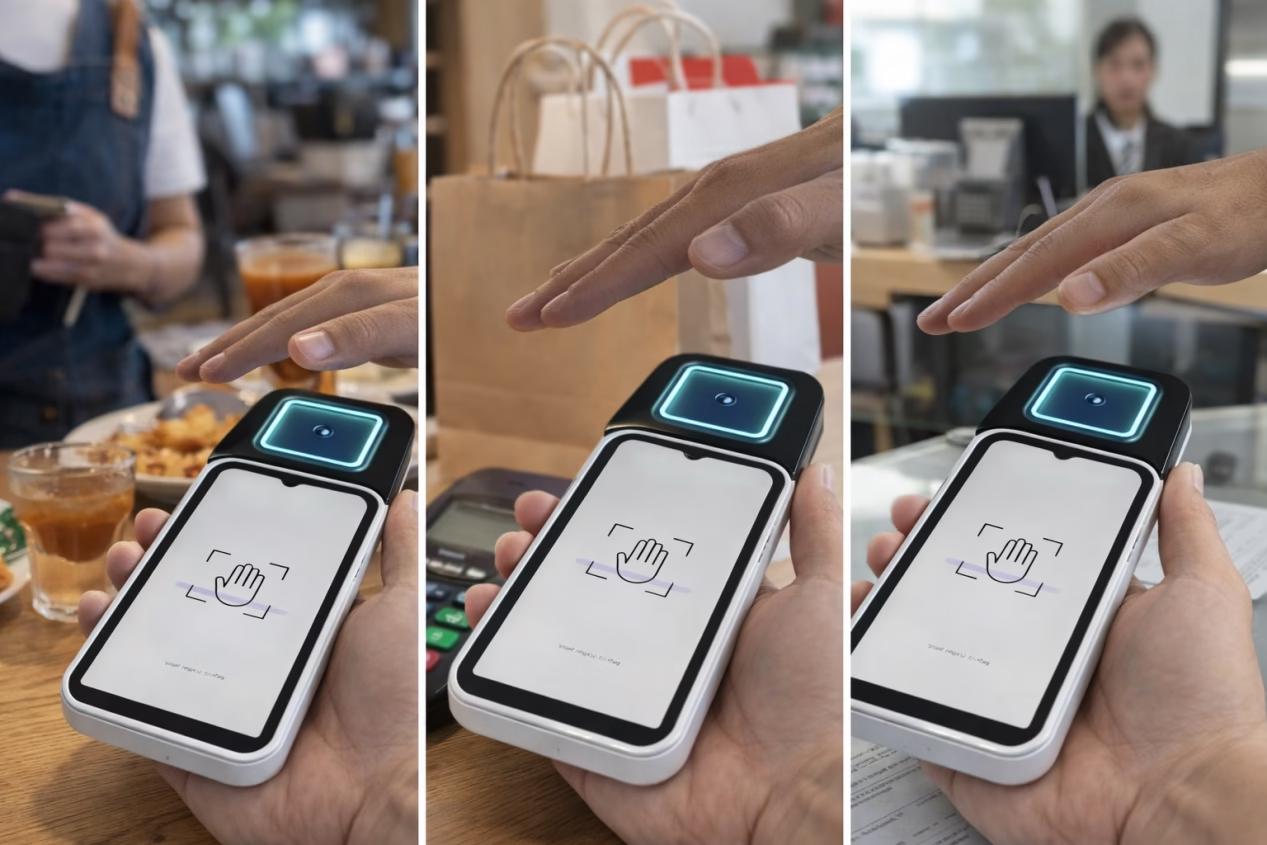
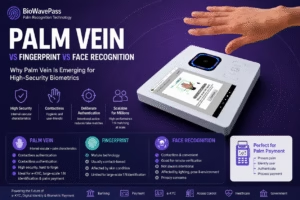
Palm Vein Payment uses near-infrared imaging to capture the unique vein pattern inside a user’s palm. Because vein structures are internal and invisible to the naked eye, they are significantly more secure and resistant to spoofing compared to surface biometrics.
This shift represents a fundamental change in payment authentication: the human identity becomes the credential.
Why Palm Vein Is the Future
Palm vein technology offers several advantages over traditional methods:
- No physical contact required
- No card or device needed
- No PIN entry
- Extremely difficult to replicate
For financial institutions and fintech platforms, this means reduced fraud risk, lower operational friction, and stronger identity assurance.
Palm Vein Payment is particularly suited for:
- Banking and fintech deployments
- Government disbursement programs
- Healthcare identity verification
- Agent banking and field operations
- High-security enterprise environments
BioWavePass: Built for Next-Generation Payment
BioWavePass develops advanced palm vein payment terminals designed for secure, scalable deployment.
Unlike add-on biometric modules, BioWavePass devices are engineered as fully integrated systems. They combine:
- Palm vein recognition hardware
- Android-based secure processing
- 4G and WiFi connectivity
- USB communication
- Centralized device management
This integration improves stability, simplifies deployment, and enables large-scale rollouts across distributed networks.
AI-Driven Matching for Large-Scale Identity Systems
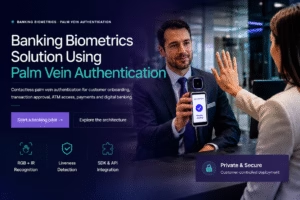
BioWavePass solutions capture both RGB and IR feature points to enhance biometric precision. The system uploads palm images together with extracted feature data, supporting large private ID databases.
In high-capacity database testing environments, the algorithm architecture achieves:
- Up to 99.9% successful matching accuracy
- Matching speed as fast as 0.35 seconds
This is not a basic infrared comparison system. It is built on an AI-driven biometric framework designed for financial-grade authentication.
The Future of Contactless Is Biometric
The next generation of contactless payment is not about tapping faster. It is about authenticating smarter.
Palm Vein Payment removes dependency on cards and devices while strengthening identity assurance. As digital ecosystems demand higher security and seamless user experience, biometric-based payment is becoming the logical progression.
BioWavePass is positioned at the forefront of this transition, enabling secure, frictionless, identity-driven payment solutions.
Learn more: https://choosepalmveinpay.com/
شارك هذه المقالة
نبذة عن الكاتب

قد يعجبك أيضاً
Bringing Palm Vein Scanning into a Web Workflow
From Palm Payment MVP to Commercial Deployment: Building a Scalable Biometric Payment System
How to Integrate a USB Palm Vein Scanner with a POS Terminal
Palm Payment Goes Live in Azerbaijan: From Biometric Technology to Real-World Payment
From MVP to Market: Scaling Palm Vein Technology with BioWavePass
Palm Vein Payment: How Biometric Payments Work Without Cards or Phones
Palm Vein vs Fingerprint vs Face Recognition: Why Palm Vein Is Emerging for High-Security Biometrics
BioWavePass Palm Vein Scanner Products Receive Design Patent Certification
Palm Vein Authentication: The Future of Secure Digital Identity and Payments