Asia Pacific Palm Vein Scanner Boom: How BioWavePass Is Powering the Future
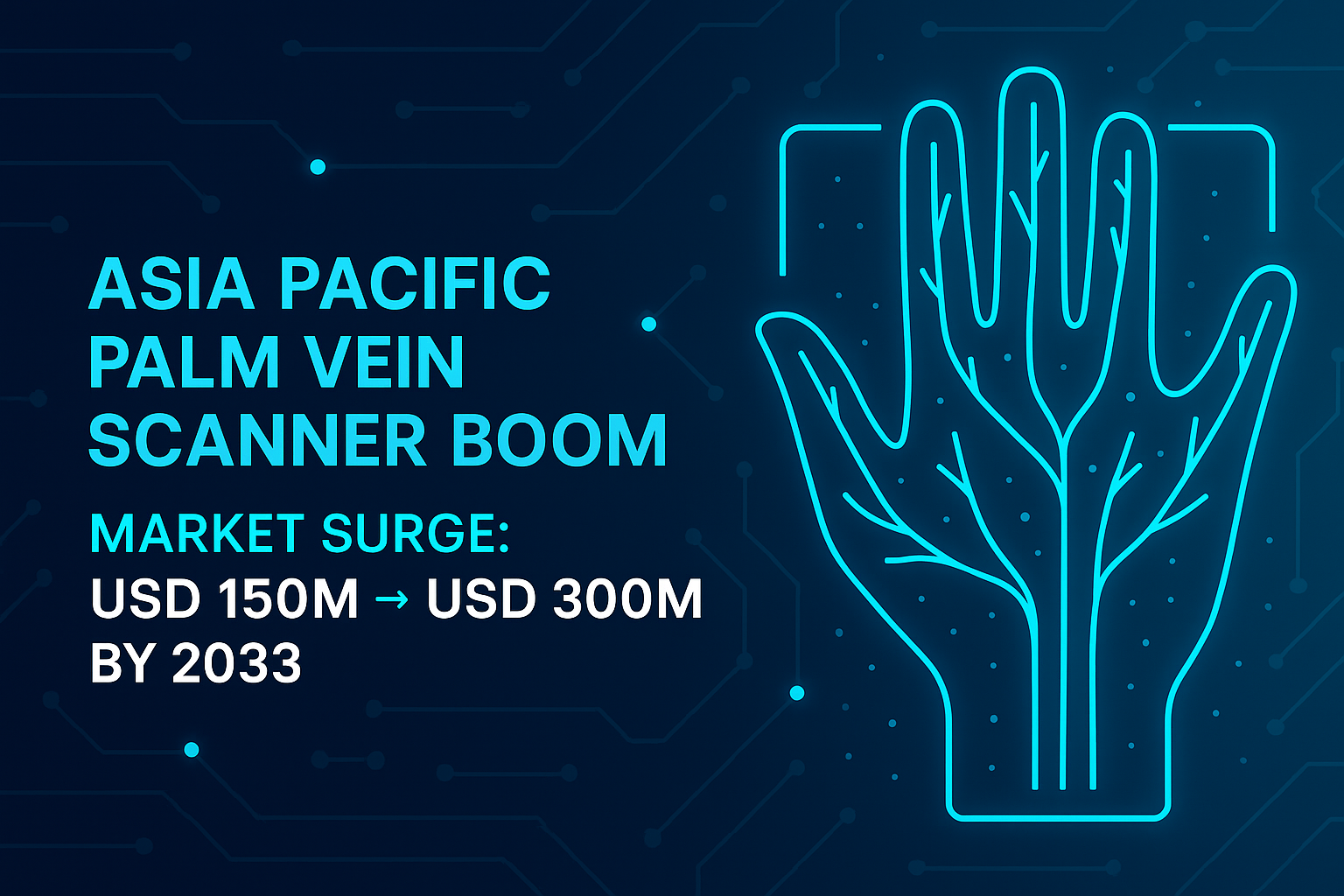
📈 Market Surge: USD 150M → USD 300M by 2033
The Asia Pacific Palm Vein Reader Market is projected to grow from USD 150 Million in 2024 to USD 300 Million by 2033, at a CAGR of 8.5%. As biometric adoption accelerates, BioWavePass, the palm vein division of X-Telcom Limited, stands at the forefront—offering advanced palm vein scanners optimized for high-security, high-frequency environments.
🔍 Why Asia Pacific Leads the Way
Home to the world’s fastest biometric infrastructure rollouts.
Key Growth Drivers:
- 📲 Digital Identity Demand: Governments investing in e-ID & subsidy systems
- 💸 Financial Security: Banks adopting vein-based ATMs for fraud protection
- 🏥 Healthcare Biometric ID: For patients, insurance, prescriptions
- 🦠 Post-COVID Hygiene: Contactless is the new global standard
📊 Asia Pacific biometrics CAGR: 18.6% (2024–2030)
🏙️ Urban population: 3.3 billion by 2030
🏢 Top Asia-Pacific Palm Vein Reader Manufacturers
- Fujitsu
- BioWavePass ( X-Telcom Limited)
- NEC Corporation
- M2SYS Technology
- BioSec Group
- Recogtech B.V.
- IDLink Systems
- Mofiria
- BioEnable Technologies
- Dakar Software Systems
- 3M
- Mantra Infotech
- Matrix Security Solutions
BioWavePass (X-Telcom Limited) is emerging as a strong regional contender—co-developing solutions with Asia’s largest Palm Pay platforms to meet new regional standards for scale, accuracy, and cloud readiness.
🌟 Why Partners Choose BioWavePass
- ✅ RGB + IR (vein + palm print fusion)
- ✅ Match speed under 0.35 seconds
- ✅ 99%+ accuracy with real private databases
- ✅ Combo: Palm + QR in one device (BOM optimization)
- ✅ Supports Cloud or On-Prem deployments
- ✅ MDM: Location control + remote lock
- ✅ SDK & API for Android / Linux / Windows
📊 Market Growth by Category
🎯 By Application
- Healthcare
- Banking and Financial Services
- Government and Defense
- Retail
- Transportation
- Education
🛠️ By Technology
- Contact-based Palm Vein Readers
- Contactless Palm Vein Readers
- Portable Palm Vein Readers
☁️ By Deployment Mode
- On-premises
- Cloud-based
🔧 By Component
- Hardware
- Software
- Services
👥 By End User
- Hospitals and Clinics
- Financial Institutions
- Government Agencies
- Retail Chains
- Educational Institutions
🔮 Market Intelligence Growth by 2033
By 2033, the market research ecosystem in Asia Pacific is projected to exceed $120 billion, driven by:
- 🚀 AI and machine learning adoption
- 📱 Mobile-first user base and digital economy
- 🌐 Cloud-based biometric deployment
- 📊 Predictive analytics for ID behavior and authentication trends
Governments and enterprises in China, India, Japan, and Southeast Asia are investing heavily in digital infrastructure, making the region a prime launchpad for biometric innovation.
🌍 Country-Level Highlights
| Country | Sector Innovation Highlights |
|---|---|
| 🇨🇳 China | Smart cities, Palm Pay subsidies, AI-linked e-ID |
| 🇮🇳 India | Aadhaar-linked hospital ID, MedTech verification |
| 🇯🇵 Japan | Elder care biometrics, robotics-integrated access |
| 🇰🇷 S. Korea | Education biometrics, public fintech access |
| 🇸🇬 Singapore | Fintech onboarding, school check-ins |
| 🇦🇺 Australia | Green tech cities, healthcare authentication |
🤖 Future Trends (2026–2033)
- 🔋 Portable, battery-powered palm readers
- ☁️ Palm-as-a-Service via cloud APIs
- 🧠 AI-powered biometric matching engines
- 📦 Subscription-based identity models
- 🌱 Eco-friendly hardware for secure ID
Palm Vein Scanning is moving beyond innovation—it’s becoming infrastructure.
📞 Join the Future of Biometric Authentication
Contact BioWavePass (X-Telcom Limited):
BioWavePass — Your Palm. Your ID. Just a Wave.
Share this article
About the Author

You might also like
Bringing Palm Vein Scanning into a Web Workflow
From Palm Payment MVP to Commercial Deployment: Building a Scalable Biometric Payment System
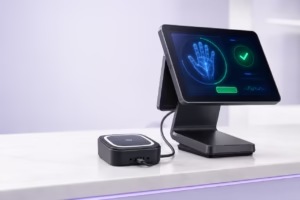
How to Integrate a USB Palm Vein Scanner with a POS Terminal
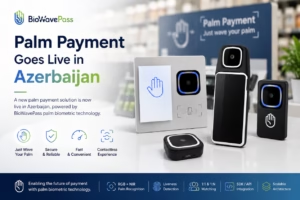
Palm Payment Goes Live in Azerbaijan: From Biometric Technology to Real-World Payment
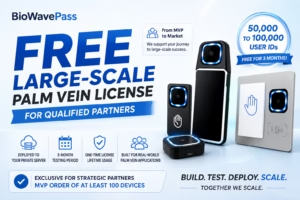
From MVP to Market: Scaling Palm Vein Technology with BioWavePass
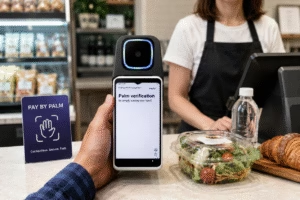
Palm Vein Payment: How Biometric Payments Work Without Cards or Phones
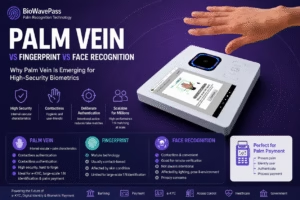
Palm Vein vs Fingerprint vs Face Recognition: Why Palm Vein Is Emerging for High-Security Biometrics
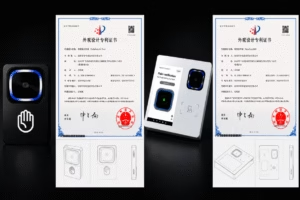
BioWavePass Palm Vein Scanner Products Receive Design Patent Certification
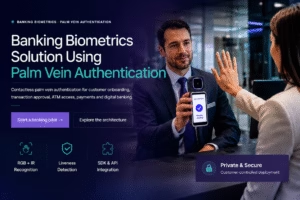
Palm Vein Authentication: The Future of Secure Digital Identity and Payments