How Palm Vein Biometrics Can Be Integrated Into Mobile Payment Systems: A BioWavePass Implementation Guide
Introducción
As digital payments continue to evolve, fintech developers face a critical challenge:
How do you strengthen identity verification for payments without adding friction for users?
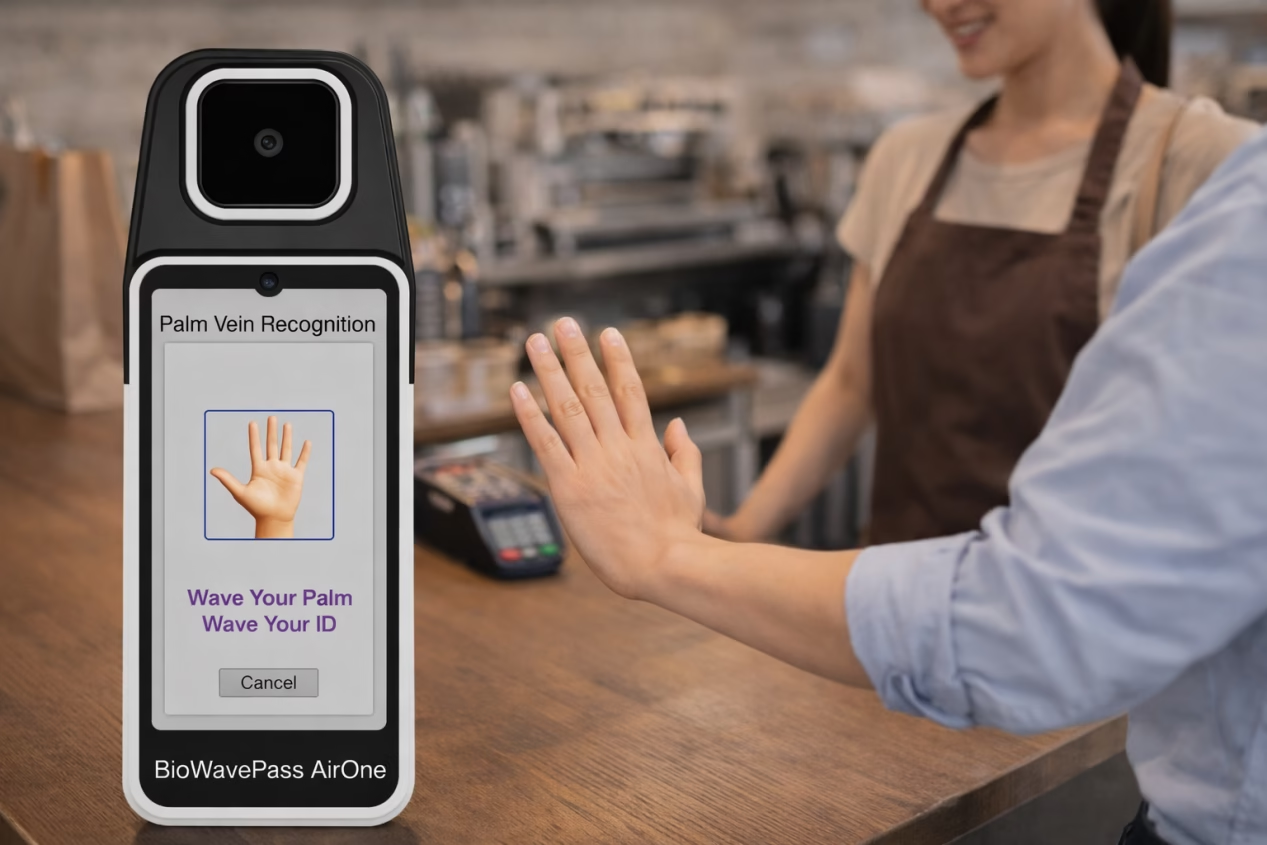
Palm vein authentication is emerging as one of the most secure and user-friendly answers. Users simply hover their palm above a scanner to verify identity. Because palm vein patterns exist beneath the skin, they cannot be photographed, copied, or easily forged. This makes them highly suited for financial applications where trust, compliance, and real-world usability must coexist.
BioWavePass palm vein solutions are designed to help fintech platforms integrate biometric identity verification safely and efficiently into mobile and in-store payment environments.
Why Palm Vein Authentication Fits Mobile Payments
Compared with traditional authentication methods, palm vein biometrics provide several unique advantages:
- Fully contactless authentication
- Internal biological features that cannot be duplicated
- High-accuracy matching with RGB + IR dual-mode imaging
- Verification speed typically under one second
- Encrypted biometric template handling
For fintech systems, this means:
✔ Stronger account protection
✔ Lower fraud and identity misuse risk
✔ Reduced operational friction
✔ Better consistency in high-traffic environments
Palm authentication adds a secure identity layer, while keeping the familiar payment experience intact.
How BioWavePass Integrates With Mobile Payment Architecture
A palm-enabled payment workflow typically includes four core elements:
- A mobile wallet or banking application
- A BioWavePass palm vein scanning device
- An identity and transaction processing platform
- The merchant POS or billing system
BioWavePass follows a clear principle:
Palm vein recognition enhances the identity layer. It does not disrupt the existing payment flow.
This means fintech platforms can introduce biometrics safely, without rewriting their entire stack.
Example Workflow: How Palm Vein Payments Operate
Step 1: Palm Vein Enrollment
The user completes a one-time registration:
- The palm vein pattern is captured using a BioWavePass device
- The data is converted into a secure encrypted template
- The template is linked to the user account or wallet
- The template is stored securely, not as a raw image
Step 2: Identity Verification at Checkout
When the user wants to pay:
- They hold their palm above the scanner
- The palm template is matched against the secure database
- Identity verification is completed
- Payment authorization is triggered
Verification is typically completed in less than one second.
Step 3: Payment Processing
The backend performs:
- Account balance validation
- Risk and fraud checks
- Transaction posting
- Audit logging
Palm vein authentication remains the identity factor, not the payment method itself.
This ensures that compliance, security controls, and financial rules remain unchanged.
How BioWavePass Protects Biometric Data
Security and privacy sit at the core of BioWavePass technology.
✔ AES-256 encryption for all palm data and images
All palm vein data and associated images are protected using AES-256 encryption.
✔ Data stored only on the customer’s own servers
All encrypted data is stored only on the customer’s own local or cloud servers.
BioWavePass does not store, manage, or access biometric data under any circumstances.
✔ No reverse reconstruction
Encrypted biometric templates cannot be reverse-engineered.
✔ Separation of identity and payment logic
System architecture ensures data isolation and risk control.
This delivers a customer-controlled, privacy-first, fully secured biometric ecosystem.
Supported Integration Scenarios
BioWavePass palm vein systems can be integrated into:
- Mobile POS payment terminals
- Wallet-based payment authentication
- e-KYC identity verification
- Banking onboarding
- Retail checkout
- Subscription and billing verification
- Public service and subsidy programs
- Transportation and ticketing
- Healthcare payment and identity workflows
Wherever authentication and payment meet, palm vein technology is applicable.
Why Fintech Teams Choose Palm Vein Authentication
Developers and financial institutions value palm authentication because it:
✔ Reduces identity fraud and account takeover
✔ Works in real-world high-traffic environments
✔ Protects user privacy
✔ Delivers consistent identity matching
✔ Supports secure AES-256 encryption
✔ Integrates without restructuring payment rails
It is secure, frictionless, and built for long-term deployment.
Frequently Asked Questions
1. Is palm vein data stored as an image?
All palm vein data and images are encrypted using AES-256 and stored only on the customer’s own local or cloud servers. BioWavePass does not store, access, or manage any biometric data. This ensures complete data security and customer-controlled privacy protection.
2. Is the system contactless?
Yes. Users do not need to touch the device.
3. How fast is authentication?
Typically less than one second.
4. What happens if the user changes devices?
Authentication is linked to the account, not the phone.
5. Does BioWavePass support cloud or local matching?
Both models are supported.
6. Is palm scanning safe for users?
Yes. It uses non-harmful infrared light.
Conclusión
Palm vein authentication is redefining identity assurance in mobile payments. It allows fintech platforms to add a privacy-first, secure, high-accuracy biometric layer while preserving a familiar payment experience.
Con BioWavePass palm vein solutions, financial institutions and fintech developers can integrate biometric authentication in a way that is:
✔ Secure
✔ Scalable
✔ Compliant
✔ User-friendly
This technology strengthens the connection between identity and payment, paving the way for a safer digital transaction ecosystem.
Comparte este artículo
Sobre el autor

También le puede interesar
Scaling Palm Vein Payment: Single Server or Kubernetes Cluster?
Before You Scale Palm Vein POS: A Terminal Management Checklist
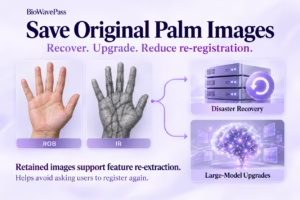
Why Saving Original Palm Images Matters for Biometric Recovery and Future Upgrades By BioWavePass
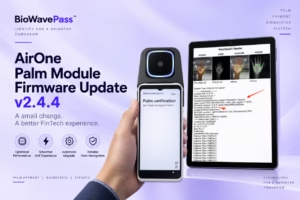
Optimizing Palm Payment Performance: AirOne Palm Module Firmware v2.4.4
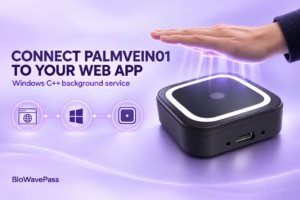
Bringing Palm Vein Scanning into a Web Workflow
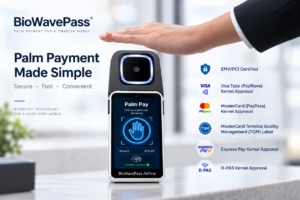
From Palm Payment MVP to Commercial Deployment: Building a Scalable Biometric Payment System
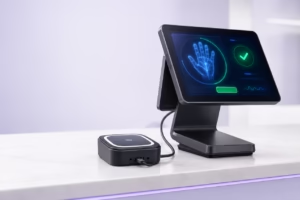
How to Integrate a USB Palm Vein Scanner with a POS Terminal
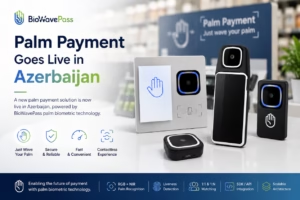
Palm Payment Goes Live in Azerbaijan: From Biometric Technology to Real-World Payment
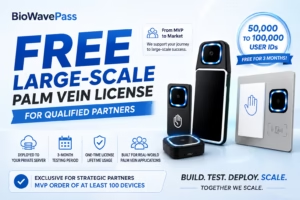
From MVP to Market: Scaling Palm Vein Technology with BioWavePass