Why BioWavePass Palm Vein Systems Are Built for Seamless Large-Scale Expansion
Introducción
Many biometric projects begin with a simple goal:
- launch an MVP
- validate the business model
- test real-world deployment
However, as the project grows, a major concern appears:
👉 How can the system scale to millions of users without disrupting existing customers?
BioWavePass was designed with this challenge in mind from the beginning.
Its palm vein architecture supports a smooth transition from Small Model deployment to Large Scale Model infrastructure while keeping the user experience unchanged.
Built for Growth from Day One
Traditional biometric systems often create problems when scaling:
- database migration becomes complex
- users must re-register
- infrastructure requires rebuilding
- customer experience is interrupted
BioWavePass uses a different architecture.
The system is designed so customers can:
✅ Start small
✅ Expand gradually
✅ Upgrade smoothly
without rebuilding the entire platform.
Small Model: Fast and Lightweight Deployment
The Small Model is designed for:
- MVP projects
- Proof of Concept testing
- pilot deployment
It supports:
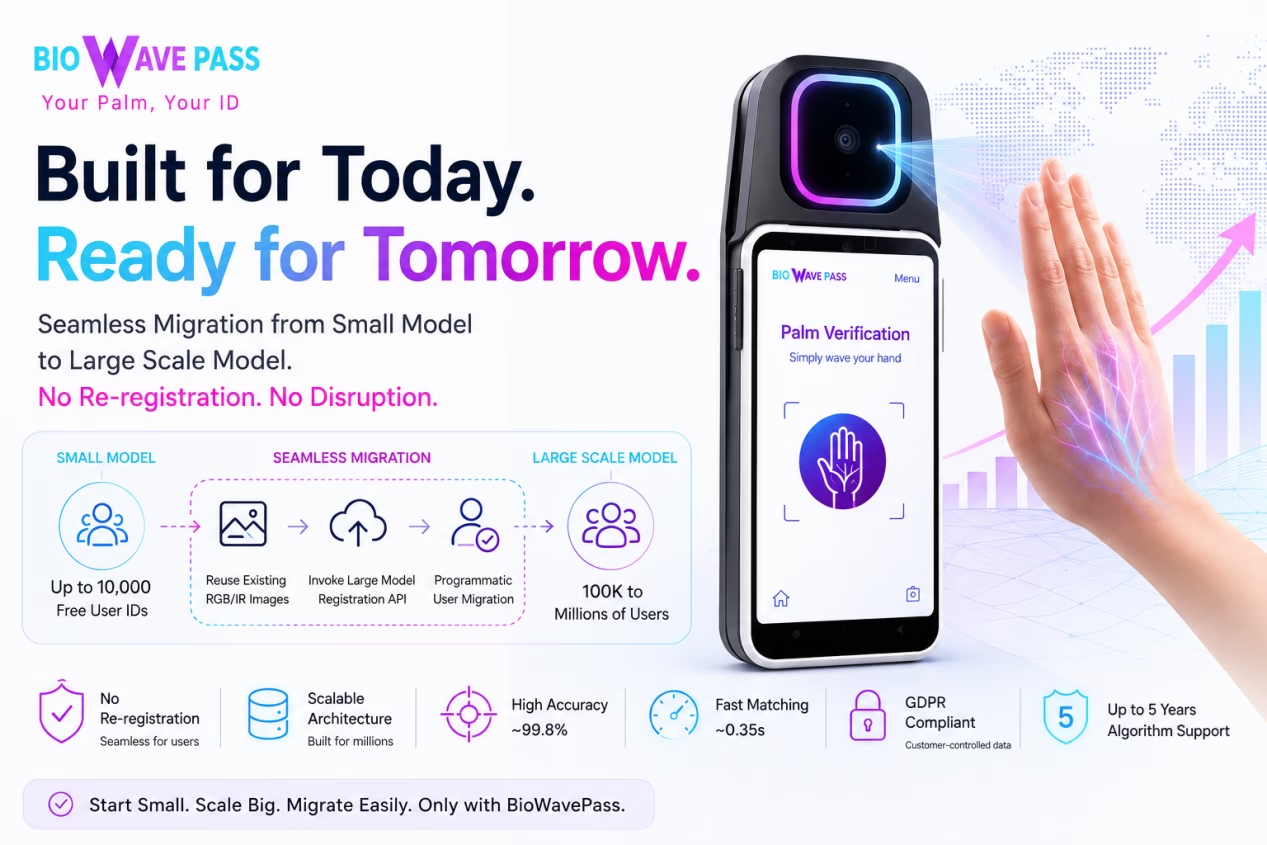
✅ Up to 10,000 free user IDs
The Small Model uses only two device-side biometric features:
- Palm Print Feature (RGB)
- Palm Vein Feature (IR)
Only feature vectors are uploaded by the SDK.
RGB + IR images are stored separately as backup.
Why the Large Scale Model Matters
As biometric systems grow larger, scalability becomes more important.
The Large Scale Model introduces:
- server-side verification
- GPU-based processing
- scalable vector database architecture
allowing the platform to support:
✅ 100K to millions of users
while maintaining:
- ~0.35s matching speed
- ~99.8% accuracy
The Key to Seamless Migration
The most important design advantage is this:
👉 Existing RGB + IR registration images can be reused during migration.
This means users originally registered in the Small Model system do not need to scan their palm again.
How the Migration Process Works
From the application perspective:
- the system invokes the Large Model registration interface
- stored RGB + IR images are programmatically registered into the new system
- the Large Model rebuilds the biometric registration internally
From the user perspective:
👉 Nothing changes.
Users do not need to:
- re-register
- capture new images
- repeat onboarding
The migration is effectively invisible to the end user.
Why RGB + IR Image Storage Is Important
Image storage is the foundation of future scalability.
In the Small Model:
- daily matching uses feature vectors only
- images are backup only
In the Large Model:
- the algorithm server re-extracts features from stored images
- server-side verification becomes part of the matching process
This creates a more scalable biometric architecture.
Large Model Verification Architecture
The Large Scale Model uses four verification elements:
- End-side palm print feature
- End-side palm vein feature
- Server-side palm print feature from RGB image
- Server-side palm vein feature from IR image
This dual-layer architecture improves:
- database scalability
- verification stability
- large-scale matching performance
Lower Operational Risk
BioWavePass helps reduce long-term deployment risk because customers can:
- launch quickly with Small Model
- validate market demand
- scale only when needed
without forcing users through another registration process.
Development and Testing Support
After sample purchase, BioWavePass provides:
- Small Model test server
- Large Scale Model test server
- API integration support
- debugging environment
This allows customers to verify the migration path during development.
Customer-Controlled Infrastructure
All systems are deployed on customer-owned servers.
This ensures:
- customer-controlled biometric data
- GDPR-compliant architecture
- no vendor-side biometric data management
BioWavePass also provides:
✅ Up to 5 years large-scale algorithm support
Conclusión
A scalable biometric platform should support long-term growth without disrupting users.
BioWavePass enables organizations to:
- start with MVP deployment
- migrate programmatically
- scale to millions of users
while keeping the transition seamless for end users.
Final Thought
The best biometric migration process is the one users never notice.
CTA
Learn more about BioWavePass Palm Vein Technology:
👉 https://biowavepass.com/biowavepass-palm-vein-scanner-products/
Comparte este artículo
Sobre el autor

También le puede interesar
Scaling Palm Vein Payment: Single Server or Kubernetes Cluster?

Before You Scale Palm Vein POS: A Terminal Management Checklist
Why Saving Original Palm Images Matters for Biometric Recovery and Future Upgrades By BioWavePass
Optimizing Palm Payment Performance: AirOne Palm Module Firmware v2.4.4
Bringing Palm Vein Scanning into a Web Workflow
From Palm Payment MVP to Commercial Deployment: Building a Scalable Biometric Payment System
How to Integrate a USB Palm Vein Scanner with a POS Terminal
Palm Payment Goes Live in Azerbaijan: From Biometric Technology to Real-World Payment
From MVP to Market: Scaling Palm Vein Technology with BioWavePass