Which Is the Best Mobile Palm Pay Device?
Introducción
Palm vein biometric payments shift authentication into a new paradigm. Instead of relying on passcodes or observable biometrics, palm vein recognition maps internal vascular patterns to unlock identities and authorize wallet payments. BioWavePass designed its Palm Pay product line to support both secure payment infrastructure and large scale cloud identity integration.
To deploy a real mobile Palm Pay terminal, the device must balance biometric precision, certification ready financial structure, mobility, and developer accessibility. BioWavePass devices enable fintech teams to integrate this secure foundation without modifying merchant host boards or supplying complex hardware overhead.
1. BioWavePass Palm Pay Product Line: Designed for Payments and Identity
BioWavePass built a family of Palm Vein Recognition terminals that operate consistently within Identity plus Payments API architectures.
The line currently includes two major practical paths for fintech deployment:
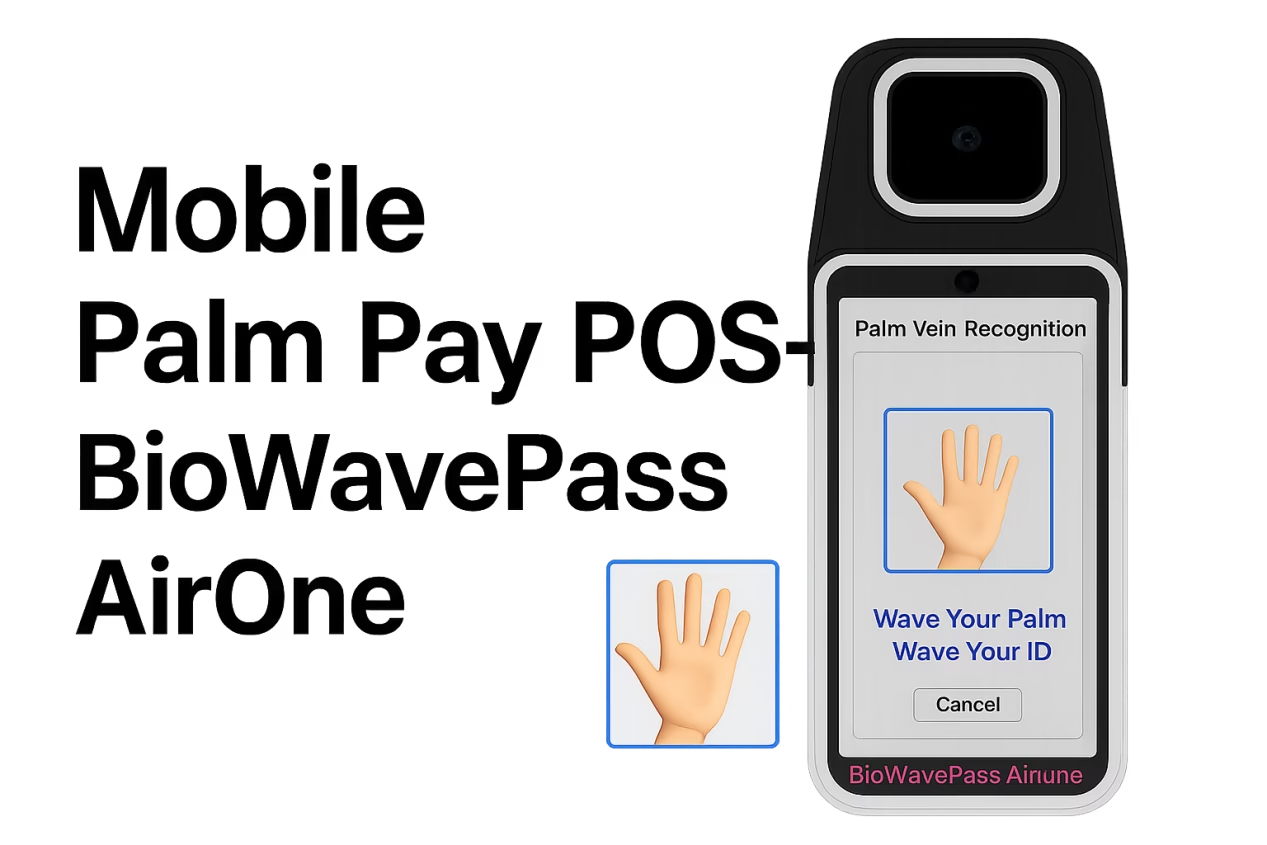
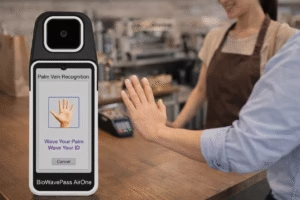
AirOne – A true mobile Palm Vein Wallet POS
The :contentReference[oaicite:0]{index=0} combines the internal PalmVein01 USB optical engine with EMV L1/L2 plus PCI secure POS architecture natively at the manufacturing layer.
BioWavePass500 – A fixed USB development-ready Palm Pay terminal
The :contentReference[oaicite:1]{index=1} is crafted as a lightweight USB RGB plus IR Palm Vein terminal kit that allows fast prototype and software testing without high dependency upgrades.
Both devices share dual spectrum imaging philosophy and support encrypted biometric transmission for wallet pairing and authorization.
2. Biometric Capture Requirements for High Security Mobile Wallet Payments
BioWavePass devices meet key authentication and performance thresholds shared across fintech platforms.
Internal vein maps for authentication precision
Palm vein recognition uses subdermal vein imaging through simultaneous RGB + IR optics, enabling consistent depth mapping.
Device encryption and safe biometric pipeline
All palm vein templates are encrypted before transmission, ensuring data integrity from device to cloud.
Fast matching cycle for high frequency use
Palm verification happens in less than one second, enabling uninterrupted transaction loops.
Free initial identity test licensing
Unlimited user support begins with 10,000 free test identities, enabling system pilots in large database environments with no delay.
3. Why the BioWavePass AirOne Design Is Certification-Ready By Manufacturing
BioWavePass AirOne was explicitly engineered to inherit financial certification structure during device architecture, not during merchant integration.
This was accomplished by:
✔ integrating PalmVein01 RGB plus IR reader into a POS secured mainboard internally
✔ routing the biometric engine through EMV L1/L2 sealed hardware zones
✔ aligning the POS body structure with PCI secure architecture
✔ tuning power chains to meet 1.5A/5V sensor stability requirements
✔ testing internal PCBA logic extensively during prototype phases
The result is a terminal body that ships banking secure and EMV/PCI certification-ready without merchant-side revalidation.
4. Product Comparison Table
AirOne is mobile. The other two represent fixed integration designs.
| Palm Pay Product | Funciones | Plataforma | Demostración Sandbox | SDK de Flutter | Solución integral Palm Pay | Escenario de uso |
|---|---|---|---|---|---|---|
| BioWavePass AirOne | Palm Vein Scanner, EMV Chip Reader, NFC, QR Scanner | Android 13 | Sí | Sí | Sí | Móvil |
| BioWavePass500 | Palm Vein, QR, tarjeta IC, NFC | Android 11 | Sí | Sí | Sí | Terminal fijo |
| PalmVein01 | USB Palm Vein Reader | Windows / Linux / Android | Sí | Sí | Sí | Integración de dispositivos fijos |
5. System Deployment Environments That Match Palm-Based Authentication
BioWavePass AirOne supports:
- agent walk around identity verification
- QR billing with palm identity redemption
- EMV chip plus NFC plus QR payment flows
- high throughput POS queues where palm unlock authorizes wallet payment
- merchant acquisitions where host POS boards remain unchanged
BioWavePass500 and PalmVein01 support:
- USB integrated kiosks
- fixed POS or billing hardware integrations
- developer workshop prototypes requiring cross OS SDK testing
- cloud or local matching API uploads
Conclusión
Which is the best Palm Vein Scanning Payment Device?
It is the one that supports real mobility, inherited financial certification security, encrypted biometric pipelines, fast matching, cloud Identity plus Payments API compatibility, and scalable wallet authorization architecture.
BioWavePass offers both mobile and fixed terminal product paths to support all modern offline biometric payment requirements.
Más información
Explore our palm vein hardware and wallet integration tools.
Comparte este artículo
Sobre el autor

También le puede interesar
Which Is the Best EMV & PCI Certified Palm Vein POS Terminal?
Will Palm Vein POS Support Existing EMV, NFC, and QR Payment Ecosystem?

Why Palm Vein Technology Is Emerging as a Payment-Grade Biometric Standard
Where Is Palm Vein Biometric Data Stored and How Is It Secured?
How Do You Choose the Best Palm Vein Technology for Real Projects?
How to Solve Power Issues in Palm Vein Scanner Projects?
What Is Palm Scanning Technology?
How Palm Vein Biometrics Can Be Integrated Into Mobile Payment Systems: A BioWavePass Implementation Guide
How to setup Palm Payment? Designing a Seamless Palm Payment Flow for Fintech and Payment Platforms