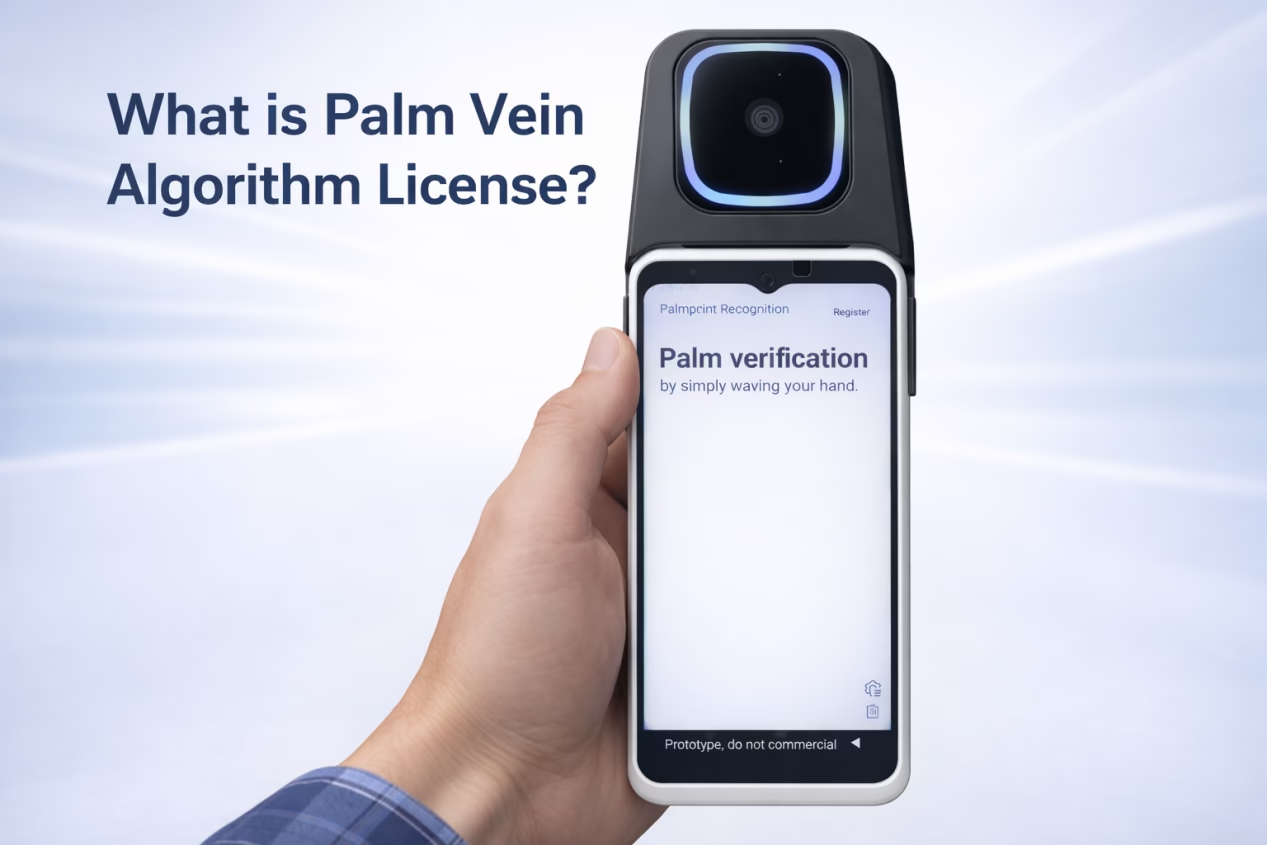
What is Palm Vein Algorithm License?
Introduction
As palm vein technology moves from pilot projects to real-world deployment,
one concept becomes critical for every business to understand:
What is a palm vein algorithm license?
Unlike traditional software licensing models, palm vein systems are built on a
user ID-based licensing architecture, which directly impacts system scalability, cost, and long-term performance.
What Is a Palm Vein Algorithm License?
A palm vein algorithm license is the authorization to use the biometric recognition engine,
including:
- Palm vein feature extraction
- Identity matching algorithms
- Large-scale database comparison capability
More importantly, it defines:
👉 How many users your system can support
The Core Concept: ID-Based Licensing
In BioWavePass palm vein systems, licensing is not based on:
- Number of devices
- Number of transactions
- API calls
Instead, it is based on:
👉 Number of registered users (User IDs)
How It Works
- Each user registered = 1 ID
- The total license determines maximum capacity
- Deleting a user frees up that ID
This creates a clear and predictable scaling model.
Why License Is Not Just “Software”
A palm vein algorithm license is tightly connected to:
- Recognition accuracy
- Matching speed
- System scalability
Because behind the license is:
- AI algorithm capability
- Computing resource allocation
- Database architecture
👉 The license is essentially the capacity of your biometric system
Small Model vs Large Scale License
Small Model (MVP Stage)
- Supports up to 10,000 users
- Designed for testing, integration, and pilot deployment
✅ BioWavePass provides up to 10,000 free ID licenses
This allows customers to:
- Start without algorithm cost
- Quickly validate business scenarios
- Reduce initial investment risk
Large Scale Model (Production Stage)
When your system grows:
👉 More than 10,000 users requires additional license purchase
Capabilities include:
- 100,000 to millions of users
- High-speed matching (~0.3 seconds)
- Stable performance in large databases
Why License Scaling Is Critical
As user volume increases, system complexity grows exponentially:
- More comparisons per request
- Higher concurrency
- Greater demand on infrastructure
BioWavePass algorithm is designed to handle this through:
- GPU-based parallel computing
- Vector database architecture
- Multi-feature matching (RGB + IR)
👉 License ensures the system maintains high accuracy and speed at scale
Real System Performance
In internal large-scale testing:
- Database size: 5 million users
- Recognition success rate: up to 99%
- Matching speed: as fast as 0.35 seconds
This demonstrates that the algorithm license is not just capacity,
but also performance assurance under scale.
One-Time License Model
BioWavePass licensing follows a simple principle:
- One-time purchase (lifetime use)
- No per-transaction fees
- No recurring algorithm cost
This means:
👉 You pay once, and scale based on user growth
Why This Model Matters for Business
Compared to traditional models:
| Traditional Systems | BioWavePass Model |
|---|---|
| Pay per transaction | No transaction cost |
| Pay per API usage | No API cost |
| Hidden scaling cost | Transparent ID-based scaling |
Long-Term Value of Algorithm License
The license model enables:
- Predictable budgeting
- Scalable infrastructure planning
- Faster ROI
Combined with:
- No consumables
- No card replacement
- Lower fraud risk
👉 It becomes a high-efficiency biometric investment
Conclusion
A palm vein algorithm license is not just a technical requirement.
It is the foundation of your system’s scalability and performance.
Final Thought
In palm vein systems,
the algorithm defines accuracy —
but the license defines scale.
CTA
If you are planning to build or scale a palm vein solution,
understanding the licensing model is the first step.
👉 Learn more: https://biowavepass.com/biowavepass-palm-vein-scanner-products/
Partager cet article
A propos de l'auteur

Vous pourriez aussi aimer
What is Palm Vein Technology Solution? And What Are the Costs?
From Small Model to Large Scale: How Palm Vein Technology Algorithm Enables Seamless Growth?
How Palm Vein Technology Large Scale Algorithm Handles Millions of Users in Real-Time?
Why Capture Consistency Matters More Than Algorithms in Palm Vein Recognition?
Who Owns Tokenization in Palm Vein Payment Projects?
How Does Tokenization Work in Palm Vein Payment Architecture?
Can Palm Registration and Payment Be Done in One Tap? A Practical View from BioWavePass
As a Developer, How Can We Upgrade from a Small Model to a Large Model Palm Vein Recognition Algorithm Without Re-Registering Users?
How Secure Is Palm Vein Technology Against Spoofing Attacks?