Why Capture Consistency Matters More Than Algorithms in Palm Vein Recognition?
Introduction
In biometric systems, accuracy is often attributed to algorithms.
But in real-world deployments, there is a more fundamental question:
Is the data being captured correctly in the first place?
In palm vein recognition, this question becomes critical.
Because no matter how advanced the algorithm is, poor input will always lead to unreliable results.
At BioWavePass, the focus is not only on recognition performance, but also on how every biometric sample is captured and standardized.
The Hidden Problem in Palm Vein Systems
Palm vein recognition depends on extracting two types of data:
- Surface features (RGB)
- Sub-dermal vein patterns (IR imaging)
These require precise conditions:
- Correct distance
- Stable lighting
- Proper positioning
However, in real usage scenarios:
- Users place their hands too close or too far
- Lighting conditions vary
- Positioning is inconsistent
The result is:
- Unstable image quality
- Increased false rejection rates
- Poor user experience
This is not an algorithm problem.
It is a capture problem.
BioWavePass Approach: Standardizing the Capture Layer
BioWavePass introduces a hardware-driven solution:
PSensor – Distance-Aware Capture Control
This built-in module continuously measures the distance between the user’s palm and the device:
- Detection range: 0–2000 mm
- Optimal capture range: 50–150 mm
Instead of relying on user behavior, BioWavePass ensures that every scan happens within a controlled and repeatable environment.
How PSensor Improves Capture Quality
PSensor works as a real-time control layer that coordinates multiple components:
1. Distance Validation
- Detects whether the palm is within the optimal range
- Prevents invalid captures (too close or too far)
2. Intelligent Lighting Control
- Automatically activates white fill light in the valid range
- Ensures high-quality RGB image capture even in low-light environments
3. Capture Timing Synchronization
- Aligns image capture with optimal positioning
- Improves feature extraction reliability
Together, these mechanisms ensure that every captured image meets the quality threshold required for accurate recognition.
Natural User Interaction Through Hardware Feedback
BioWavePass also enhances usability by providing intuitive feedback:
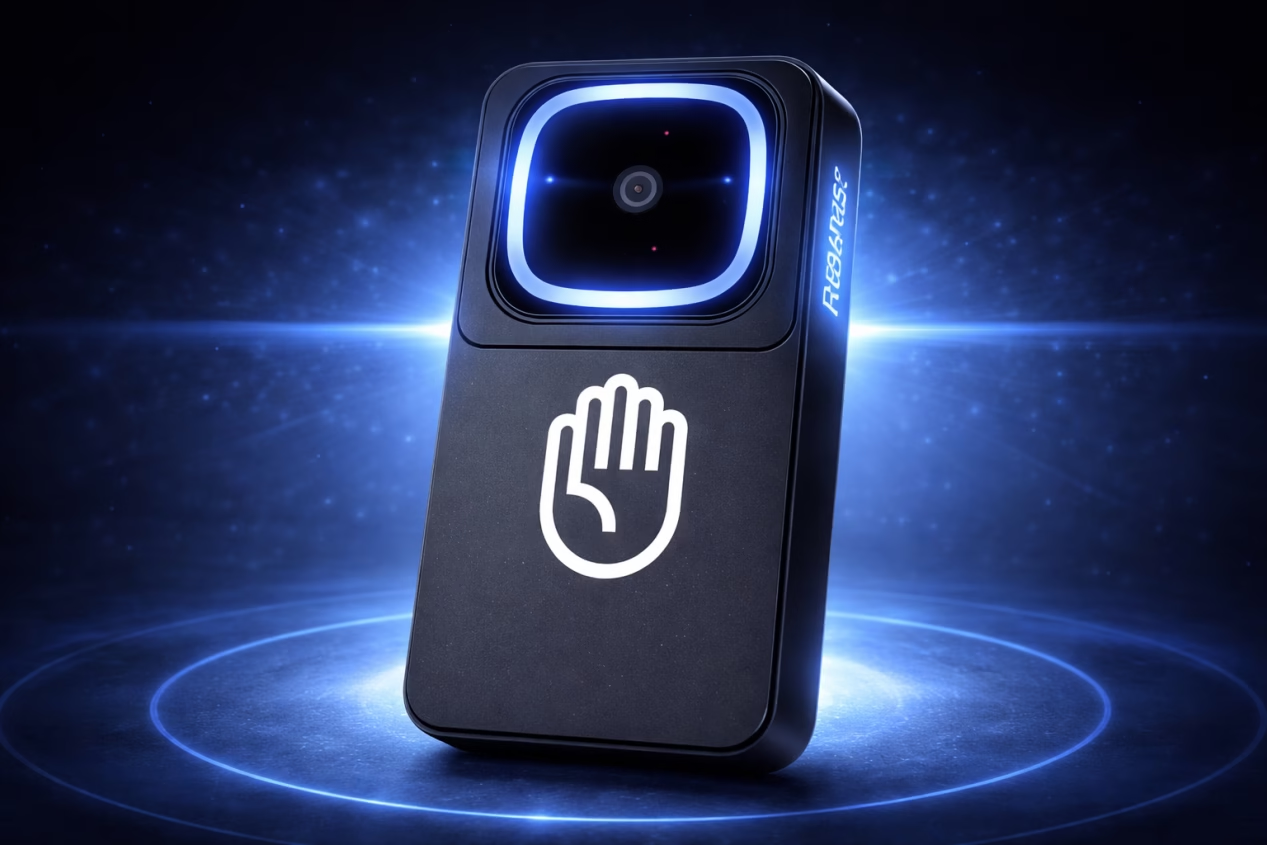
- Blue breathing light → Device in standby
- Yellow-green flashing → Palm too close
- White fill light → Ready for capture
This creates a self-guided interaction model:
- Users instinctively adjust their hand position
- No training or instructions required
- Faster and smoother verification process
From Better Capture to Better Performance
By controlling the capture process, BioWavePass delivers measurable improvements:
Higher Accuracy
Consistent input data leads to more reliable matching results.
Faster Recognition
Stable images reduce processing variability, enabling fast verification (~0.3 seconds).
Improved User Experience
Fewer failed attempts and more intuitive interaction.
Scalable Performance
Maintains consistency across large user databases and high-frequency usage scenarios.
Why This Matters for Real-World Applications
In applications such as:
- Palm vein payment systems
- eKYC and digital identity verification
- Banking and fintech platforms
- Healthcare and public services
System reliability is critical.
BioWavePass ensures that:
- Every interaction follows the same capture standard
- Data quality remains stable across millions of users
- The system performs consistently in diverse environments
Conclusion
In palm vein recognition:
Algorithms define potential —
but capture defines reality.
BioWavePass bridges this gap by introducing a controlled capture layer through PSensor.
It ensures:
- Correct distance
- Stable image acquisition
- Intelligent user interaction
This transforms palm vein recognition from a variable process into a predictable, scalable, and deployment-ready solution.
Learn More
Explore how BioWavePass enables next-generation biometric identity systems:
Partager cet article
A propos de l'auteur

Vous pourriez aussi aimer
Scaling Palm Vein Payment: Single Server or Kubernetes Cluster?
Before You Scale Palm Vein POS: A Terminal Management Checklist
Why Saving Original Palm Images Matters for Biometric Recovery and Future Upgrades By BioWavePass
Optimizing Palm Payment Performance: AirOne Palm Module Firmware v2.4.4
Bringing Palm Vein Scanning into a Web Workflow
From Palm Payment MVP to Commercial Deployment: Building a Scalable Biometric Payment System
How to Integrate a USB Palm Vein Scanner with a POS Terminal
Palm Payment Goes Live in Azerbaijan: From Biometric Technology to Real-World Payment
From MVP to Market: Scaling Palm Vein Technology with BioWavePass