Palm Vein vs Face Recognition: Which Is Better for Payments?
Introduction
Biometric payment is rapidly reshaping how people authenticate and pay. Among the most widely used technologies today are:
- Face recognition payment
- Palm vein payment
Both offer contactless convenience, but when it comes to security, long-term stability, large-scale deployment, and user psychology, the differences become critical.
So the real question is:
Which biometric technology is truly better for payment systems?
What Is Face Recognition Payment?
Face recognition payment uses a camera to capture facial features and match them with stored data to verify identity.
It is widely used in:
- Retail checkout systems
- Mobile payment apps
- Access control systems
Advantages
- Easy to use
- No physical contact required
- Fast adoption in consumer markets
Limitations of Face Recognition in Payment
Despite its convenience, face recognition has several practical limitations:
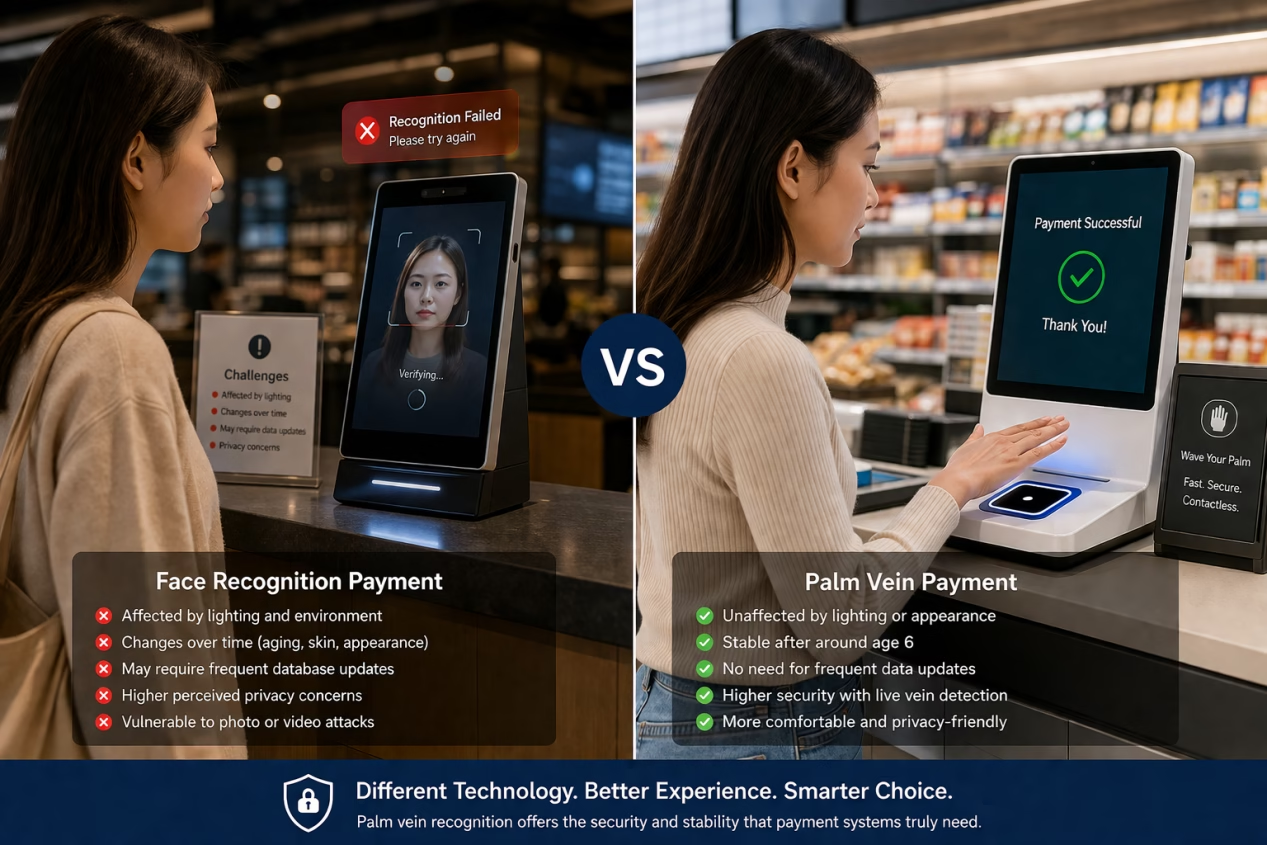
- Highly dependent on lighting conditions
- Affected by masks, glasses, hats, and accessories
- Vulnerable to spoofing, including photos, videos, and deepfake attacks
- Higher privacy concerns in public environments
More importantly:
- Facial appearance can change over time
- Influenced by aging, skin condition, cosmetic procedures, and skin tone differences
- Users may need to periodically update their face data in the system
This creates challenges for long-term reliability and system maintenance.
What Is Palm Vein Payment?
Palm vein payment uses near-infrared technology to capture the vein pattern inside the palm, which is unique to each individual.
BioWavePass enhances this with:
- RGB + IR dual-mode recognition
- Surface + internal feature matching
Unlike facial features, palm vein patterns are internal biological features and are not visible from the outside.
Why Palm Vein Is More Stable and Secure
Palm vein technology provides several key advantages:
- Requires live blood flow for liveness detection
- Extremely difficult to replicate
- Less affected by lighting or surface appearance
- Strong resistance to spoofing attacks
Most importantly:
- Palm vein patterns become stable from around age 6
- Not affected by aging, skin condition, skin tone, or cosmetic changes
- No need for frequent biometric data updates
This makes palm vein highly reliable for long-term payment systems.
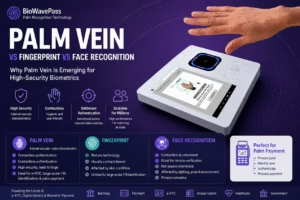
Palm Vein vs Face Recognition: Key Comparison
| Feature | Palm Vein Recognition | Face Recognition |
|---|---|---|
| Security Level | Very high, internal feature | Medium, external feature |
| Anti-Spoofing | Strong, requires live blood flow | Weak to medium |
| Accuracy | High in large databases | Affected by environment |
| Lighting Dependency | Low | High |
| User Changes Impact | Not affected | Affected by aging, surgery, skin condition |
| Long-term Stability | Stable after around age 6 | Changes over time |
| Database Maintenance | Minimal | May require periodic updates |
| Privacy Feeling | More comfortable | Often feels intrusive |
| Payment Suitability | Strong | Limited for high-security use |
Why Palm Vein Is Better for Payment Systems
Payment systems demand:
- High security
- Stable identity verification
- Long-term reliability
- Scalable deployment
- Strong fraud prevention
Palm vein technology delivers:
- Internal biometric authentication
- Consistent performance across large user databases
- Minimal maintenance requirements
- Strong resistance to fraud
These advantages make it suitable for:
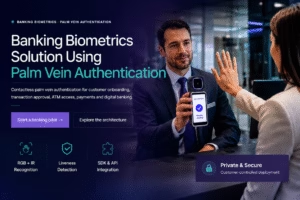
- Banking systems
- Fintech platforms
- Government subsidy programs
- Large-scale identity systems
- Retail payment environments
Why BioWavePass Palm Vein Technology Stands Out
BioWavePass is designed for secure and scalable payment infrastructure.
Key strengths include:
- Recognition speed around 0.3 seconds
- High accuracy in large-scale databases
- RGB + IR dual-mode algorithm
- Flexible deployment: mobile, fixed, and embedded devices
- Support for scalable user databases
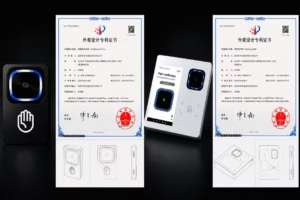
BioWavePass solutions include:
- AirOne for mobile palm payment
- WavePass500 for fixed recognition and access control
- PalmVein01 for USB integration
- PalmVein01 Pro for self-powered USB palm vein scanning
Data Security and Ownership
All palm vein data and images are encrypted with AES-256 and stored on the customer’s own server.
The customer maintains full ownership and control of both the system and data, ensuring a compliant architecture aligned with GDPR requirements.
BioWavePass does not store or manage any biometric data.
One More Real-World Factor: User Psychology
Technology adoption is not only about accuracy or speed. It is also about how users feel when they use it.
For many people, face recognition can feel uncomfortable. A camera pointing directly at your face may create a sense of privacy invasion, especially in payment scenarios.
Palm vein recognition feels much more natural.
After all, who really minds gently waving a hand to complete verification?
No awkward camera stare.
No “why are you scanning my face?” moment.
Just wave your palm and go.
Sometimes, the best technology is not only the most secure one, but also the one people feel comfortable using every day.
Conclusion
Both face recognition and palm vein technologies offer contactless payment experiences.
However:
- Face recognition prioritizes convenience but faces long-term stability, privacy, and security challenges
- Palm vein provides stronger security, stability, scalability, and user comfort
For payment systems where accuracy, fraud prevention, privacy, and long-term reliability matter, palm vein is the better choice.
Learn More
Explore BioWavePass palm vein solutions:
https://choosepalmveinpay.com/
Share this article
About the Author

You might also like
Bringing Palm Vein Scanning into a Web Workflow
From Palm Payment MVP to Commercial Deployment: Building a Scalable Biometric Payment System
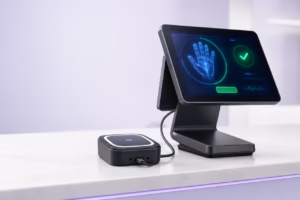
How to Integrate a USB Palm Vein Scanner with a POS Terminal
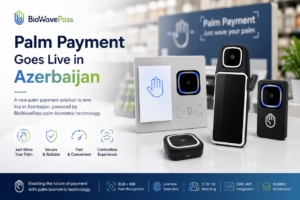
Palm Payment Goes Live in Azerbaijan: From Biometric Technology to Real-World Payment
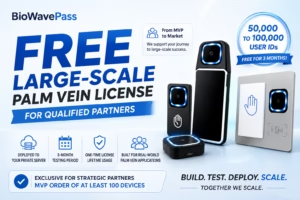
From MVP to Market: Scaling Palm Vein Technology with BioWavePass
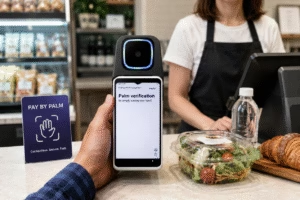
Palm Vein Payment: How Biometric Payments Work Without Cards or Phones
Palm Vein vs Fingerprint vs Face Recognition: Why Palm Vein Is Emerging for High-Security Biometrics
BioWavePass Palm Vein Scanner Products Receive Design Patent Certification
Palm Vein Authentication: The Future of Secure Digital Identity and Payments