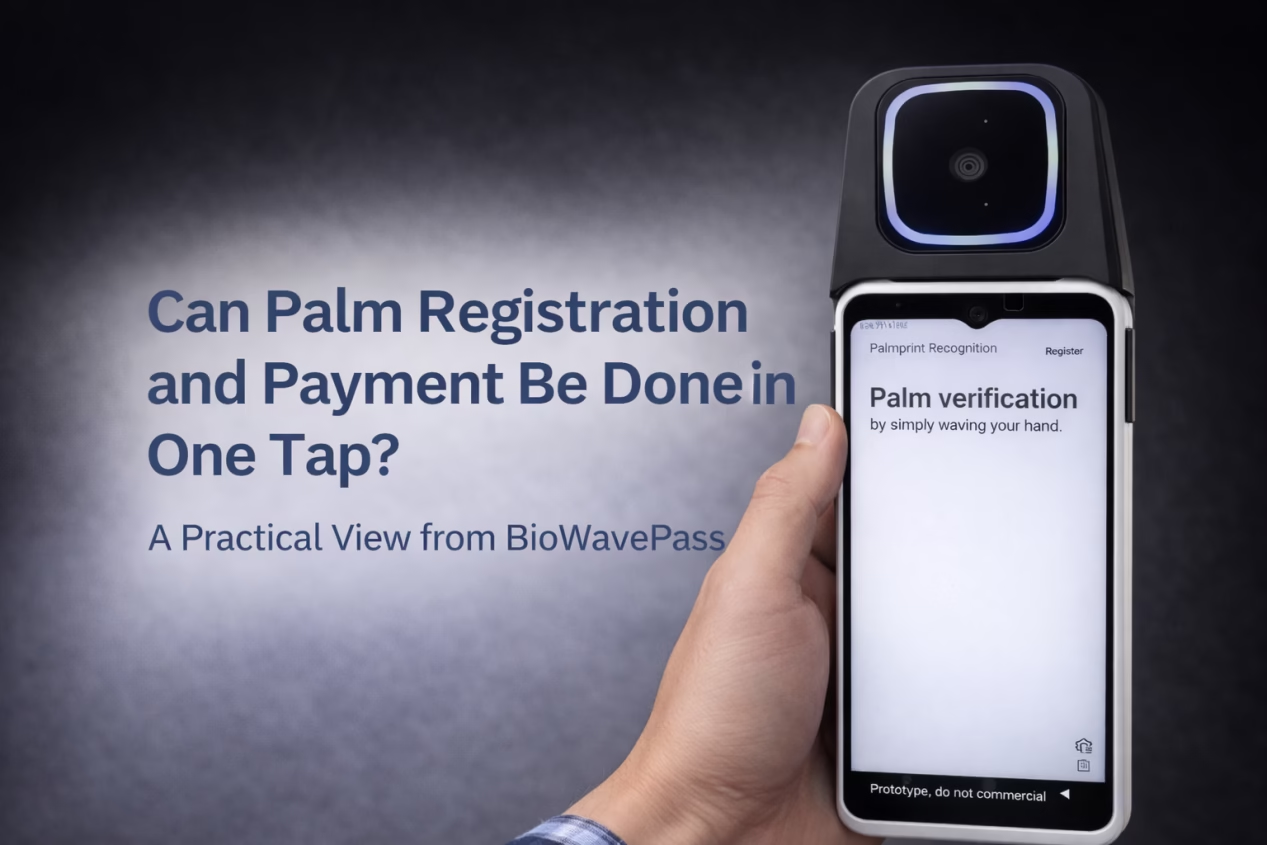
Can Palm Registration and Payment Be Done in One Tap? A Practical View from BioWavePass
In palm vein payment system design, one question often comes up:
Can registration and payment be completed in a single palm tap?
From a UX perspective, this sounds ideal. However, from a biometric algorithm and system architecture perspective, the answer is clear:
👉 Registration and identification (payment) are fundamentally different processes and should not be merged.
Em BioWavePass, this principle is central to how we design reliable and scalable palm vein systems.
Understanding the Two Core Processes
1. Registration (Enrollment)
Registration is responsible for building a high-quality biometric foundation that will be used for all future verifications.
This process requires:
- Strict image quality standards
- Zero tolerance for failure
- Multi-layer validation to ensure long-term stability
Core Issue: Fundamental Differences in Technical Objectives:
| Dimension | Identification Flow (Blue Path) | Registration Flow (Red Path) |
|---|---|---|
| Primary Objective | Fast matching, passage efficiency | Establishing high-quality biometric baseline |
| Quality Requirements | Lenient (sufficient for matching) | Strict (must ensure long-term stability) |
| Computing Resources | Lightweight, low latency | Complex algorithms, deep verification |
| Error Tolerance | Allow a certain level of collection error rate | Zero tolerance, must succeed on first attempt |
| Timeliness | Real-time response (<1 second) | Acceptable longer processing time |
As shown in the flowchart, the registration flow (red) contains critical steps absent from the identification flow (blue), the registration flow contains critical steps that do not exist in the identification flow, including:
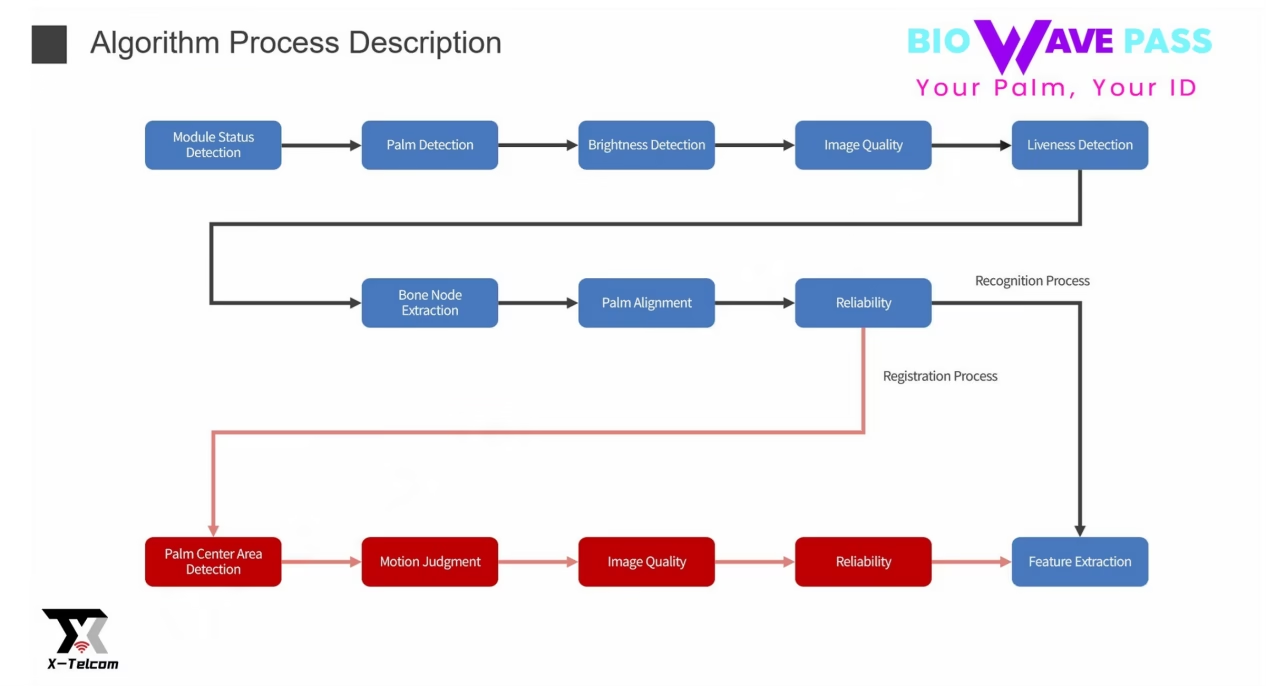
- Palm center region detection (ensures standardized capture area)
- Motion judgment (prevents image blur caused by hand movement)
- Registration reliability verification (multi-dimensional quality assessment)
These steps are essential to ensure that the biometric template is consistent, stable, and usable across time.
Skipping these steps for direct registration would result in uncontrolled baseline data quality, which would severely impact the accuracy of all subsequent identifications.
2. Identification (Payment)
In contrast, identification is designed for speed and efficiency.
The goal is to:
- Complete matching within milliseconds
- Support high-frequency transactions
- Deliver a seamless user experience
Identification systems:
- Use optimized feature matching
- Allow minor variations in capture conditions
- Focus on low latency rather than deep validation
Why “One Tap” Is Not Feasible
Combining registration and payment into a single interaction introduces unavoidable technical conflicts.
1. Quality vs Speed Trade-Off
Registration requires deep validation and higher processing time, while payment requires instant response.
Merging both would lead to:
- Slower transaction times
- Compromised user experience
2. Hardware and Processing Constraints
Running both registration-level validation and real-time matching simultaneously would significantly increase:
- Device computing requirements
- Processing latency
- System complexity
This is not practical for scalable deployments.
3. Security and Compliance Risks
Biometric data is highly sensitive and must be handled with strict controls.
Approaches such as temporary caching or reusing biometric data across flows may violate:
- Data protection regulations
- Security best practices (e.g., minimum retention, immediate processing)
A clear separation between registration and identification helps ensure compliance.
Recommended System Architecture
At BioWavePass, we recommend a two-stage architecture:
Step 1: High-Quality Registration (One-Time)
- Capture high-quality RGB and IR palm images
- Perform full validation and quality checks
- Generate a stable biometric template
Step 2: Fast Identification (Ongoing)
- Perform quick palm scans
- Match against stored templates
- Complete transactions in real time
The Long-Term Advantage
Separating registration and identification ensures:
- Higher recognition accuracy
- Stable performance across large user bases
- Faster transaction speeds
- Stronger data security and compliance
- Scalable system architecture
Most importantly, it ensures that once a user is registered, every future interaction becomes fast, reliable, and seamless.
Designing for Real-World Deployment
In biometric systems, a smooth user experience must be supported by rigorous technical foundations.
While a single-tap approach may appear attractive, it compromises:
- Data quality
- System accuracy
- Long-term reliability
Em BioWavePass, we focus on building systems that work in real-world conditions, at scale.
Because in biometrics:
👉 The quality of registration determines the success of every future transaction.
Learn more about BioWavePass palm vein solutions:
https://biowavepass.com/biowavepass-palm-vein-scanner-products/
Partilhar este artigo
Sobre o autor

Também pode gostar
How Does Tokenization Work in Palm Vein Payment Architecture?
As a Developer, How Can We Upgrade from a Small Model to a Large Model Palm Vein Recognition Algorithm Without Re-Registering Users?
How Secure Is Palm Vein Technology Against Spoofing Attacks?
How to Choose the Right Palm Vein Recognition Device for Your Project?
Why Is It Not Recommended to Use a Single Palm Scan for Both Identification and Registration?
What Is the Next-Gen Contactless Payment Method?
Which Is the Best EMV & PCI Certified Palm Vein POS Terminal?

Will Palm Vein POS Support Existing EMV, NFC, and QR Payment Ecosystem?

Why Palm Vein Technology Is Emerging as a Payment-Grade Biometric Standard