Como é que se constrói um sistema de pagamento Palm Vein sem grande trabalho de certificação local?
Introdução
As palm vein biometrics gain global traction in fintech, banking, e-KYC, and government identity programs, one challenge becomes very clear:
How do you build a Palm Vein Payment System without going through long, expensive local EMV and PCI certification processes?
For many fintech platforms and financial institutions, certification is the biggest bottleneck preventing fast deployment of biometric payments.
BioWavePass created a solution specifically for this problem.
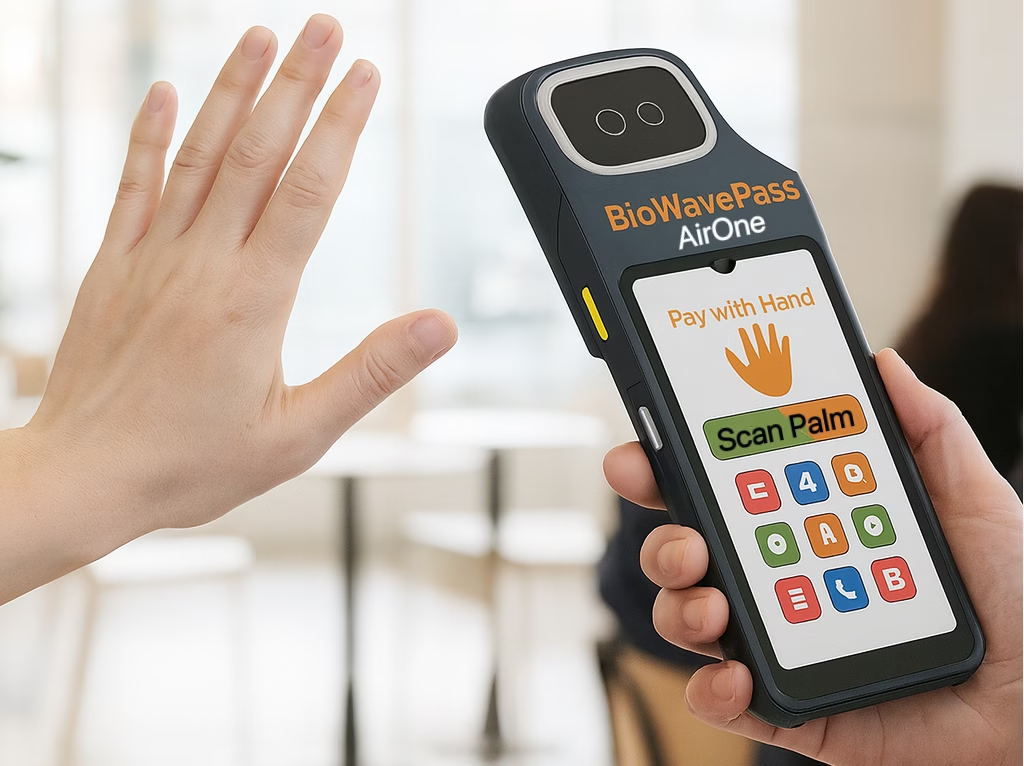
Introducing the BioWavePass AirOne — a mobile, all in one palm vein payment terminal that removes the need for customers to conduct heavy local certification work.
1. Why Certification Is the Biggest Barrier
Setting up a palm vein payment system normally requires:
- Certification of the new biometric module
- Certification of the redesigned POS hardware
- Testing across different financial networks
- EMV L1 and L2 approval
- PCI architecture validation
This process takes months and often requires substantial engineering and financial investment from the customer.
For many fintechs or regional banks, this slows down go to market timelines and increases deployment costs.
So the real question is:
How can we let clients deploy palm vein payment instantly, without this heavy burden?
2. The AirOne Approach: Integration Done at the Manufacturer Level
Instead of asking customers to certify a new biometric device, BioWavePass integrates the palm vein module directly into an EMV and PCI certified POS architecture at the factory level.
This means:
✔ Customers do not need to re certify
✔ No local EMV or PCI testing
✔ No redesigning host devices
✔ No new electrical or firmware validation
✔ No integration risk
✔ No deployment delays
The BioWavePass AirOne arrives ready to deploy.
This approach required significant engineering work on our side:
- A redesigned POS connection mainboard
- Electrical routing adjustments
- Stability tuning
- Firmware alignment
- Hardware level optimization
- Intensive PCBA logic and current stability testing
The result is a fully integrated biometric payment terminal that bypasses the customer’s certification burden entirely.
3. AirOne: The All in One Palm Vein Payment Terminal
The BioWavePass AirOne is designed to deliver both:
- Palm Vein Identity Verification
- Certified Financial Payment Processing
In a single mobile device.
Key Features
- RGB plus IR dual mode palm vein scanner
- EMV L1 and L2 plus PCI certified POS architecture
- NFC, chip card, and QR payment support
- Android 13 open platform
- Portable, battery powered handheld design
- Dual SIM, WiFi, Bluetooth, USB C
- Supports cloud or local biometric matching
By merging the biometric module with the financial POS hardware internally, AirOne eliminates the integration gap that normally triggers new certification requirements.
4. Why This Solves the Certification Problem
With AirOne, customers no longer need to:
- Certify a new biometric capture module
- Replace or redesign their host POS device
- Update firmware or electrical layouts
- Conduct secondary EMV or PCI testing
- Validate voltage or current requirements
- Spend months in compliance labs
All certification is already built into the device.
Customers can deploy AirOne immediately as a complete Palm Vein Payment System — without delays and without unnecessary certification costs.
5. Ideal Use Cases
The AirOne is perfect for projects requiring fast deployment and mobile operation:
- Fintech wallets and merchant payments
- Mobile banking and field onboarding
- Large scale e-KYC registration
- Government subsidy and social benefit programs
- Airports, stadiums, and global event access
- Healthcare and education identity verification
- Transportation ticketing and secure access
Any high volume identity or payment scenario benefits from eliminating certification delays.
Conclusão
How do you build a Palm Vein Payment System without heavy local certification work?
You start with a device that already integrates both biometric and EMV or PCI compliant payment architectures at the manufacturer level.
O BioWavePass AirOne is engineered precisely for this purpose.
By removing the certification burden, shortening deployment time, and combining secure biometrics with a mobile POS platform, AirOne offers the fastest and most efficient path to launching palm vein payment systems worldwide.
Partilhar este artigo
Sobre o autor

Também pode gostar
Scaling Palm Vein Payment: Single Server or Kubernetes Cluster?
Before You Scale Palm Vein POS: A Terminal Management Checklist
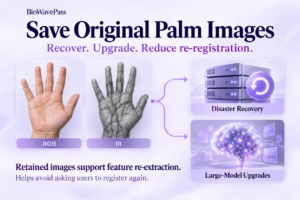
Why Saving Original Palm Images Matters for Biometric Recovery and Future Upgrades By BioWavePass
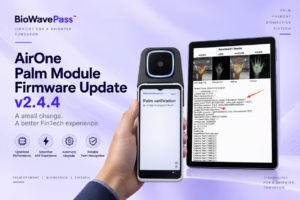
Optimizing Palm Payment Performance: AirOne Palm Module Firmware v2.4.4
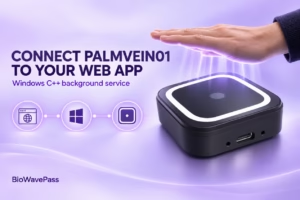
Bringing Palm Vein Scanning into a Web Workflow
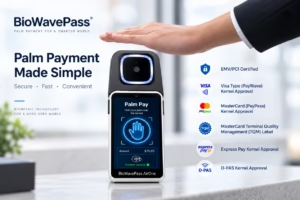
From Palm Payment MVP to Commercial Deployment: Building a Scalable Biometric Payment System
How to Integrate a USB Palm Vein Scanner with a POS Terminal
Palm Payment Goes Live in Azerbaijan: From Biometric Technology to Real-World Payment
From MVP to Market: Scaling Palm Vein Technology with BioWavePass