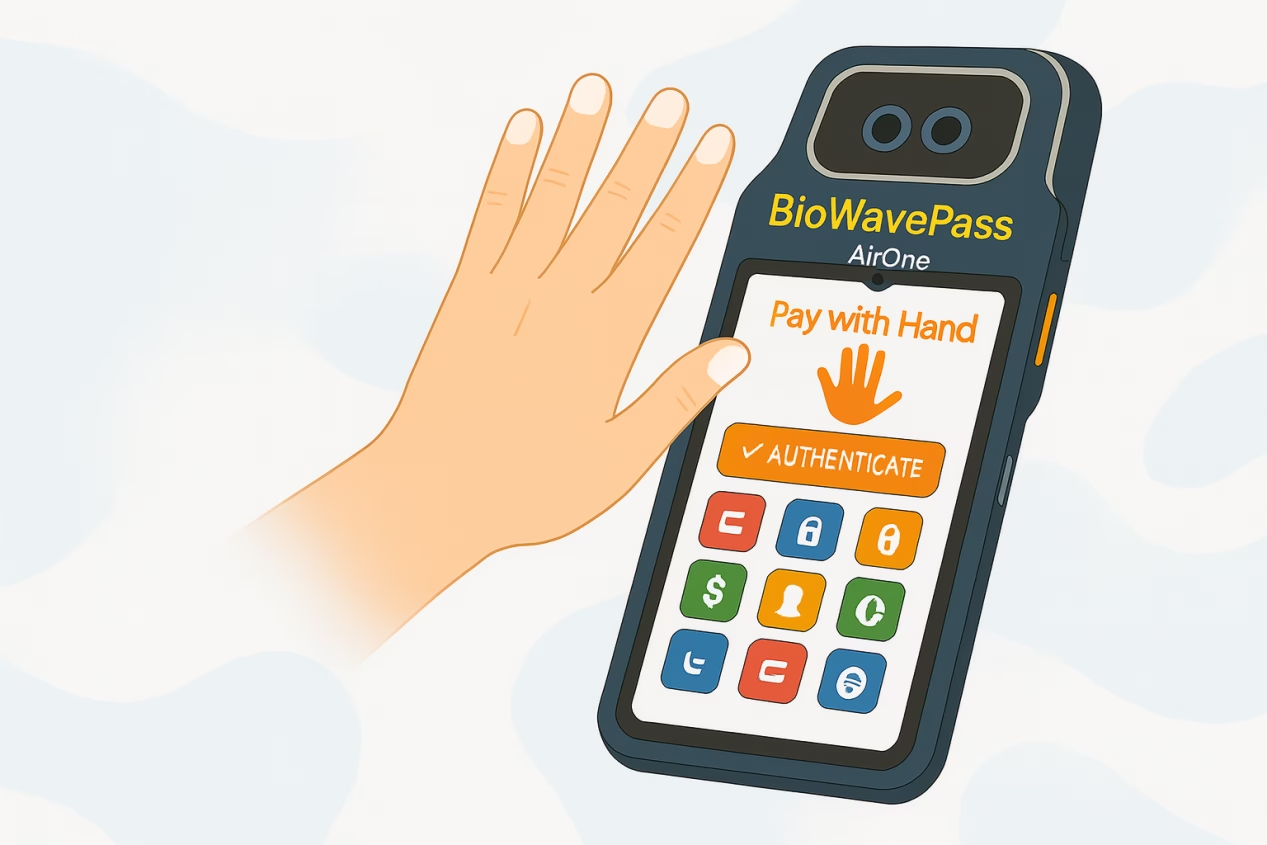
O que é um sistema de pagamento Palm Vein? Visão geral dos tipos de clientes e da arquitetura do BioWavePass Palm Vein Payment
Introdução
Palm vein biometrics is rapidly becoming a trusted method for upgrading identity verification in modern payment ecosystems. As more fintech teams build cloud based identity and payment infrastructures, the demand for Palm Vein Payment Systems continues to rise. BioWavePass solutions offer a dependable path to improving transaction security, preventing fraud, and delivering a consistent biometric experience across merchant environments.
This article summarises the shared characteristics and system design patterns observed among fintech companies that integrate BioWavePass palm vein technology. The insights represent a category of customers rather than a single project case.
1. Typical Fintech Customer Characteristics
Fintech organisations that choose BioWavePass usually operate within a similar technical framework. These teams often develop:
- Cloud based Identity plus Payments platforms
- APIs for user authentication, authorization, and identity management
- Payment processing APIs for transaction creation and settlement
- Merchant or billing applications connected to Android biometric devices
- Existing POS environments that already serve merchants at scale
Rather than replacing hardware, these fintech companies aim to strengthen current payment systems with palm vein authentication for higher security and smoother user validation.
2. Common Architectural Approach
Although customers vary in size and market, many share consistent architectural principles when deploying palm vein technology.
Cloud Centric Identity Design
Most fintech teams rely on:
- A primary Identity API to handle user login, authentication, and permissions
- A Payments API to manage payment workflows
- Merchant billing software that aligns with the biometric terminal through a shared identity session
This structure provides a unified and scalable identity experience across multiple application layers.
Integration Through Android Devices
Typical integration methods include:
- PalmVein01 Leitor de veias da palma da mão USB connected to Android tablets or Android POS systems via USB
- BioWavePass scanning devices transmitting data to the cloud through WiFi
- WavePass500, which supports both USB and WiFi for flexible deployment
This configuration allows biometric integration without requiring POS hardware redesign.
Why USB plus WiFi Is the Standard Choice
Fintech teams commonly avoid:
- RS232 communication
- OTG adapters
- Bluetooth pairing
USB offers reliable performance, and WiFi completes the cloud communication chain required for identity and payment APIs.
Power Supply Requirements
A shared evaluation point across customers is the power standard:
- Minimum 1.5A at 5V is needed for stable palm vein scanning.
Because many POS devices output less than 1A on USB, customers typically verify power compatibility at the start of integration.
3. Business Scenarios and Deployment Needs
Palm Vein Payment Systems are used by fintech teams to meet several objectives:
- Add biometric authentication to existing POS and billing workflows
- Improve identity certainty for offline transactional environments
- Create a consistent identity experience across various terminals
- Minimise merchant transition cost
- Use Android scanning devices as the core biometric capture point
Technical Priorities for This Customer Group
These fintech organisations usually evaluate:
- USB communication stability
- Whether WiFi alone can support all identity and payment updates
- Secure and encrypted template upload
- Algorithm speed, accuracy, and reliability
- SDK and API compatibility
- Power availability on merchant devices
4. Typical Rollout Patterns and Growth Potential
Many fintech teams follow a predictable expansion model when integrating BioWavePass systems.
Phase 1: Pilot Deployment
- Small scale deployment for testing
- Android biometric terminal as the main integration device
- Merchant POS hardware remains unchanged
Phase 2: Full Rollout
If the pilot is successful, palm vein authentication extends to:
- Retail chains
- Service providers
- Billing and membership systems
- Local payment networks
In mature cases, annual deployment may scale into hundreds or thousands of units.
Across customer groups, the following priorities appear consistently.
Technical Concerns
- USB connection stability and sufficient power
- Dependability of WiFi for cloud communication
- Secure template handling and encrypted transmission
- Recognition speed and accuracy of palm vein algorithms
- Smooth SDK integration with cloud identity APIs
Commercial and Operational Considerations
- Compatibility with the existing Identity plus Payments architecture
- Merchant workflow simplicity
- Feasibility of long term and large scale deployment
Fintech organisations expect a mature, architecture level biometric solution rather than a simple device add on.
6. Palm Vein Technology Use Cases
BioWavePass palm vein solutions are used across a variety of industries, including:
- Retail and point of sale authentication
- Service billing environments
- Membership and loyalty systems
- Payment and acquiring networks
- Any offline scenario needing strong identity verification
Palm vein biometrics deliver high security and anti fraud performance, making them suitable for enterprise level deployment.
Conclusão
Palm Vein Payment Systems are shaping the next generation of secure offline transactions. Across multiple fintech companies, integration patterns remain consistent. They rely on USB connectivity for hardware stability, WiFi for cloud communication, and a cloud driven identity structure for scalability.
BioWavePass supports this customer group with devices such as the PalmVein01 Leitor de veias da palma da mão USB e WavePass500 Android biometric terminals, offering secure and scalable solutions for building a modern palm vein payment ecosystem.
Learn more from: Soluções de pagamento Palm Vein | Pagamento biométrico e eKYC BioWavePass
Partilhar este artigo
Sobre o autor

Também pode gostar

Scaling Palm Vein Payment: Single Server or Kubernetes Cluster?

Before You Scale Palm Vein POS: A Terminal Management Checklist

Why Saving Original Palm Images Matters for Biometric Recovery and Future Upgrades By BioWavePass

Optimizing Palm Payment Performance: AirOne Palm Module Firmware v2.4.4

Bringing Palm Vein Scanning into a Web Workflow

From Palm Payment MVP to Commercial Deployment: Building a Scalable Biometric Payment System

How to Integrate a USB Palm Vein Scanner with a POS Terminal

Palm Payment Goes Live in Azerbaijan: From Biometric Technology to Real-World Payment

From MVP to Market: Scaling Palm Vein Technology with BioWavePass
