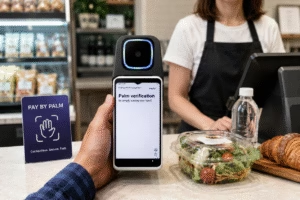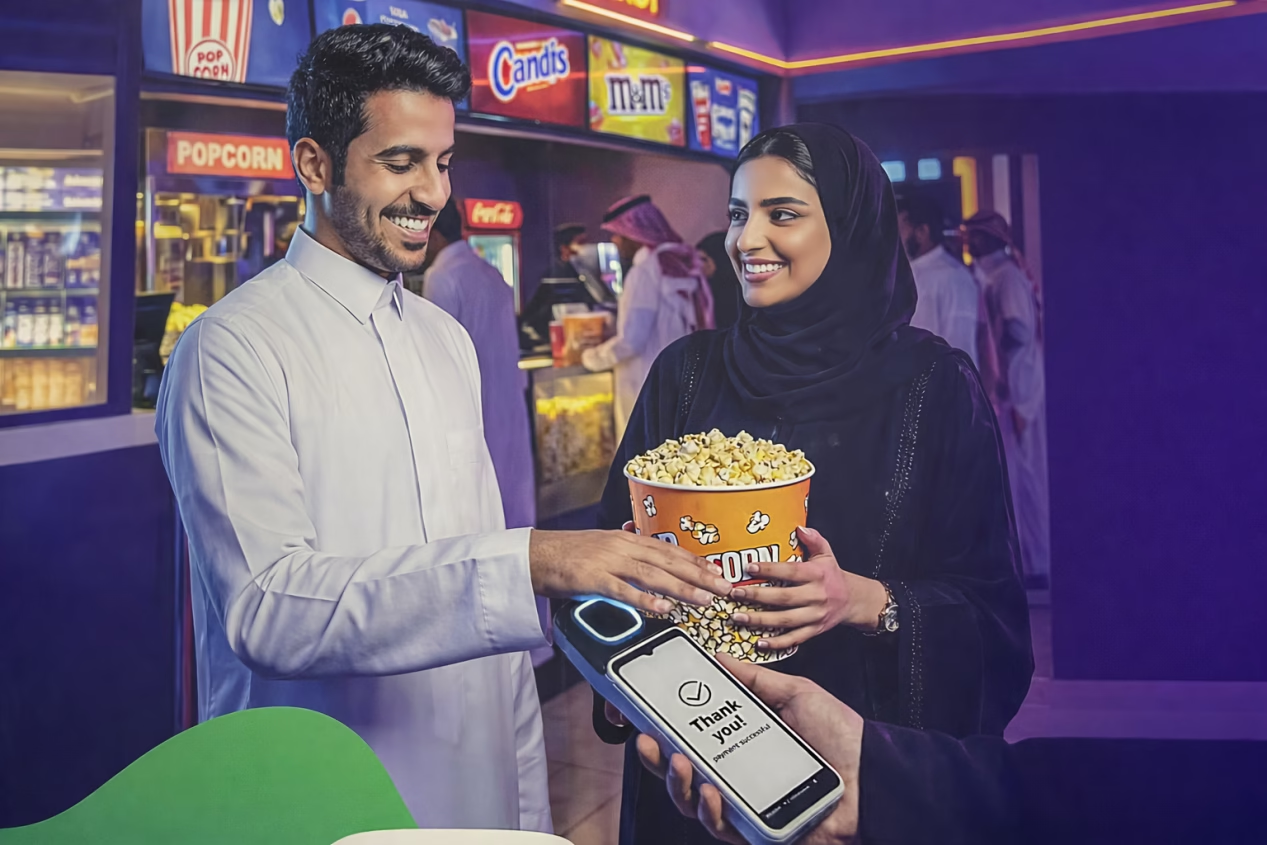
What Is BioWavePass AirOne Mobile Palm Vein POS?
As digital payments and biometric identity systems continue to converge, fintech platforms and enterprise service providers are searching for payment terminals that are not only secure, but also mobile, scalable, and ready for real-world deployment. This is where the BioWavePass AirOne Mobile Palm Vein POS plays a critical role.
BioWavePass AirOne is a mobile palm vein payment terminal designed to combine biometric identity verification and financial payment processing into a single handheld device. It is built for modern fintech, banking, e-KYC, and enterprise identity environments where mobility and security are equally important.
Understanding the BioWavePass AirOne Concept
The BioWavePass AirOne was created with a clear design philosophy:
to integrate a PalmVein01 USB palm vein scanner directly into a financial-grade POS terminal architecture.
Rather than treating biometrics as an external add-on, AirOne embeds palm vein recognition into the core structure of the device. As a result, the entire POS design follows EMV and PCI security logic, including hardware layout, power management, and secure processing zones. This approach allows organizations to adopt palm vein authentication without redesigning their payment hardware stack from scratch.
What Makes AirOne a Mobile Palm Vein POS
Palm Vein Biometrics at the Core
AirOne uses RGB plus IR dual-mode palm vein recognition to authenticate users based on internal vascular patterns beneath the skin. These patterns cannot be photographed, copied, or replicated externally, making palm vein recognition one of the most secure biometric methods available today.
This technology enables:
- Strong resistance to spoofing and replay attacks
- Stable performance across different lighting environments
- High accuracy even with large user databases
Financial-Grade POS Architecture
Unlike generic biometric devices, BioWavePass AirOne is designed as a true POS terminal. Its internal structure aligns with EMV and PCI certification requirements, making it suitable for regulated payment environments and future local certification processes.
This architecture supports:
- NFC contactless payments
- IC chip card transactions
- QR code payments
- Secure transaction handling
True Mobility for Field Operations
AirOne is a handheld, battery-powered device equipped with 4G, WiFi, Bluetooth, and USB-C connectivity. This allows it to operate independently of fixed counters or external peripherals.
It is especially suitable for:
- Mobile banking and field onboarding
- Door-to-door identity verification
- Temporary service points and pop-up locations
- Remote and decentralized payment scenarios
Built on Android for Platform Integration
BioWavePass AirOne runs on Android, giving fintech and enterprise developers flexibility to integrate their own applications, SDKs, and APIs. The device supports cloud-based identity systems, payment platforms, and e-wallet architectures, making it ideal for pilot projects that can later scale into full commercial deployments.
With Android at its core, AirOne supports:
- Custom application development
- SDK and API integration
- Cloud or local biometric matching
- OTA updates and centralized device management
Typical Use Cases for BioWavePass AirOne
The AirOne Mobile Palm Vein POS is designed for a wide range of scenarios, including:
- Fintech wallet payments and merchant acquiring
- Banking onboarding and e-KYC registration
- Government benefit distribution and identity programs
- Enterprise authentication and access verification
- Retail, transportation, healthcare, and education services
In each case, AirOne acts as both an identity gateway and a payment endpoint.
Why BioWavePass AirOne Matters
As payment ecosystems evolve, organizations need solutions that reduce fraud, protect user privacy, and remain flexible enough to scale. BioWavePass AirOne addresses these needs by combining palm vein biometrics, financial-grade hardware design, and mobile deployment capability into one integrated device.
It is not just a biometric scanner.
It is not just a payment terminal.
BioWavePass AirOne is a mobile palm vein POS built for the next generation of secure digital identity and payments.
Conclusão
So, what is BioWavePass AirOne Mobile Palm Vein POS?
It is a handheld, Android-based payment terminal that integrates palm vein authentication directly into a financial-grade POS architecture. By unifying identity verification and payment processing, AirOne provides a practical, scalable foundation for fintech platforms and enterprises building secure, contactless payment systems.
For organizations exploring palm vein payment technology, BioWavePass AirOne offers a clear and deployment-ready path forward.
Check the AirOne Demo video from: https://www.youtube.com/watch?v=ZRwbAB4yRgM
Partilhar este artigo
Sobre o autor

Também pode gostar
Scaling Palm Vein Payment: Single Server or Kubernetes Cluster?
Before You Scale Palm Vein POS: A Terminal Management Checklist
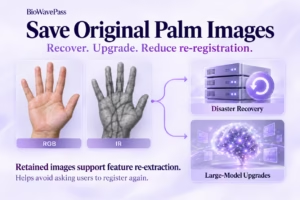
Why Saving Original Palm Images Matters for Biometric Recovery and Future Upgrades By BioWavePass
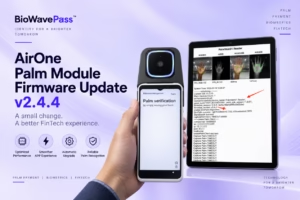
Optimizing Palm Payment Performance: AirOne Palm Module Firmware v2.4.4
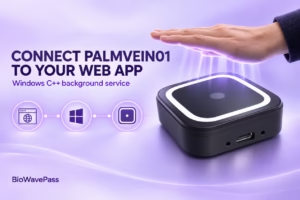
Bringing Palm Vein Scanning into a Web Workflow
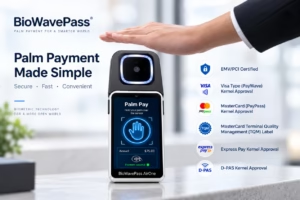
From Palm Payment MVP to Commercial Deployment: Building a Scalable Biometric Payment System
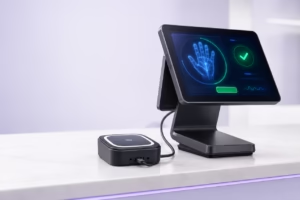
How to Integrate a USB Palm Vein Scanner with a POS Terminal
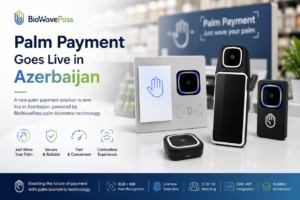
Palm Payment Goes Live in Azerbaijan: From Biometric Technology to Real-World Payment
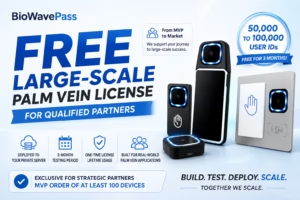
From MVP to Market: Scaling Palm Vein Technology with BioWavePass