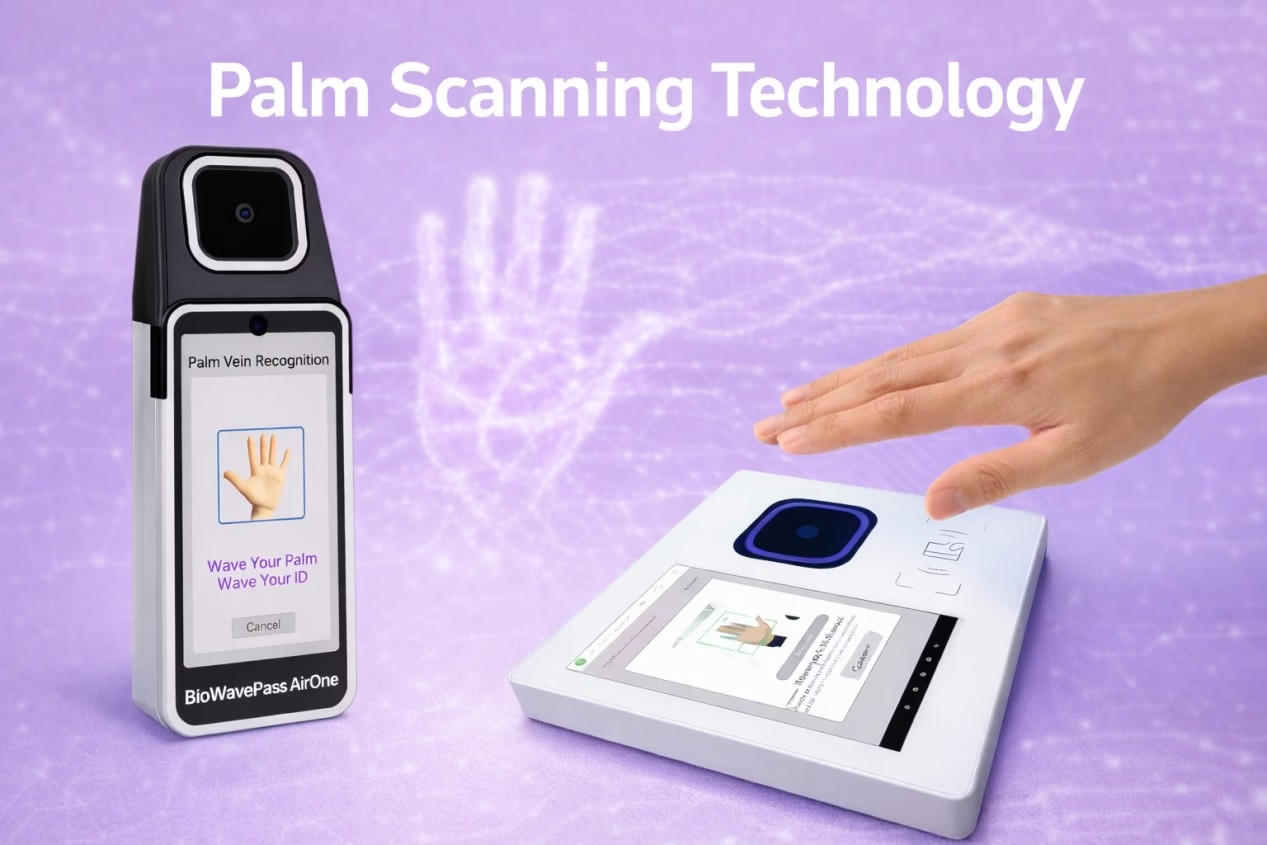
Palm scanning technology is a truly contactless biometric method that identifies a person using the unique characteristics found both on the surface of the palm and inside the palm. Instead of recognising a user through a password, card, or mobile device, palm scanning turns the hand itself into a secure digital identity.
With BioWavePass palm-vein devices, the scanner captures two layers of biometric information:
- NIR infrared imaging to read palm vein structure beneath the skin
- RGB visible-light imaging to detect palm print lines and surface texture
Because palm veins sit under the skin and can only be read when real blood is flowing, the technology is naturally private, secure, and resistant to spoofing.
In daily use, this means something very simple:
No phone. No password. No plastic card.
Just a wave of your palm to confirm who you are.
How Does Palm Scanning Work?
Although it sounds advanced, palm scanning is quick, intuitive, and touch free.
1. Your Palm Is Scanned
The user simply holds their hand above the BioWavePass scanner. The device simultaneously captures:
- Palm print patterns and surface texture using RGB imaging
- Palm vein structure beneath the skin using infrared imaging
No touching. No physical contact.
2. Your Palm Data Becomes a Secure Template
The system does não store palm photos.
Instead, the biometric information is converted into an encrypted mathematical template. This template is used for matching later during authentication.
3. Authentication Happens in Under a Second
When the user scans again, the system checks whether the new scan matches the stored template.
If it matches, identity is verified and the process is complete.
Fast. Silent. Friction free.
Why Is Palm Scanning So Secure?
Palm scanning has several built in security advantages:
Internal biometrics
Palm veins are hidden inside the body and cannot be photographed or copied like fingerprints.
Natural liveness detection
Veins can only be scanned when real blood is flowing.
Dual mode recognition
BioWavePass uses both palm print and palm vein data together, strengthening accuracy compared to single mode biometrics.
Stronger privacy than face recognition
Your face is public.
Your palm vein pattern is not.
That difference matters.
A True Contactless Experience
Palm scanning delivers a natural and hygienic interaction:
- No touching hardware
- No hygiene concerns
- Works even with dry or worn skin
- Easy for users of all ages
- No dependency on carrying a phone
Most importantly:
You are the key.
Data Security and Privacy Protection
BioWavePass is built on a privacy first architecture where the customer always owns their data.
All palm related data and images are:
- Encrypted using AES-256
- Stored only on the customer’s own local or cloud servers
- Protected during transmission using HTTPS over SSL
- Encrypted at rest using AES-256 CBC
Data is encrypted when written and decrypted only when accessed.
BioWavePass does não store, access, or operate any biometric databases.
This ensures true data ownership and compliance readiness.
Where Can Palm Scanning Be Used?
Palm scanning technology fits naturally in environments where security and convenience both matter:
- Contactless payments and checkout
- Digital identity and e-KYC
- Healthcare and patient identity
- Workforce identity and secure building access
- Smart retail and self service kiosks
Anywhere secure, friction free authentication is needed, palm scanning is a strong fit.
Why Choose BioWavePass?
BioWavePass focuses on developing next generation palm vein recognition devices and SDKs that integrate seamlessly into real world systems.
We support:
- Fintech and payment platforms
- Banks and digital wallet providers
- Government identity projects
- Healthcare institutions
- Access control and security integrators
Our technology provides:
- Dual mode palm print and palm vein recognition
- Developer friendly SDKs
- High quality RGB and IR imaging
- Scalable deployment capability
- A privacy first data model
BioWavePass provides the biometric technology foundation.
Our partners retain full platform and user ownership.
The Future: Your Palm as Your Digital Identity
Palm scanning represents a shift toward identity that feels simple, human, and secure.
No passwords to remember.
No cards to carry.
No plastic wallets to lose.
Just your palm.
And with BioWavePass palm vein technology, that future is already here.
Partilhar este artigo
Sobre o autor

Também pode gostar
Which Is the Best EMV & PCI Certified Palm Vein POS Terminal?
Will Palm Vein POS Support Existing EMV, NFC, and QR Payment Ecosystem?

Why Palm Vein Technology Is Emerging as a Payment-Grade Biometric Standard
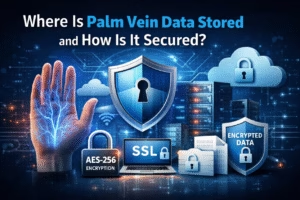
Where Is Palm Vein Biometric Data Stored and How Is It Secured?
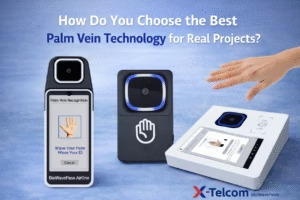
How Do You Choose the Best Palm Vein Technology for Real Projects?
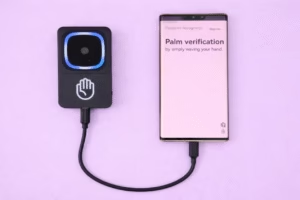
How to Solve Power Issues in Palm Vein Scanner Projects?
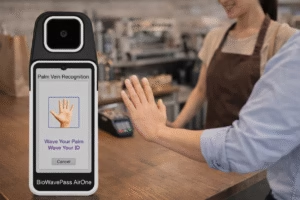
How Palm Vein Biometrics Can Be Integrated Into Mobile Payment Systems: A BioWavePass Implementation Guide
How to setup Palm Payment? Designing a Seamless Palm Payment Flow for Fintech and Payment Platforms
What Is BioWavePass AirOne Mobile Palm Vein POS?