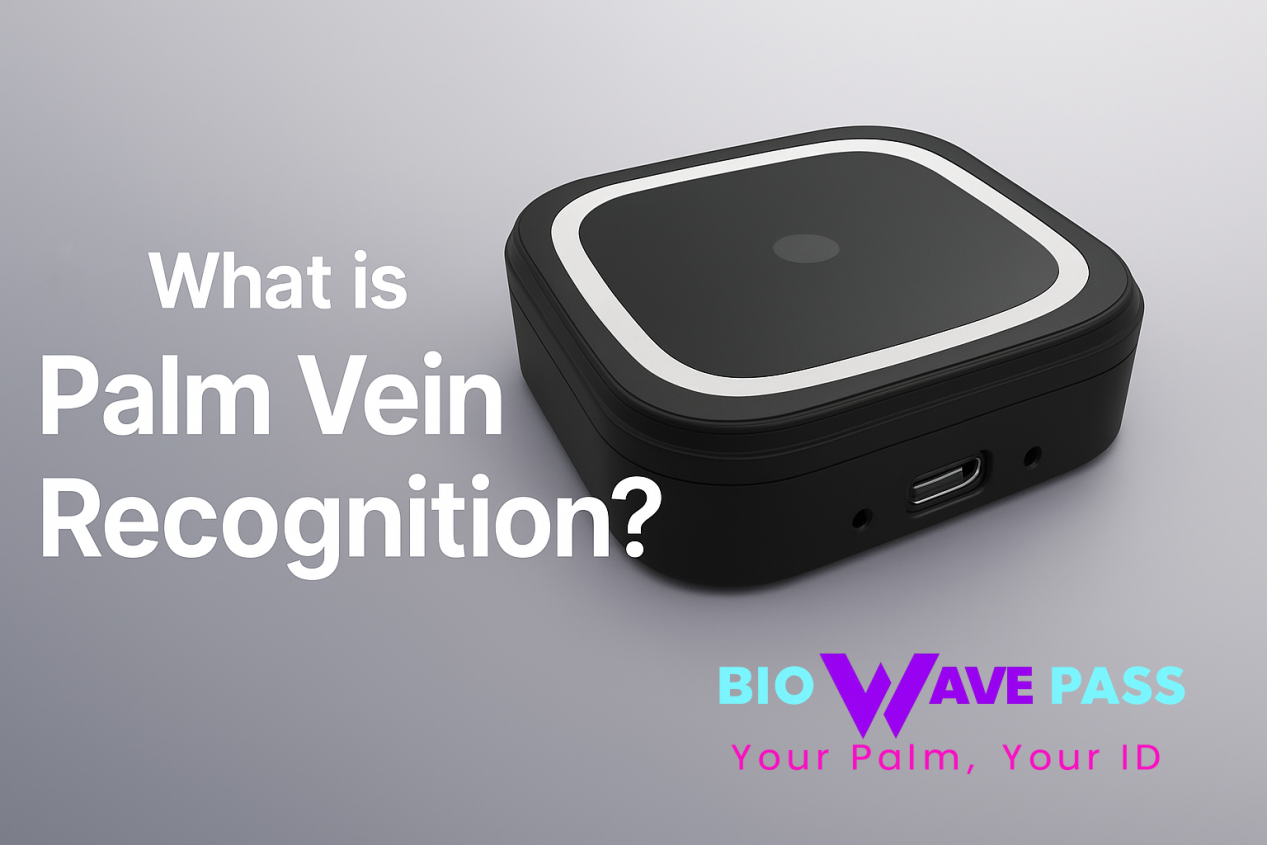
Reconhecimento de veias da palma da mão is a high-security biometric technology that verifies identity by analyzing the unique vascular patterns inside your palm. Unlike fingerprints or facial scans, which are based on external features, palm vein recognition relies on internal biological traits—making it significantly more difficult to replicate or spoof.
Em BioWavePass, we deliver advanced palm vein reader solutions that fuse infrared vein mapping com visible-light palm print recognition. This dual-spectrum architecture ensures precise, contactless identification for demanding use cases in finanças, cuidados de saúde, e government systems.
🖐 How It Works: A Two-Layer Identity Scan
Each palm contains two independent biometric signatures:
-
Subdermal Vein Map (IR/NIR)
Near-infrared light penetrates the skin and captures your unique vascular layout. -
Palm Surface Print (RGB)
A visible-light sensor records external palm features such as ridges, lines, and contours.
Using BioWavePass devices like the PalmVein 01 USB Reader or WavePass500 Android Terminal, both image types are captured simultaneously—enabling a dual verification pathway that resists spoofing and enhances reliability.
🔐 Why Palm Vein? Why It Matters Today
Compared to traditional biometrics, palm vein offers unmatched privacy, hygiene, and integrity:
| Caraterística | Reconhecimento de veias da palma da mão |
|---|---|
| Fully contactless | ✅ Sim |
| Internal + private data | ✅ Cannot be seen or copied |
| Spoof-resistance | ✅ Exceptionally high |
| Ideal for critical use | ✅ Payments, healthcare, ID |
| Platform compatibility | ✅ Android, Windows, Linux |
🌈 RGB + IR = Enterprise-Ready Precision
While many palm scanners rely solely on IR, that’s not enough for high-stakes verification.
BioWavePass uses both RGB + IR imaging, offering:
- Palm print + vein fusion
- Full image + feature data transmission
- Sub-0.35s recognition speeds on 5M+ user bases
- 99%+ accuracy rates in real-world applications
This is not just image capture.
It’s biometric computation, powered by AI.
📦 Practical Use Cases
BioWavePass devices are already securing critical services in the real world:
- 🚌 Public transport palm payments
- 🏛️ Government and eKYC onboarding
- 🏥 Patient authentication at check-in
- 💳 Banking-grade identity verification
- 🧾 Smart self-service kiosks for telecom, education, and utilities
Devices are durable, compact, and easily embedded into your infrastructure.
🧩 Final Thought
So—what is palm vein recognition?
It’s identity that runs beneath the skin.
It’s trust delivered in milliseconds.
It’s the most secure, hygienic, and scalable biometric available today.
Looking to integrate?
Reach out for SDK access, demo kits, or a tailored deployment plan.
PalmVein #PalmScanner #PalmPrint #BiometricSecurity #BioWavePass #ContactlessID #AIbiometrics #PalmAuthentication #KYC #IRandRGB #PalmVeinScanner
Partilhar este artigo
Sobre o autor

Também pode gostar
Bringing Palm Vein Scanning into a Web Workflow
From Palm Payment MVP to Commercial Deployment: Building a Scalable Biometric Payment System
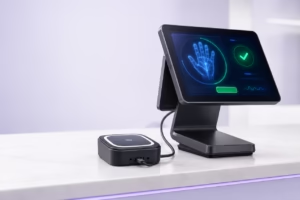
How to Integrate a USB Palm Vein Scanner with a POS Terminal
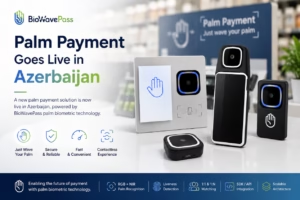
Palm Payment Goes Live in Azerbaijan: From Biometric Technology to Real-World Payment
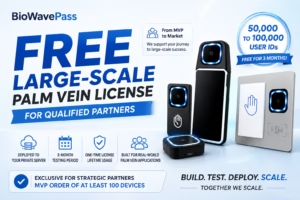
From MVP to Market: Scaling Palm Vein Technology with BioWavePass
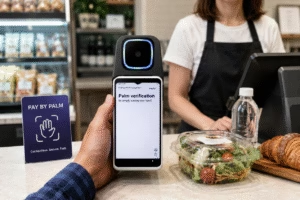
Palm Vein Payment: How Biometric Payments Work Without Cards or Phones
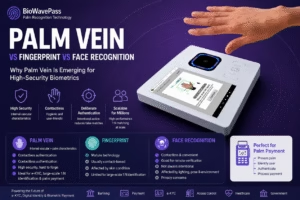
Palm Vein vs Fingerprint vs Face Recognition: Why Palm Vein Is Emerging for High-Security Biometrics
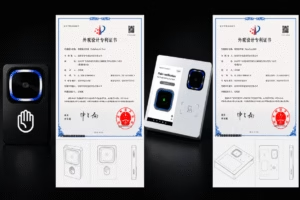
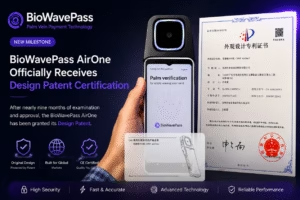
BioWavePass Palm Vein Scanner Products Receive Design Patent Certification
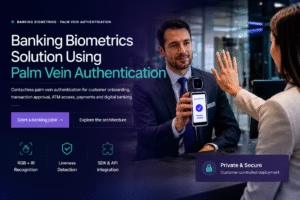
Palm Vein Authentication: The Future of Secure Digital Identity and Payments