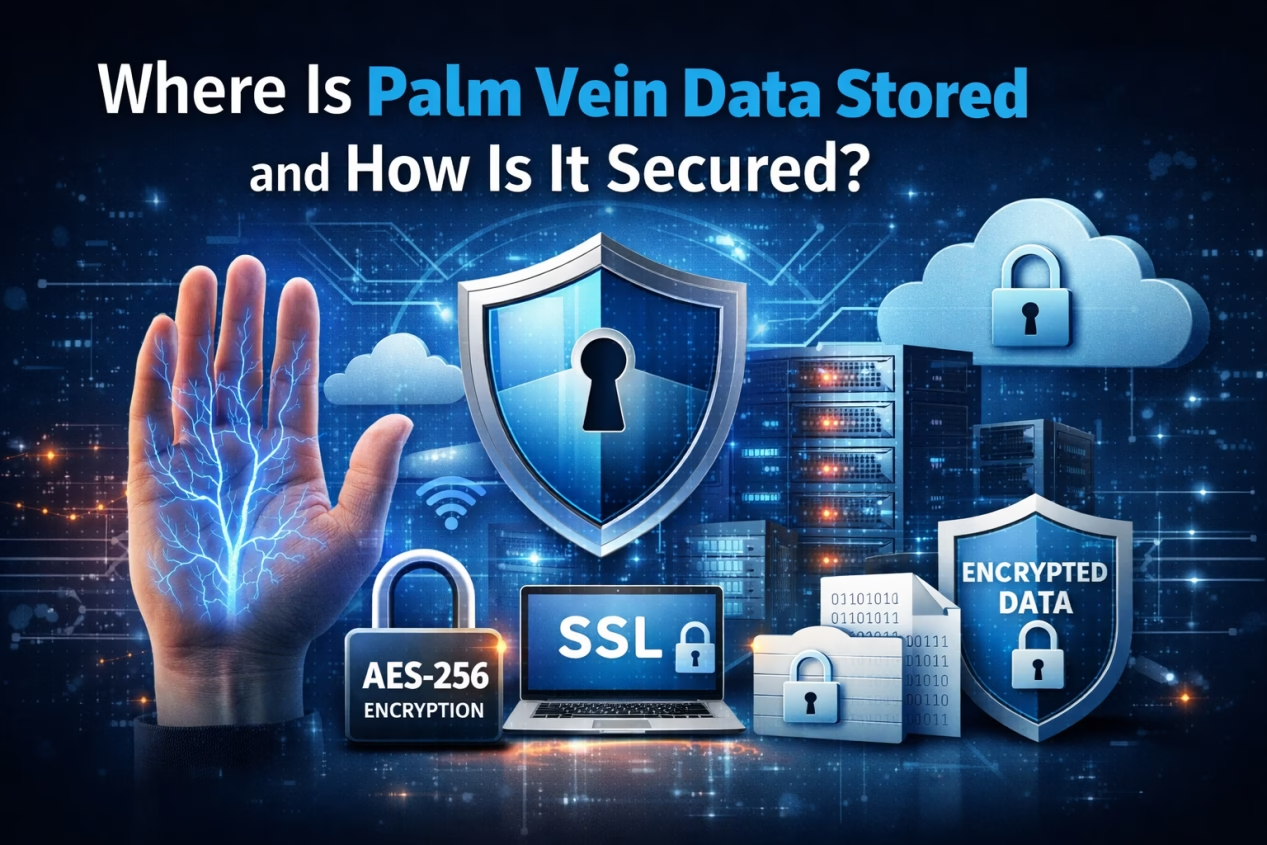
Where Is Palm Vein Biometric Data Stored and How Is It Secured?
As palm vein biometrics are increasingly used in payment, eKYC, and identity verification systems, one question consistently comes from banks, fintech platforms, and enterprise customers:
Where is palm vein data stored, and how is it secured?
At BioWavePass, data security and ownership are not optional features. They are core design principles.
Palm Vein Data Is Never Stored by BioWavePass
A common misconception is that biometric solution providers store or manage user biometric data.
This is não how BioWavePass works.
All palm vein images and biometric feature data are:
- Stored only on the customer’s own local servers or cloud infrastructure
- Fully controlled by the customer or platform owner
- Never accessed, stored, or managed by BioWavePass or X-Telcom
BioWavePass provides hardware and SDKs only.
Data ownership always remains with the customer.
What Palm Vein Data Is Collected
During enrollment and verification, the system processes:
- Palm images captured using RGB + IR sensors
- Biometric feature templates extracted by the algorithm
The templates are mathematical representations used solely for matching.
They do not contain personal identity details or payment information.
How Palm Vein Data Is Secured
BioWavePass applies multiple layers of encryption to protect biometric data throughout its lifecycle.
Encrypted Transmission
All data transmitted between devices, SDKs, and customer servers uses:
- HTTP + SSL encrypted communication
This ensures palm vein data cannot be intercepted or tampered with during transmission.
Encrypted Storage
For cloud or local storage environments, BioWavePass supports:
- AES-256 CBC encryption
- Encriptado na escrita
- Decrypted only on reading
Biometric data is never stored in plain text.
Encryption is applied automatically before data is written to disk and removed only temporarily during authorized read operations.
BioWavePass does não operate:
- Central biometric databases
- Shared biometric clouds
- Multi-tenant biometric storage platforms
Each customer deployment is fully isolated, eliminating cross-project access risks and simplifying regulatory compliance.
Designed for Payment and Regulatory Environments
Palm vein payment and identity systems demand significantly higher security standards than access control or attendance applications.
BioWavePass is designed to support:
- Payment platforms and digital wallets
- eKYC and financial onboarding systems
- Government subsidy and identity programs
- Enterprise-grade authentication environments
The security architecture aligns with strict data protection and privacy requirements across different regions.
Where BioWavePass Fits in the Architecture
BioWavePass operates strictly at the hardware and SDK layer:
- Devices capture palm vein data
- SDKs handle enrollment and matching
- Only verification results are returned to the customer system
BioWavePass does não participate in:
- User identity management
- Biometric database operations
- Payment processing or transaction storage
This clear separation of responsibility reduces security risk and increases trust.
Why This Matters
For regulators, banks, and platform owners, the most critical questions are:
- Who owns the biometric data?
- Where is it stored?
- How is it protected?
With BioWavePass, the answers are clear:
- You own the data
- You decide where it is stored
- Data is encrypted in transit and at rest
- You control access and compliance
This approach enables palm vein payment and authentication systems to scale safely from pilot deployments to large-scale commercial or national projects.
Final Thoughts
Palm vein biometrics can only succeed in payment and identity systems when security and data ownership are treated as first-class requirements.
BioWavePass is built on a simple principle:
Biometric technology should empower platforms, not take control of their data.
Learn more about BioWavePass palm vein devices and secure deployment architecture:
https://biowavepass.com/palm-vein-scanning-technology/
Partilhar este artigo
Sobre o autor

Também pode gostar
How Does Tokenization Work in Palm Vein Payment Architecture?
Can Palm Registration and Payment Be Done in One Tap? A Practical View from BioWavePass
As a Developer, How Can We Upgrade from a Small Model to a Large Model Palm Vein Recognition Algorithm Without Re-Registering Users?
How Secure Is Palm Vein Technology Against Spoofing Attacks?
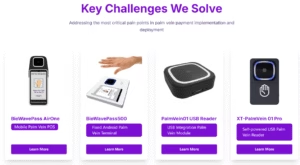
How to Choose the Right Palm Vein Recognition Device for Your Project?
Why Is It Not Recommended to Use a Single Palm Scan for Both Identification and Registration?
What Is the Next-Gen Contactless Payment Method?
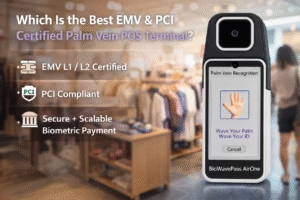
Which Is the Best EMV & PCI Certified Palm Vein POS Terminal?
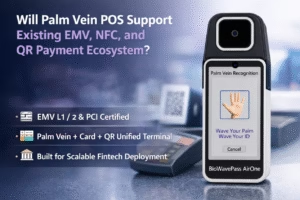
Will Palm Vein POS Support Existing EMV, NFC, and QR Payment Ecosystem?
