Which Is the Best EMV & PCI Certified Palm Vein POS Terminal?
For banks, fintech platforms, and e-wallet providers, selecting a biometric payment terminal is not just about innovation. It is about certification, integration capability, scalability, and long-term ecosystem compatibility.
So the real question becomes:
Which EMV and PCI certified palm vein POS terminal is ready for financial-grade deployment?
Why Certification Comes First
In regulated payment environments, certification is non-negotiable.
The BioWavePass AirOne is:
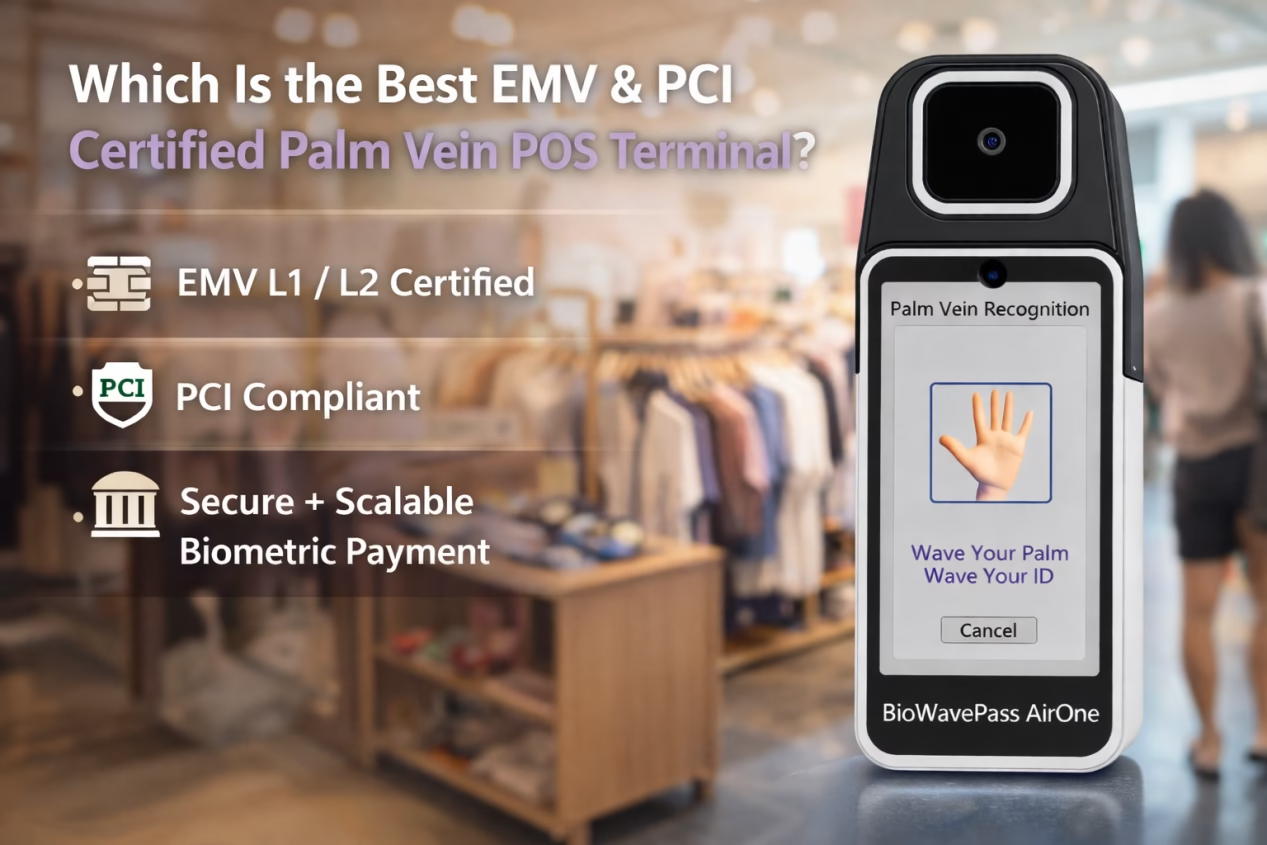
- EMV Level 1 certified
- EMV Level 2 certified
- PCI compliant
This ensures compatibility with global card schemes and secure payment processing standards required by banks and financial institutions.
Certification reduces deployment risk and accelerates regulatory approval processes.
Beyond Certification: What Makes a Palm Vein POS “Best”?
The best solution is not only certified. It must also integrate seamlessly into your existing payment infrastructure.
The BioWavePass AirOne supports:
- EMV chip transactions
- EMV contactless payments
- NFC payment flows
- QR code payments
- Integrated palm vein biometric authentication
This unified architecture allows financial institutions to introduce biometric authentication without replacing their current payment ecosystem.
Built for Fintech and Banking Infrastructure
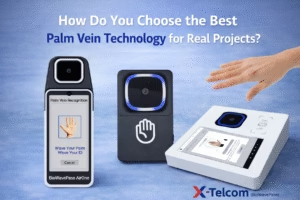
AirOne runs on Android and integrates directly into your existing payment applications via SDK and API.
BioWavePass provides:
- Android Native Java SDK
- Android Flutter SDK
- API documentation
- Private server deployment guidance
Palm vein authentication can function as:
- A primary payment method
- A second-factor authentication layer
- A secure alternative to PIN entry
Your development team controls how it connects to your core banking, settlement, and risk systems.
Data Control and Regulatory Alignment
For banks and regulated fintech companies, biometric data governance is critical.
BioWavePass provides the palm vein algorithm and device-level SDK only.
All biometric templates and transaction-related data are stored exclusively on:
- Your own local servers
- Your private cloud infrastructure
BioWavePass does not store or manage end-user biometric data.
This structure supports GDPR and other regional compliance frameworks, depending on your jurisdiction.
Scalable Licensing for National Rollouts
AirOne supports both pilot programs and large-scale deployment.
Licensing options include:
- 10,000 user IDs free for testing
- 100,000 user ID package
- 1 million user ID package
- No upper limit on total registrations
This flexibility enables:
- City-level pilot programs
- National e-wallet expansion
- Government-backed biometric payment initiatives
Why BioWavePass AirOne Stands Out
The best EMV and PCI certified palm vein POS terminal is one that:
- Meets global payment certification standards
- Integrates with existing EMV, NFC, and QR ecosystems
- Provides secure biometric authentication
- Supports scalable deployment
- Keeps data control in the hands of the financial institution
The BioWavePass AirOne was engineered with these priorities in mind.
For banks and fintech leaders seeking to introduce secure biometric payment at scale, AirOne offers a certified, integrable, and future-ready foundation.
Learn more about palm vein payment from: https://choosepalmveinpay.com/
Partilhar este artigo
Sobre o autor

Também pode gostar
Will Palm Vein POS Support Existing EMV, NFC, and QR Payment Ecosystem?

Why Palm Vein Technology Is Emerging as a Payment-Grade Biometric Standard
Where Is Palm Vein Biometric Data Stored and How Is It Secured?
How Do You Choose the Best Palm Vein Technology for Real Projects?
How to Solve Power Issues in Palm Vein Scanner Projects?
What Is Palm Scanning Technology?
How Palm Vein Biometrics Can Be Integrated Into Mobile Payment Systems: A BioWavePass Implementation Guide
How to setup Palm Payment? Designing a Seamless Palm Payment Flow for Fintech and Payment Platforms

What Is BioWavePass AirOne Mobile Palm Vein POS?