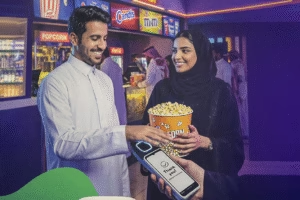
Porque é que não podemos registar o Palm Pay utilizando a câmara do telemóvel? - Informações sobre a tecnologia do WeChat Pay e do BioWavePass Palm Pay
🌐 Introduction
Palm-based biometric payment is changing how the world authenticates identity.
Platforms like Tencent WeChat Pay have already proven its reliability through Palm Pay, where users simply wave their hands to complete payments.
But a simple question keeps surfacing:
“Why can’t we just use a phone camera to register our palm?”
The answer lies in how real biometric data is captured, encrypted, and verified.
Let’s explore the exact registration flow used by WeChat Pay, and why X-Telcom’s BioWavePass adopts the same hardware-based RGB + IR technology for secure and accurate palm recognition.
🔒 WeChat (Tencent) Palm Pay Registration Process
1️⃣ Registration Entry
- Users begin registration inside the WeChat App via WeChat Pay → Biometrics → Palm.
- The phone only acts as an authorization gateway, not for biometric capture.
- Tencent confirmed that mobile registration via phone cameras was tested but later disabled due to inaccuracy and security risks.
- All active registrations now require a certified Palm Vein Scanner device.
2️⃣ Registration Method
Palm registration cannot be completed on a smartphone.
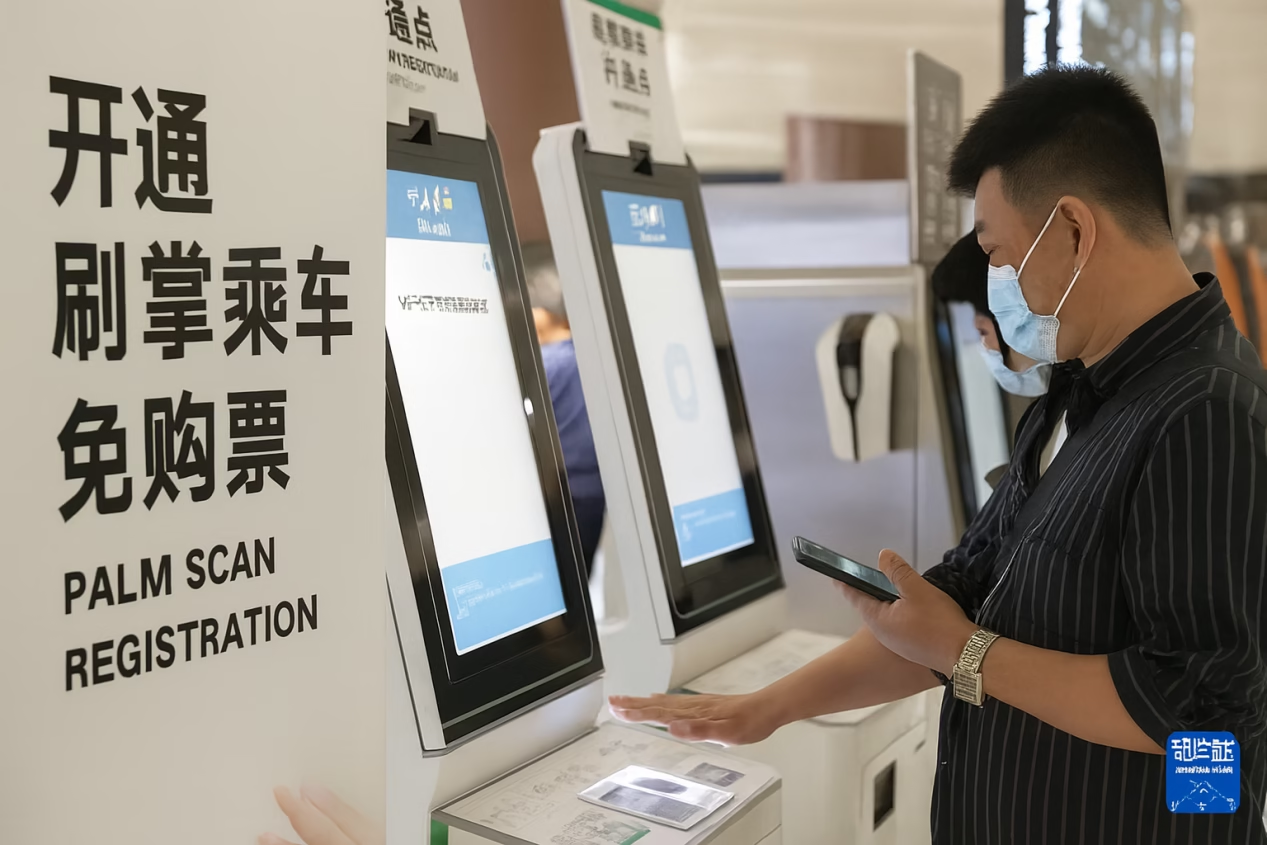
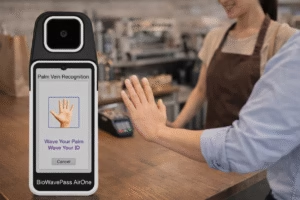
It requires a POS terminal, kiosk, or access gate equipped with a Scanner de veias da palma da mão.
Process Overview:
- User agrees in the WeChat App to activate Palm Pay.
- User visits a certified terminal with a palm scanner.
- The scanner captures RGB + IR images of the palm’s structure and vein network.
- The encrypted data is uploaded securely to WeChat Pay’s backend, where a unique token links the palm to the user’s account.
3️⃣ Data Binding
- The merchant terminal does not store any biometric data.
- Palm data is encrypted and securely stored in Tencent’s backend database.
- O Palm ID is bound to the user’s WeChat account and linked bank card/wallet.
4️⃣ Usage Scenarios
Once registration is complete, users can simply wave their palm to pay — no card or phone required.
✅ Typical scenarios include:
- Public transportation (bus, metro, gate)
- Retail checkout and vending kiosks
- Smart access and identity verification systems
This seamless experience is only possible through certified RGB + IR hardware, ensuring both precision and safety.
📸 Why Smartphones Can’t Replace Palm Vein Devices
Smartphone cameras capture color (RGB) — but not infrared (IR) light, which is essential for detecting subcutaneous vein patterns unique to each person.
| Limitation | Explanation |
|---|---|
| No Infrared Imaging | Palm Vein scanners use IR to detect blood vessel patterns under the skin — invisible to normal cameras. |
| Lighting Variations | Smartphone photos fluctuate with ambient light, angles, and distance — causing unstable biometric data. |
| No Real-Time Encryption | Certified scanners encrypt data instantly, while phones can’t meet financial-grade encryption standards. |
That’s why WeChat Pay — and now BioWavePass — insist on RGB + IR scanners for secure biometric registration.
💡 BioWavePass: Global Palm Vein Payment Solution
Em BioWavePass, we designed Tecnologia Palm Vein using the same technical logic proven by WeChat Pay — combining RGB + IR sensors, AI-based image fusion, and on-device encryption.
Core Highlights:
- ✅ Dual-spectrum imaging (RGB + IR) for unmatched accuracy and anti-spoofing.
- ⚡ Recognition speed: 0.35 seconds with 99% success rate in databases over 5 million IDs.
- 🧠 AI-driven algorithm ensures precision even under poor lighting.
- 🔒 Full SDK/API support for payment, eKYC, and access systems.
Key Devices:
- WavePass500 Android Palm Vein Payment Terminal
- PalmVein01 Leitor de veias da palma da mão USB (Windows / Linux / Android)
These devices ensure compliant, encrypted, and scalable palm registration for global partners.
🌍 From WeChat Pay to Worldwide Adoption
O WeChat Palm Pay model proves that accurate palm registration must depend on certified RGB + IR hardware.
BioWavePass extends this standard globally — enabling:
- Secure palm registration for digital wallets and payment platforms.
- Integration into fintech, government, and smart city systems.
- Deployment across POS terminals, kiosks, and transport gates.
✅ Conclusão
A phone camera can see your hand — but only RGB + IR technology can identify who you are.
The lesson from Tencent WeChat Pay is clear:
Palm Pay registration must use certified RGB + IR scanners to ensure security, accuracy, and compliance.
With Tecnologia BioWavePass para as veias da palma da mão, this proven model is now available worldwide — bringing reliable, touch-free, and intelligent payment solutions to every market.
Tags:
#BioWavePass #PalmVeinTechnology #WeChatPay #Tencent #PalmPay #BiometricPayment #ContactlessPayment #Fintech #Security #Innovation #AI #DigitalIdentity
Partilhar este artigo
Sobre o autor

Também pode gostar
Which Is the Best EMV & PCI Certified Palm Vein POS Terminal?
Will Palm Vein POS Support Existing EMV, NFC, and QR Payment Ecosystem?

Why Palm Vein Technology Is Emerging as a Payment-Grade Biometric Standard
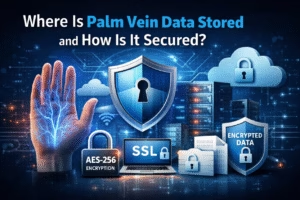
Where Is Palm Vein Biometric Data Stored and How Is It Secured?
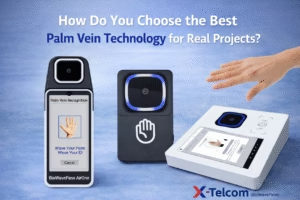
How Do You Choose the Best Palm Vein Technology for Real Projects?
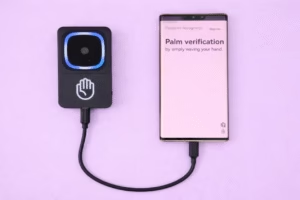
How to Solve Power Issues in Palm Vein Scanner Projects?
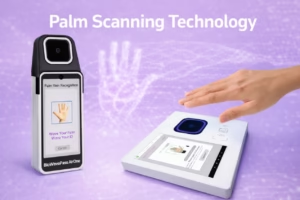
What Is Palm Scanning Technology?
How Palm Vein Biometrics Can Be Integrated Into Mobile Payment Systems: A BioWavePass Implementation Guide
How to setup Palm Payment? Designing a Seamless Palm Payment Flow for Fintech and Payment Platforms