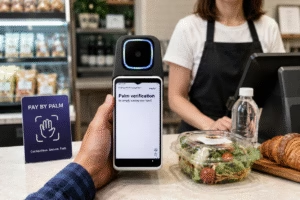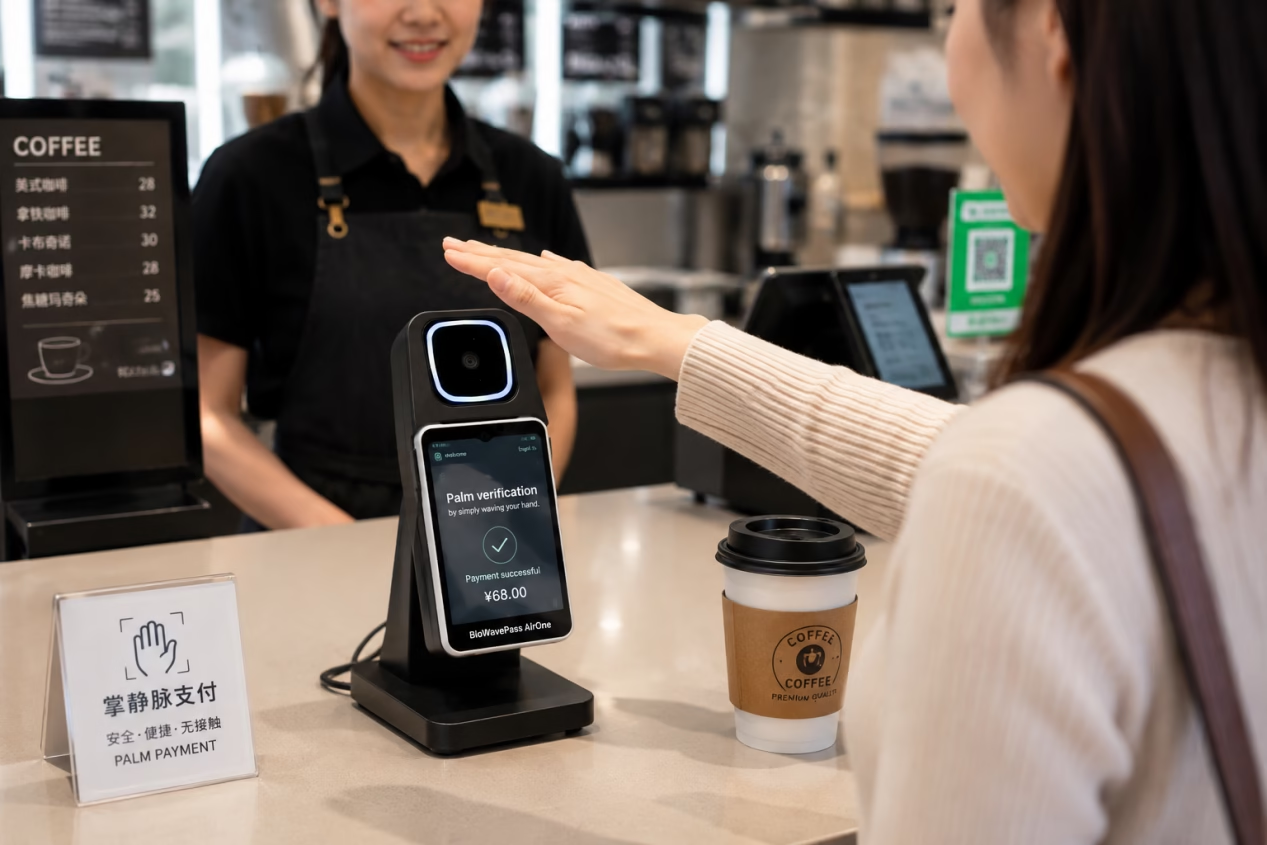
What is Palm Payment China?
Palm Payment China refers to a new generation of biometric payment technology that allows users to complete payment by scanning their palm.
Instead of using a bank card, mobile phone, QR code, or password, the user only needs to place or wave their palm above a palm vein recognition device. The system verifies the user’s palm vein identity and then connects this identity to the customer’s payment platform.
In simple words, palm payment turns the human palm into a secure identity key for payment.
Why Is Palm Payment Growing in China?
China has been one of the fastest markets for digital payment innovation. From QR code payment to face recognition payment, users are already familiar with fast and contactless payment experiences.
Palm payment is now gaining attention because it offers a better balance between convenience, privacy, and security.
Compared with face recognition, many users feel palm payment is less intrusive. A face is visible everywhere, but palm vein patterns are internal biological features. Users only need to wave their hand, which feels more natural and less sensitive in public payment environments.
How Does Palm Payment Work?
A palm payment system usually includes three layers:
-
Palm vein recognition device
The device captures palm print and palm vein features. -
Biometric algorithm
The algorithm verifies whether the palm belongs to the registered user. -
Customer payment platform
The customer’s own system handles wallet, tokenization, payment authorization, and transaction processing.
BioWavePass provides the palm vein hardware, algorithm, SDK/API, and integration support. The payment platform and transaction processing are managed by the customer.
Why Palm Vein Is Suitable for Payment
Palm vein recognition uses internal vein patterns under the skin. These patterns are difficult to copy and require live biological detection.
Key advantages include:
- Contactless user experience
- High security
- Fast verification
- Strong anti-spoofing capability
- Suitable for large-scale user databases
- Better privacy perception than face recognition
- Convenient for retail, transport, banking, and self-service payment
This makes palm vein technology highly suitable for payment scenarios where both speed and security are important.
BioWavePass Palm Payment Solution
BioWavePass supports palm payment deployment through a complete biometric identity layer.
The solution can include:
- BioWavePass AirOne palm payment terminal
- WavePass500 fixed palm recognition terminal
- PalmVein01 USB palm vein module
- PalmVein01 Pro self-powered USB palm vein scanner
- RGB + IR dual-mode recognition
- SDK/API integration support
- Small Model and Large Model algorithm options
For POC testing, BioWavePass provides a free 10,000 user ID license. For commercial deployment, the system can scale from 100K users to millions of users.
Data Ownership and Compliance
All palm vein data and images are encrypted with AES-256 and stored on the customer’s own server.
The customer owns and controls both the system and the data. BioWavePass does not store, manage, or participate in customer biometric data management.
This architecture supports privacy protection, compliance control, and GDPR-aligned deployment.
Conclusion
Palm Payment China shows how biometric payment is moving beyond cards, phones, QR codes, and face recognition.
For banks, fintech platforms, e-wallet providers, and payment solution companies, palm vein payment offers a secure, contactless, and privacy-friendly way to build the next generation of payment experience.
BioWavePass helps customers build this biometric payment layer with palm vein devices, scalable algorithms, SDK/API support, and customer-controlled data deployment.
Learn More: https://biowavepass.com/palm-payment-technology/
Share this article
About the Author

You might also like
Scaling Palm Vein Payment: Single Server or Kubernetes Cluster?
Before You Scale Palm Vein POS: A Terminal Management Checklist
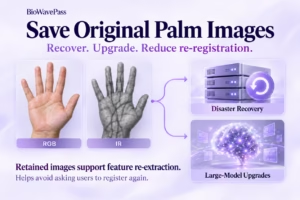
Why Saving Original Palm Images Matters for Biometric Recovery and Future Upgrades By BioWavePass
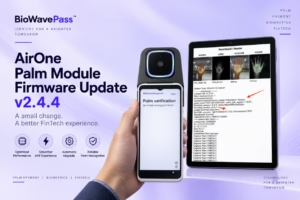
Optimizing Palm Payment Performance: AirOne Palm Module Firmware v2.4.4
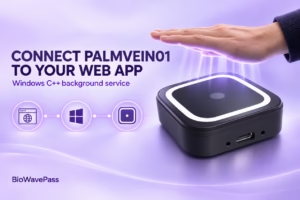
Bringing Palm Vein Scanning into a Web Workflow
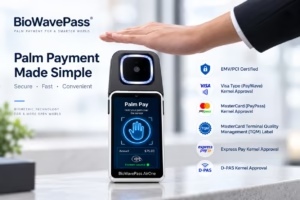
From Palm Payment MVP to Commercial Deployment: Building a Scalable Biometric Payment System
How to Integrate a USB Palm Vein Scanner with a POS Terminal
Palm Payment Goes Live in Azerbaijan: From Biometric Technology to Real-World Payment
From MVP to Market: Scaling Palm Vein Technology with BioWavePass