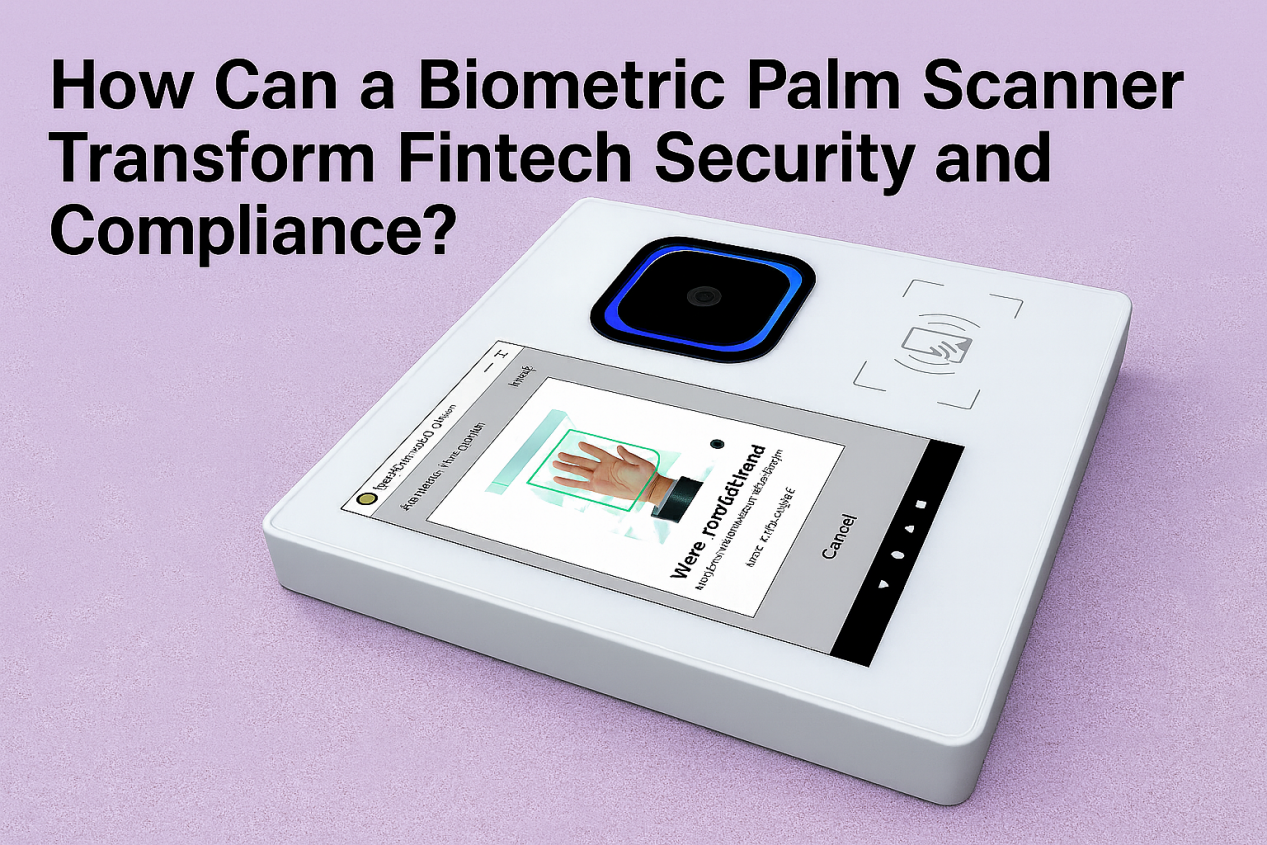
لماذا يجب على شركات التكنولوجيا المالية اعتماد الماسحات الضوئية البيومترية لراحة اليد من أجل الأمن والامتثال؟
Fraud, compliance costs, and user drop-off are major pain points for fintech platforms. Traditional cards and PIN codes can no longer protect high-value transactions.
إن نظام نقاط البيع WavePass500 البيومترية bridges biometric security مع legacy card compatibility, providing a compliance-friendly solution for banks and fintechs.
Industry Pain Points
- Transaction Fraud: Billions lost yearly from card cloning and stolen credentials.
- Complex Authentication: Users abandon apps when forced through OTPs and multi-steps.
- Compliance Pressure: Meeting PCI DSS, EMVCo, and regional eKYC requirements is costly.
Why WavePass500 Fits Fintech
- Palm Vein Biometrics: Subcutaneous vein matching, nearly impossible to fake.
- Card Support: Reads ISO7816 contact cards و ISO14443A NFC cards for inclusivity.
- Developer APIs: Easy integration into e-wallets, mobile banking, or payment platforms.
الخاتمة
Fintechs can enhance fraud prevention, compliance, and user trust with WavePass500.
Instead of choosing between cards or biometrics, offer both in a single terminal.
شارك هذه المقالة
نبذة عن الكاتب

قد يعجبك أيضاً
Can a Palm Vein SDK Capture Data Without an Algorithm Server?
“We already have our own backend. Can the terminal simply scan a palm and return the biometric data for us to process?” This is a practical question for teams building
Palm Vein Image Encryption: Why AES-256-GCM Alone Does Not Guarantee Compatibility
Your development team has implemented AES-256-GCM encryption. The algorithm server also uses AES-256-GCM. Yet an encrypted palm image still fails to process. Why? Using the same encryption algorithm does not
Large-Scale Palm Vein Recognition: How to Test the SDK and Plan for Growth
Before investing in a large-scale palm vein recognition system, product and development teams need to answer a practical question: How can we test the technology before purchasing an algorithm licence?

Palm Vein Payment SDK: Direct Algorithm Server Integration or Your Own Backend?
BioWavePass’s large-scale palm vein SDK supports two integration routes: connecting directly to the Algorithm Server, or connecting through your own backend. Both require a valid server URL and the response
Palm Vein Deployment Support: Who Can Access Your Servers?
Before introducing palm vein authentication into a production environment, IT teams need to know who will access their servers, what permissions are required and whether that access will continue after
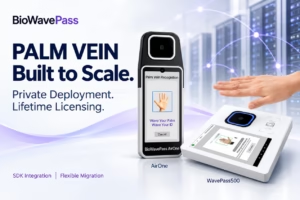
Scaling Palm Vein Payment: Single Server or Kubernetes Cluster?
A palm vein payment pilot may begin with a few terminals and a limited group of users. As the project grows, one infrastructure question becomes increasingly important: Should your palm
Before You Scale Palm Vein POS: A Terminal Management Checklist
Your pilot has demonstrated the user experience. The next question is how to operate the terminals across multiple locations. Who will prepare new devices? How will applications be distributed? What
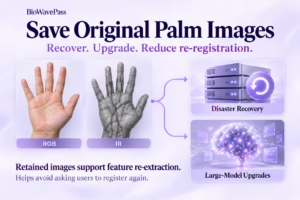
Why Saving Original Palm Images Matters for Biometric Recovery and Future Upgrades By BioWavePass
A successful Palm Vein Recognition deployment needs to support more than today’s matching requirements. It should also be prepared for server failures, lost biometric feature data and future algorithm upgrades.
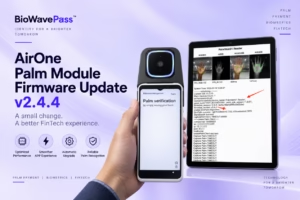
Optimizing Palm Payment Performance: AirOne Palm Module Firmware v2.4.4
In a palm payment system, recognition accuracy is important, but the overall user experience also depends on how efficiently the biometric technology works together with the payment application. BioWavePass has
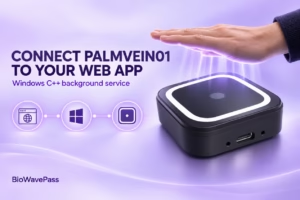
Bringing Palm Vein Scanning into a Web Workflow
Web applications are effective at managing users and business workflows. Connecting one to a USB palm vein scanner requires an additional software layer, because BioWavePass does not currently provide a