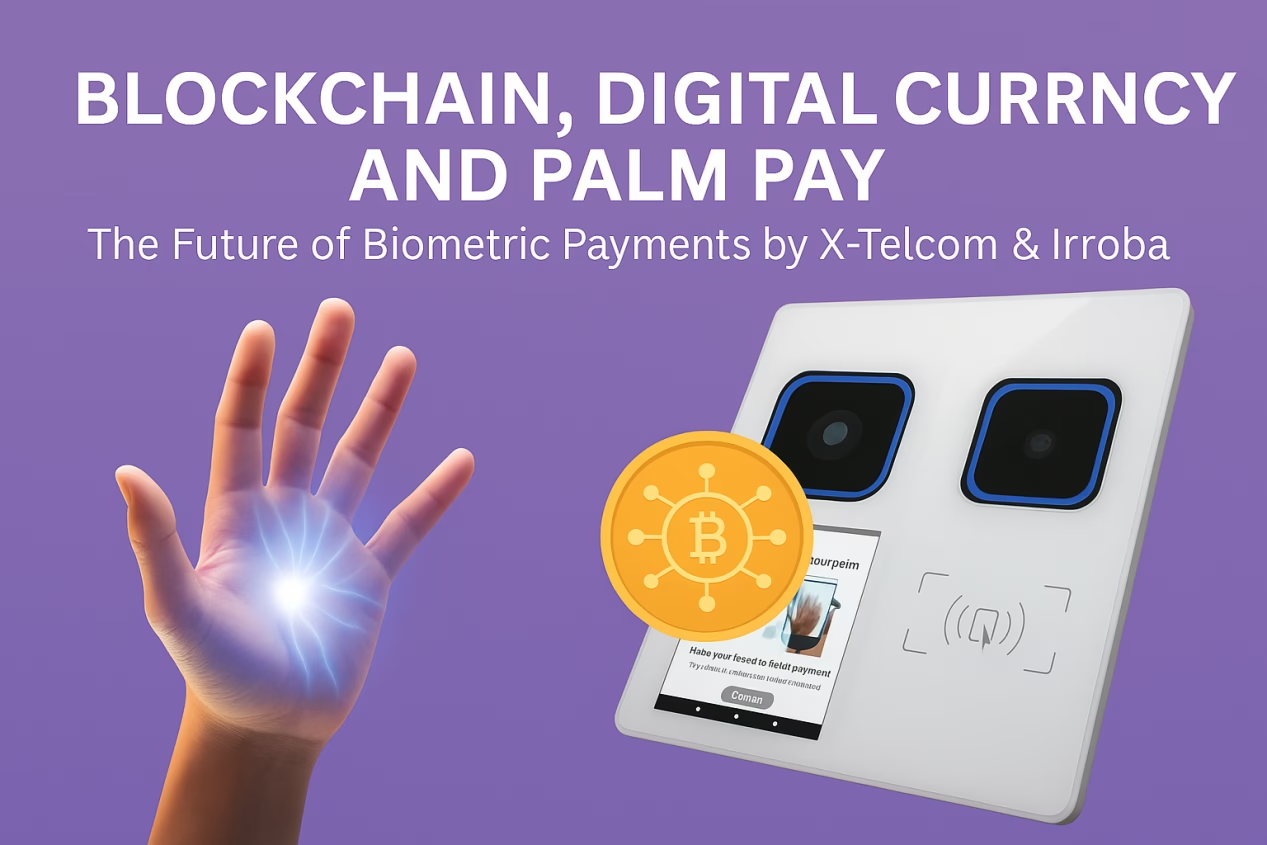
BioWavePass (X-Telcom) e Irroba introducen en el mercado el pago por vena de la palma de la mano basado en Blockchain
Introducción
As global fintech accelerates toward biometric and blockchain convergence, BioWavePass (X-Telcom) y Irroba are taking a major leap forward — launching a commercially deployed Palm Vein Payment Solution that combines biometric identity, blockchain infrastructure, and cryptocurrency support.
This partnership not only showcases innovation but also demonstrates real-world readiness, bringing secure and contactless palm-based payments to Brazil and global fintech ecosystems.
About Irroba 🇧🇷
Founded in 1997, Irroba is a Brazilian technology company with deep expertise in payment systems, e-commerce platforms, and digital transformation.
Core Capabilities
- 💳 Advanced payment gateway integration
- 🔗 Blockchain-based architecture supporting tokenized transactions
- 🪙 Cryptocurrency payments for modern fintech applications
- 🛍️ E-commerce, logistics, and digital infrastructure solutions
- 🏛️ Government, retail, and finance sector innovation
With more than 28 years of operational excellence, Irroba serves as a trusted digital enabler for fintech companies looking to modernize legacy systems and embrace the future of blockchain payments.
Learn more about Irroba’s background.
A Global Partnership with Real-World Impact 🌍
BioWavePass (X-Telcom) y Irroba are collaborating to bring palm vein payment to commercial life — a contactless biometric solution that ensures security, privacy, and interoperability across blockchain and traditional financial environments.
What Makes It Different
- 🖐️ Palm Vein Biometrics: Combines Imágenes de doble espectro RGB + IR for precise, spoof-proof authentication. [Fujitsu Research on Palm Vein Tech]
- 🔗 Blockchain Integration: Enables transaction transparency and identity verification across distributed ledgers. [IBM Blockchain Explained]
- 🪙 Crypto Compatibility: Supports digital currency and token payments via Irroba Pay infrastructure. [Cointelegraph Fintech Insight]
- 💻 API & SDK Integration: Easily connects with POS systems, e-wallets, and mobile payment apps.
- 🏦 Compliance Ready: Meets PCI, EMV, and data sovereignty standards. [PCI Security Standards Council]
Together, the two companies have built a fully interoperable Palm Vein Payment platform — one that bridges biometric security with the decentralized finance (DeFi) ecosystem.
Why Blockchain + Palm Vein Is the Next Payment Revolution
| Key Element | How It Works | Por qué es importante |
|---|---|---|
| Biometric Layer | Secure palm vein ID for user verification | Eliminates passwords and fraud risks |
| Blockchain Layer | Immutable ledger for transaction tracking | Provides trust and transparency |
| Crypto Layer | Enables multi-currency (fiat + crypto) support | Expands financial accessibility |
| Integration Layer | SDKs & APIs for Android, Linux, Windows | Accelerates fintech deployment |
| Analytics Layer | Cloud-based biometric transaction monitoring | Supports regulatory compliance and auditability |
Commercial Deployment Readiness 🚀
Unlike most biometric prototypes, this is a fully deployed, field-tested solution — ready for enterprise-scale adoption.
- ✅ Integrated into Irroba Pay, enabling both fiat and crypto payments
- ✅ Compatible with existing POS networks and gateways
- ✅ Includes Palm Vein SDK, API documentation, and integration support
- ✅ Field-tested across Brazil’s retail, banking, and logistics sectors
- ✅ Supports private-cloud, hybrid, and blockchain-linked deployment models
Fintech providers and banks can now deploy biometric payments without replacing existing hardware, drastically reducing cost and deployment time.
Industry Applications 💼
- 🏪 Retail & E-commerce: Card-free, crypto-enabled checkout.
- 🏦 Banking: Biometric eKYC and digital wallet authentication. [Finextra Banking Biometric Report]
- 🚍 Transportation: Blockchain-backed identity for transit systems.
- 🏥 Healthcare: Secure, contactless patient verification.
- 🏛️ Government: Transparent subsidy and benefits distribution.
Strategic Benefits for FinTechs & Banks
| Benefit | Description |
|---|---|
| Scalable Security | Palm vein biometrics reduce fraud by up to 99.999%. |
| Future-Proof Technology | Blockchain and crypto-ready infrastructure. |
| Fácil integración | BioWavePass SDK simplifies fintech onboarding. |
| Compliance Assurance | Full support for data privacy and audit standards. |
| Seamless Upgrade Path | Works with existing POS systems and digital wallets. |
Why Palm Vein Payment Is the Future
Palm-based authentication offers not only security but also emotional and experiential value that modern consumers crave.
Beyond technology, users love the simplicity:
✨ No phone. No card. Just your hand.
💫 No PIN. No password. Just a gesture.
It’s more than convenience — it’s a symbol of digital freedom.
And with blockchain and crypto integration, it’s also borderless, transparent, and decentralized.
Palm Vein Payment will be the future — not only for how people pay, but for how they connect to the digital economy.
Conclusion ✨
Through their joint innovation, BioWavePass (X-Telcom) y Irroba have proven that blockchain, cryptocurrency, and palm vein biometrics can coexist in a unified, real-world payment ecosystem.
This is the beginning of a new era — where biometric identity meets decentralized finance, and your hand becomes your ultimate digital wallet.
The future of payment isn’t in your pocket. It’s in your palm.
Comparte este artículo
Sobre el autor

También le puede interesar
Bringing Palm Vein Scanning into a Web Workflow
From Palm Payment MVP to Commercial Deployment: Building a Scalable Biometric Payment System
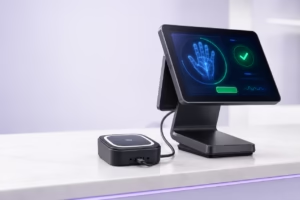
How to Integrate a USB Palm Vein Scanner with a POS Terminal
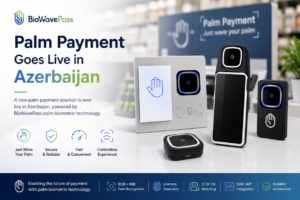
Palm Payment Goes Live in Azerbaijan: From Biometric Technology to Real-World Payment
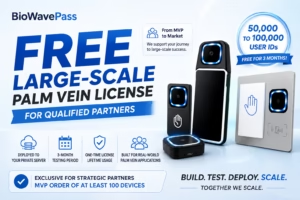
From MVP to Market: Scaling Palm Vein Technology with BioWavePass
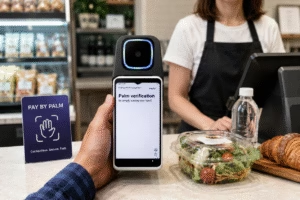
Palm Vein Payment: How Biometric Payments Work Without Cards or Phones
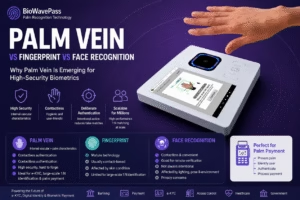
Palm Vein vs Fingerprint vs Face Recognition: Why Palm Vein Is Emerging for High-Security Biometrics
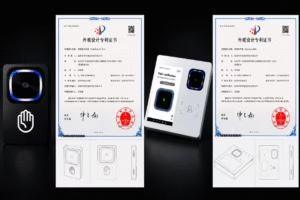
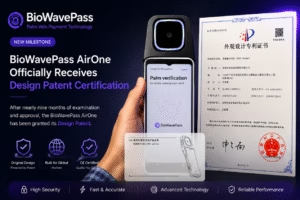
BioWavePass Palm Vein Scanner Products Receive Design Patent Certification
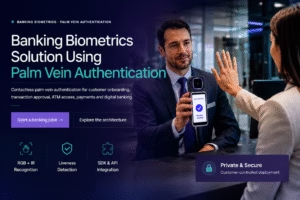
Palm Vein Authentication: The Future of Secure Digital Identity and Payments