How to Choose the Right Palm Payment Hardware Platform for Your Fintech or Banking Project
As Palm Pay continues to gain momentum across banking, digital wallets, government services, and fintech ecosystems, selecting the right hardware platform has become one of the most important decisions in any deployment.
Many organizations focus primarily on biometric accuracy, but successful Palm Pay projects require much more than a scanner. The hardware platform must support integration, scalability, security, and future business growth.
Two Different Approaches to Palm Pay
One of the biggest misconceptions is that every Palm Pay device should function as a payment terminal.
In reality, most projects fall into one of two categories:
Palm Authentication Platform
This type of device focuses on answering one question:
Who is the user?
The platform performs:
- Palm vein authentication
- Palm print authentication
- User verification
- e-KYC
- Wallet or account mapping
The actual payment transaction is handled by the bank, digital wallet, or payment provider’s existing infrastructure.
Palm Payment POS Platform
This model combines identity verification with payment acceptance capabilities.
In addition to biometric authentication, it may support:
- Merchant payments
- Digital wallets
- QR payments
- NFC interactions
- Retail payment scenarios
Understanding which architecture your project requires should be the first step in any hardware evaluation.
WavePass500: Built for Authentication Before Payment
WavePass500 is designed for organizations that need secure biometric authentication while maintaining full control over payment processing.
Typical use cases include:
- Banking customer authentication
- Digital identity programs
- Government services
- Healthcare identity verification
- Digital wallet authentication
With an open Android platform, SDK access, NFC card reading, and Palm Vein + Palm Print recognition, WavePass500 provides a flexible foundation for biometric identity verification without requiring the device to become part of the payment acceptance infrastructure.
Typical Authentication Flow
User Authentication
↓
WavePass500
↓
Identity Verification Platform
↓
Wallet or Account Mapping
↓
Existing Banking or Payment Infrastructure
↓
Transaction Completed
AirOne: Built for Authentication and Payment Acceptance
For organizations building merchant payment networks or next-generation Palm Pay ecosystems, AirOne provides a more integrated approach.
AirOne combines:
- Palm Vein + Palm Print authentication
- NFC support
- QR payment capabilities
- Mobile smart POS architecture
- Wallet payment integration
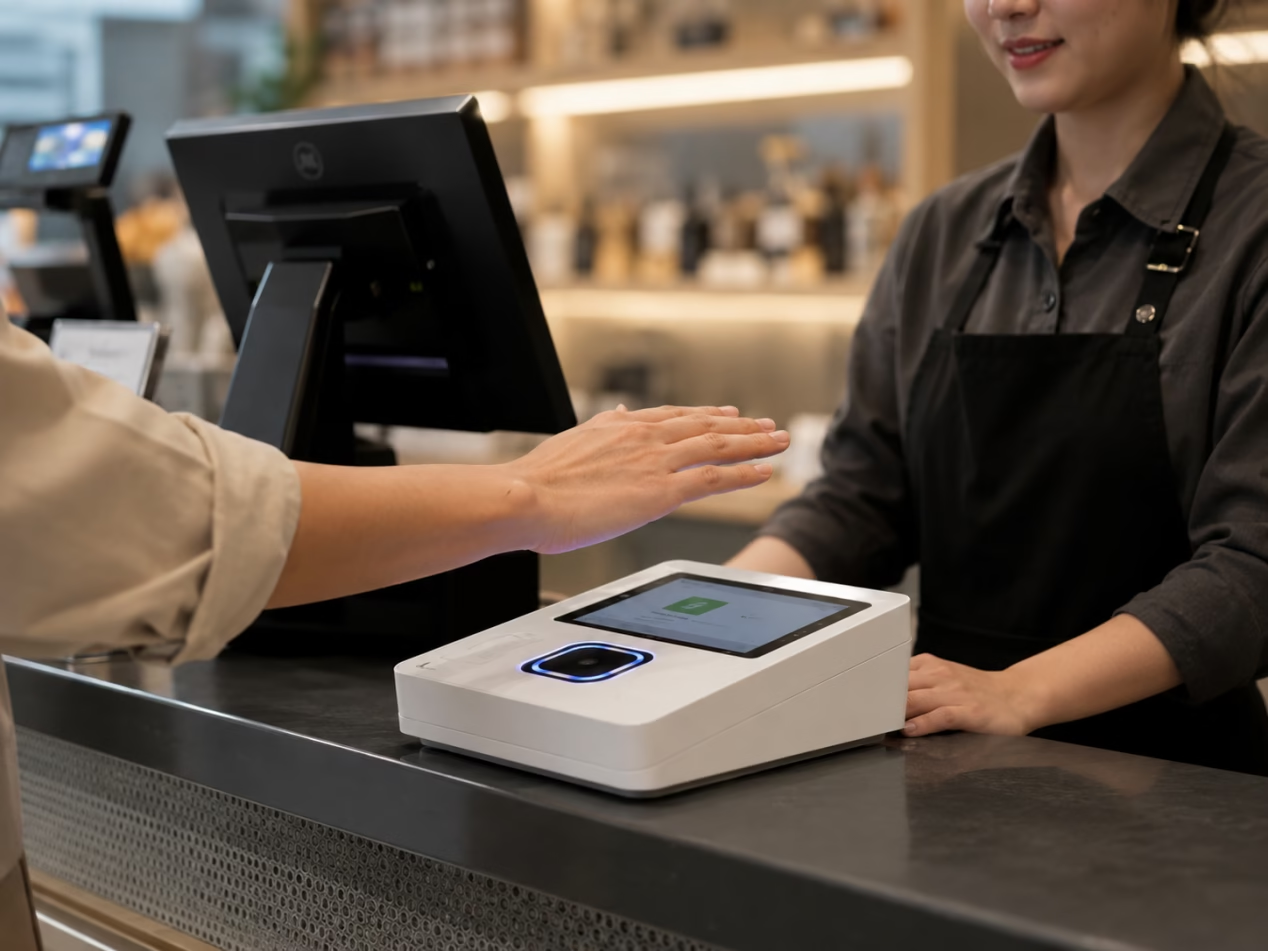
This makes it ideal for retail payments, fintech payment networks, smart city projects, and Palm Pay operators looking to combine authentication and payment acceptance within a single platform.
Typical Payment Flow
User Authentication
↓
AirOne
↓
Wallet Mapping
↓
Payment Application
↓
Payment Authorization
↓
Transaction Completed
Why Dual-Modality Biometrics Matter
Traditional systems often rely only on palm vein recognition.
Modern financial-grade authentication increasingly uses both:
- Palm Vein
- Palm Print
This dual-modality approach provides stronger anti-spoofing protection, enhanced liveness detection, and greater confidence when verifying a user’s identity.
| Capability | Palm Vein Only | Palm Vein + Palm Print |
|---|---|---|
| Security | High | Higher |
| Antispoofing | High | Higher |
| Liveness Detection | Good | Enhanced |
| Banking Authentication | Good | Recommended |
| Palm Payment | Good | Recommended |
For banking, fintech, and digital identity projects, combining palm vein and palm print recognition creates a more robust authentication framework than either technology alone.
Choosing the Right Platform
Choose WavePass500 If:
- You already have a banking or payment platform
- You need biometric authentication before payment
- You are building a digital identity or e-KYC solution
- You want to keep payment processing separate from authentication
Choose AirOne If:
- You want authentication and payment acceptance on one device
- You are building a Palm Pay network
- You require merchant payment functionality
- You are deploying payment solutions in retail environments
Final Thoughts
As Palm Pay adoption continues to grow worldwide, selecting the right hardware architecture from the beginning can significantly reduce deployment risk, accelerate integration, and create a stronger foundation for long-term success.
Whether your project requires a Palm Authentication Platform such as WavePass500 or a Palm Payment Smart POS Platform such as AirOne, understanding the role of the hardware within your overall ecosystem is the first step toward building a scalable and future-ready Palm Pay solution.
Learn more from: https://biowavepass.com/biowavepass-palm-vein-scanner-products/
Comparte este artículo
Sobre el autor

También le puede interesar
Bringing Palm Vein Scanning into a Web Workflow
From Palm Payment MVP to Commercial Deployment: Building a Scalable Biometric Payment System
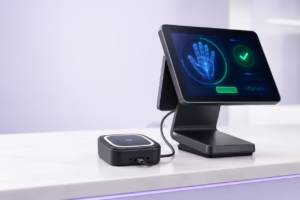
How to Integrate a USB Palm Vein Scanner with a POS Terminal
Palm Payment Goes Live in Azerbaijan: From Biometric Technology to Real-World Payment
From MVP to Market: Scaling Palm Vein Technology with BioWavePass
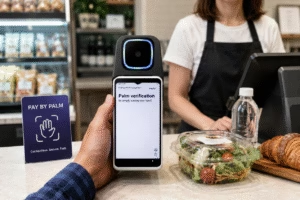
Palm Vein Payment: How Biometric Payments Work Without Cards or Phones
Palm Vein vs Fingerprint vs Face Recognition: Why Palm Vein Is Emerging for High-Security Biometrics
BioWavePass Palm Vein Scanner Products Receive Design Patent Certification
Palm Vein Authentication: The Future of Secure Digital Identity and Payments