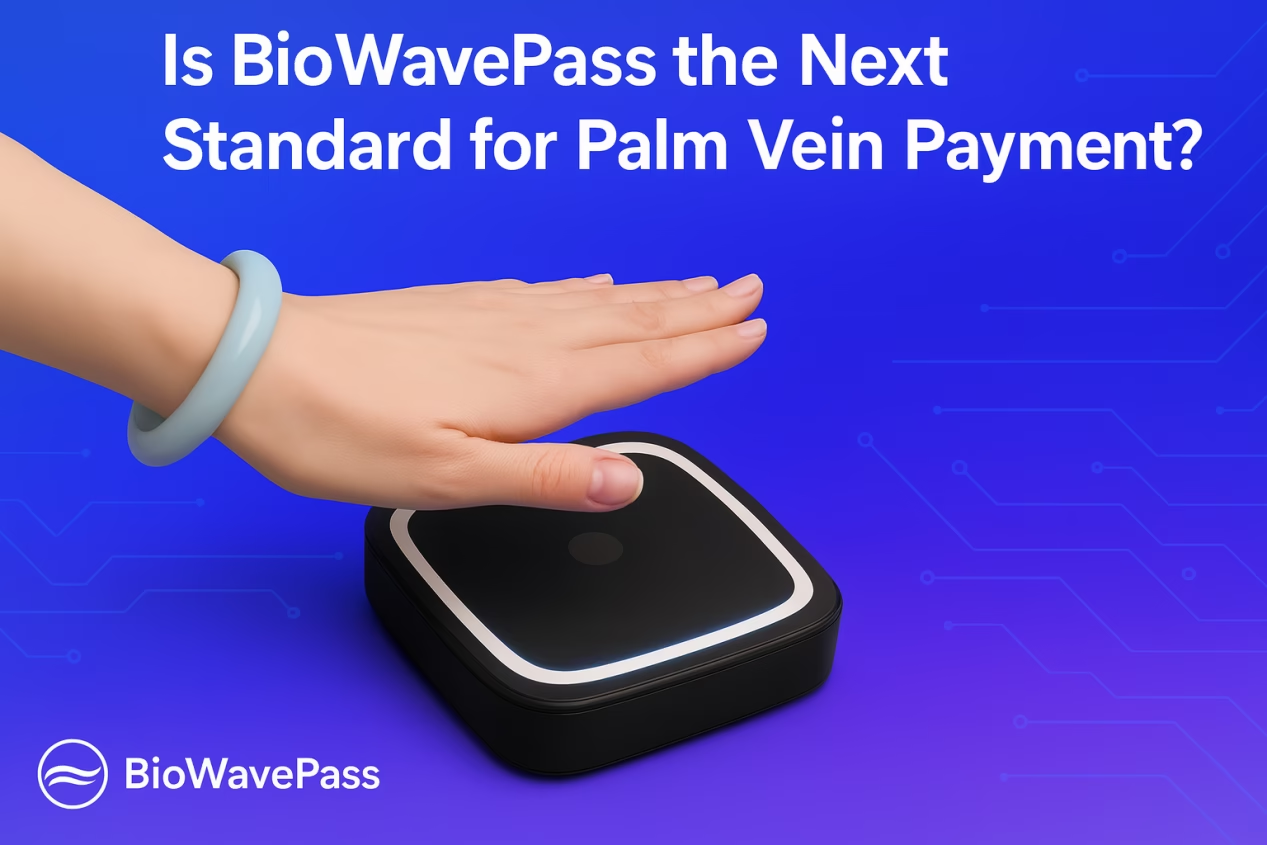
¿Es BioWavePass el próximo estándar para el pago a través de la vena de la palma de la mano?
El ecosistema mundial de pagos está evolucionando más rápido que nunca. de las tarjetas de plástico a los monederos digitales, y ahora, a verificación biométrica de la identidad.
Mientras los bancos y las empresas de tecnología financiera tratan de eliminar el fraude y mejorar la experiencia del usuario, una pregunta define la próxima era de la innovación:
👉 ¿Qué tecnología biométrica está realmente preparada para unos pagos escalables, seguros e inclusivos?
Aunque las huellas dactilares y el reconocimiento facial tienen su lugar, ambos se enfrentan a problemas persistentes de fiabilidad y suplantación.
Ahí es donde Tecnología BioWavePass Palm Vein establece una nueva referencia en materia de seguridad, escalabilidad y facilidad de uso.
🔐 Seguridad de doble capa: RGB + IR para una autenticación a prueba de fraudes
A diferencia de los sistemas biométricos de espectro único, BioWavePass integra Imágenes de doble modalidad RGB + IR, combinando huella palmar (RGB) y vena de la palma de la mano (infrarrojos) datos para una precisión inigualable.
| Modalidad | FRR @ FAR=1e-6 | Característica principal |
|---|---|---|
| RGB | 1.002% | Modo de impresión palmar en superficie |
| NIR | 1.52% | Modo subcutáneo de la vena de la palma de la mano |
| Combinado (RGB + IR) | 1e-11 | Uno de cada 100.000 millones coincide en fiabilidad |
Este algoritmo de doble capa garantiza precisión de nivel nacional con una aceptación falsa casi nula, lo que lo hace ideal para fintech, eKYC y seguridad bancaria aplicaciones.
En términos sencillos: El pago por vena de la palma a través de BioWavePass no se puede falsificar, falsear ni interceptar.
Construido a escala: Diseñado para millones de usuarios en tiempo real
BioWavePass no es sólo un dispositivo biométrico - es un infraestructura de verificación de identidad de extremo a extremo validado en un Base de datos de más de 5 millones de documentos de identidad.
- Velocidad media de coincidencia: ~315 ms por verificación
- Precisión de reconocimiento: 99,9% en condiciones luminosas y demográficas variables
- Escalabilidad: Admite implantaciones a gran escala de documentos nacionales de identidad, pagos y eKYC
This ensures real-time authentication for high-volume fintech transactions — without compromising accuracy or latency.
🖥️ Un completo ecosistema de hardware
BioWavePass offers a full hardware lineup to meet diverse deployment needs:
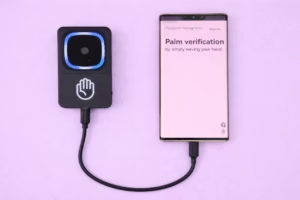
- Lector USB PalmVein01 — Compact, plug-and-play design compatible with Android, Linux, and Windows. Perfect for POS terminals, banking kiosks, and developer testing.
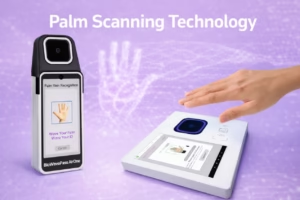
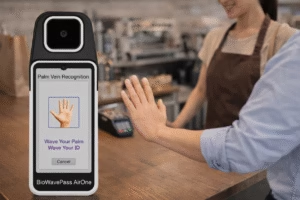
- WavePass500 Terminal — An Android-based biometric payment device supporting NFC, IC cards, QR scanning, and national ID integrations.
Both devices are EMV/PCI-ready and support custom branding or integration for financial institutions, government ID programs, and enterprise-level rollouts.
🛠️ Integración perfecta de software con SDK y API
En BioWavePass SDK simplifies development for fintechs, government projects, and system integrators through stable APIs and modular architecture.
Software Highlights:
- Developer SDKs for Android, Linux, and Windows
- SDK del complemento de Flutter for faster cross-platform app deployment
- API hooks for Inscríbase en, Partido, Actualización, y Revocar operations
- Full MVP-to-commercial scaling support, including sandbox and live environments
- Comes with 10,000 free cloud ID matches for pilot validation
This enables developers to integrate Palm Vein Authentication into existing banking apps, eKYC systems, and digital wallets — in under an hour.
🔒 Por qué el pago con la vena de la palma de la mano supera a otros biométricos
| Biometric Type | Key Weakness | BioWavePass Advantage |
|---|---|---|
| Fingerprint | Spoofable from lifted prints | Internal vein structure impossible to copy |
| Facial Recognition | Affected by lighting, demographics, and masks | Independent of lighting and appearance |
| Iris Scanning | High cost and user discomfort | Contactless and easy for public use |
| Palm Vein | None significant | Dual-spectrum, fast, and fraud-proof |
The result: a biometric identity layer that’s both secure and user-friendly, ready for mass adoption across retail, fintech, and public sector systems.
Aplicaciones industriales
Tecnología BioWavePass Palm Vein is already driving digital transformation in multiple industries:
- 🏦 Banking & Fintech: Secure authentication for cardless ATMs and Palm Pay systems
- 💰 Government eKYC: Reliable identity verification for subsidy and citizen services
- 🏥 Healthcare: Hygienic, contactless patient identification
- 🛒 Retail Payments: Fast checkout without cash, cards, or phones
- 🧾 Smart City Infrastructure: Unified biometric access and payment systems
✨ Conclusión: El futuro de los pagos está en la palma de la mano
The payment revolution isn’t about removing cards — it’s about replacing friction with identity.
BioWavePass combines advanced Tecnología Palm Vein, dual-layer RGB+IR biometrics, y enterprise-grade SDK tools to deliver what the industry has been waiting for:
a secure, scalable, and touchless standard for next-generation payments.
Banks, fintechs, and government agencies are now embracing Pago de la vena de la palma — not as a trend, but as the future standard for authentication and trust.
Check more about the Palm Vein Scanner Payment: https://biowavepass.com/palm-payment-technology/
Comparte este artículo
Sobre el autor

También le puede interesar
Which Is the Best EMV & PCI Certified Palm Vein POS Terminal?
Will Palm Vein POS Support Existing EMV, NFC, and QR Payment Ecosystem?

Why Palm Vein Technology Is Emerging as a Payment-Grade Biometric Standard
Where Is Palm Vein Biometric Data Stored and How Is It Secured?
How Do You Choose the Best Palm Vein Technology for Real Projects?
How to Solve Power Issues in Palm Vein Scanner Projects?
What Is Palm Scanning Technology?
How Palm Vein Biometrics Can Be Integrated Into Mobile Payment Systems: A BioWavePass Implementation Guide
How to setup Palm Payment? Designing a Seamless Palm Payment Flow for Fintech and Payment Platforms