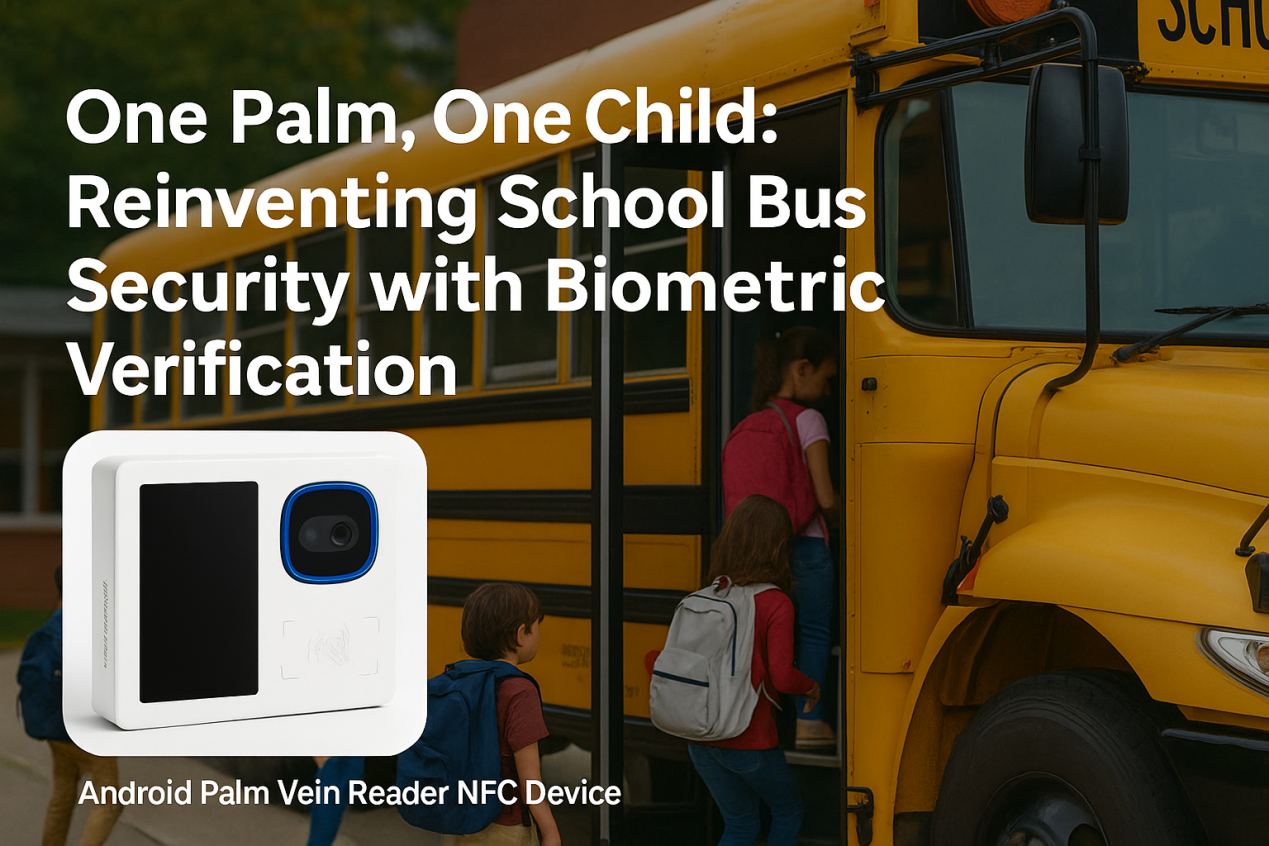
Una palma, un niño: Reinventar la seguridad de los autobuses escolares con la verificación biométrica de la vena de la palma de la mano
Publicado por BioWavePass | Julio 2025
Todos los días, millones de niños van y vienen en autobús, pero ¿cómo podemos estar seguros de que todos los niños suben a bordo de forma segura, llegan al lugar correcto y se les tiene en cuenta en tiempo real?
La respuesta está en la palma de la mano de un niño.
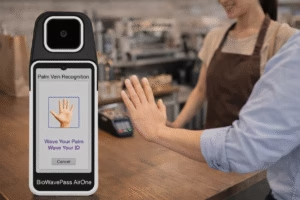
Con BioWavePass500, una poderosa escáner de venas de la palma de la mano, Las escuelas revolucionan su gestión asistencia al autobús escolar, convirtiendo cada embarque en un evento biométrico seguro y sin contacto, lo que da tranquilidad a los padres y visibilidad total a las escuelas.
🖐️ Por qué Palm Vein es el futuro de la seguridad de los estudiantes
A diferencia de las huellas dactilares o los carnés de identidad, reconocimiento de las venas de la palma de la mano utiliza patrones venosos internos invisibles que no pueden falsificarse, robarse ni desgastarse. Es:
- Sin contacto - ideal para la higiene y comodidad de los niños
- Alta seguridad - datos subdérmicos hace que sea casi imposible falsificar
- Ultraprecisión - >98% de aciertos
- Privado - sin captura biométrica visible
Eso hace que el escáner biométrico de palma la solución ideal para seguridad en el transporte escolar.
🚍 Cómo funciona BioWavePass500 en los autobuses escolares
En WavePass500 es un sistema basado en Android lector de las venas de la palma de la mano diseñado para despliegues sobre el terreno. Así es como transforma la rutina diaria del autobús escolar:
- Alumno sube al autobús, ...pasa la palma de la mano por encima del escáner.
- El dispositivo identifica al alumno en menos de 1 segundo.
- La asistencia es registradas y enviadas a la nube o al servidor de la escuela.
- Los padres reciben una notificación instantánea: “Emma subió al autobús #7 a las 07:41 AM.”
Construido para autobuses escolares: Preparados para la recarga de coches
Una característica destacada: BioWavePass500 admite una entrada de carga de coche de 12V-36V, por lo que es totalmente compatible con sistemas de alimentación basados en vehículos. Esto permite el montaje directo en autobuses escolares sin adaptadores externos ni convertidores de tensión, lo que resulta perfecto para casos de uso estable en el vehículo.
🔍 Dentro del dispositivo
- Dual-mode recognition: Palm Vein + Palm Print (RGB + IR)
- 5” Touchscreen with Android OS
- Built-in NFC reader y QR code scanner
- Wi-Fi + USB communication
- AES-256 encryption + SSL security
- Ready for on-bus power input (12V–36V, surge-protected chipset)
- Full SDK + Free license for ≤10,000 users
🎯 Por qué les encanta a los colegios
- ✅ No cards to forget or lose
- ✅ Real-time dashboards for admins and parents
- ✅ No-touch biometric check-in
- ✅ Fully mobile, car-powered, and cloud-ready
- ✅ Tamper-proof, secure, and child-safe
🧪 Empieza un piloto hoy
Schools can begin with just 1–2 units of BioWavePass500 to run a full MVP test—onboard SDK, quick integration, and no license cost for early-stage users.
📞 Póngase en contacto con nosotros para obtener más información
Let BioWavePass500 secure every ride, every day—with car-ready installation, real-time attendance, and biometric precision.
📧 Email: [email protected]
📱 WhatsApp: +86 198 6084 3404
Comparte este artículo
Sobre el autor

También le puede interesar
Which Is the Best EMV & PCI Certified Palm Vein POS Terminal?
Will Palm Vein POS Support Existing EMV, NFC, and QR Payment Ecosystem?

Why Palm Vein Technology Is Emerging as a Payment-Grade Biometric Standard
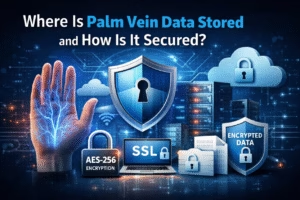
Where Is Palm Vein Biometric Data Stored and How Is It Secured?
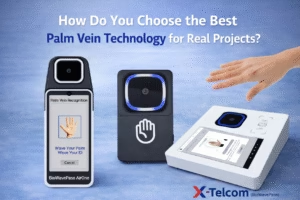
How Do You Choose the Best Palm Vein Technology for Real Projects?
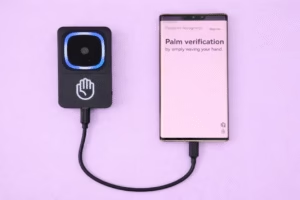
How to Solve Power Issues in Palm Vein Scanner Projects?
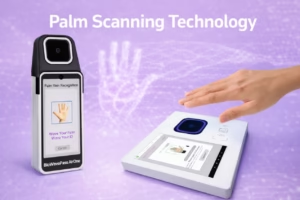
What Is Palm Scanning Technology?
How Palm Vein Biometrics Can Be Integrated Into Mobile Payment Systems: A BioWavePass Implementation Guide
How to setup Palm Payment? Designing a Seamless Palm Payment Flow for Fintech and Payment Platforms