And Why BioWavePass Technology Excels in Enterprise Applications
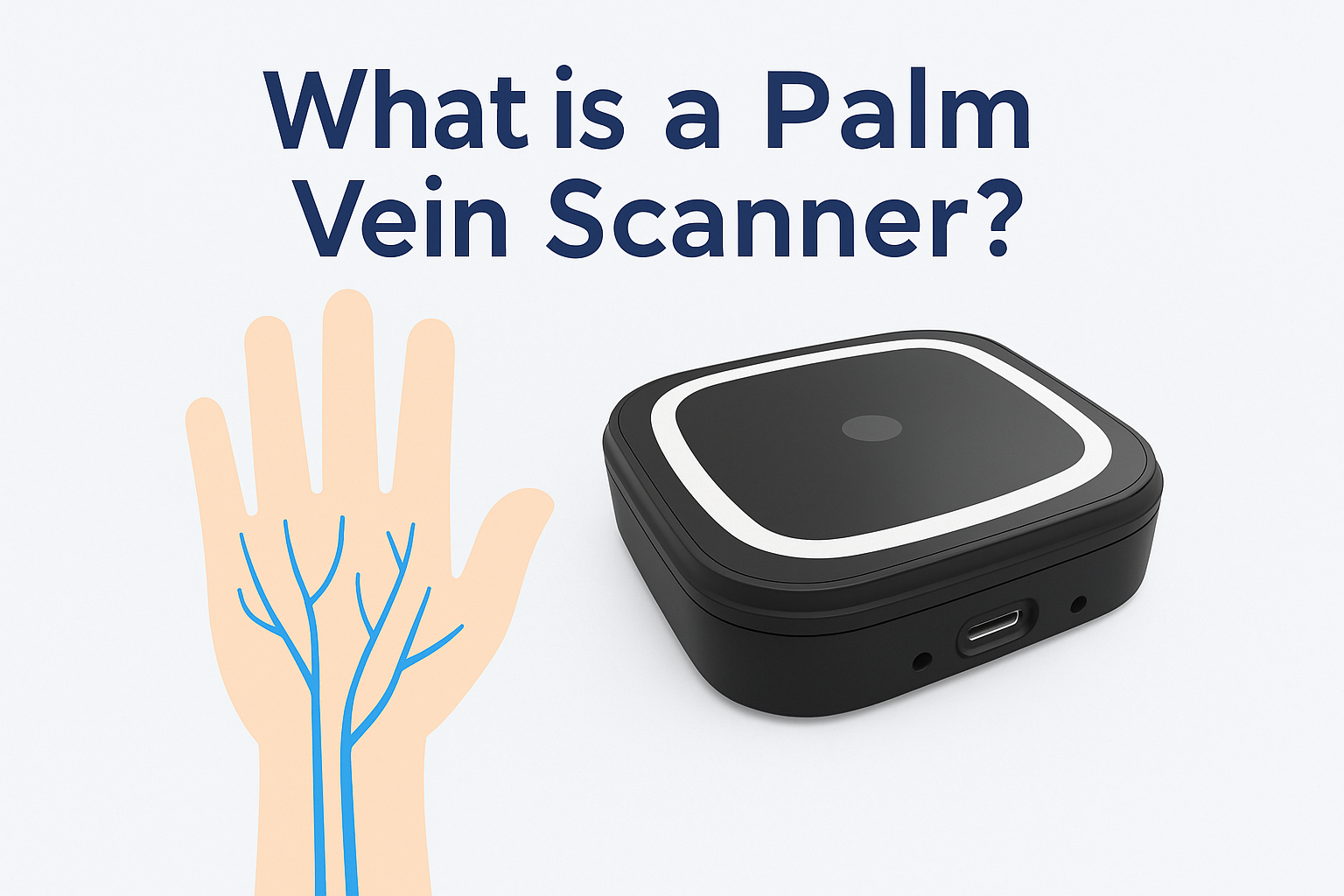
A Escáner de venas de la palma de la mano is an advanced biometric device that authenticates identity by analyzing the internal vein patterns within your palm. Using near-infrared (NIR) imaging, it captures subdermal vascular structures that are both unique and nearly impossible to forge.
En BioWavePass, we’ve built a full-stack biometric platform that merges internal vein analysis with external palm print imaging, creating a dual-mode solution for industries where security, hygiene, and speed are non-negotiable.
🔍 How It Works
-
Infrared + RGB Capture
BioWavePass devices emit IR to reveal veins and RGB light to record the palm’s surface. The dual imaging allows for multi-layer biometric verification. -
Dual-Mode Authentication
Capturing both internal and external features allows us to cross-check identity vectors — dramatically reducing false positives and improving spoof resistance. -
Biometric Template Generation
Proprietary algorithms convert captured images into encrypted feature strings — never storing raw photos. -
Cloud or On-Premise Matching
Feature data is matched locally or through a secure server, returning a verified user ID without exposing PII.
✅ Why BioWavePass Stands Out
| Feature | BioWavePass Advantage |
|---|---|
| High Precision | Dual-layer scanning yields a 1 in 100 billion FAR when RGB + IR are combined. |
| Touch-Free Operation | Great for hospitals, airports, and public kiosks — no contact means less maintenance. |
| Anti-Spoofing Technology | Internal biometric verification that’s nearly impossible to replicate. |
| Soporte multiplataforma | Compatible with Android, Windows, Linux — SDKs available for all. |
| Developer Tools Included | Easy-to-integrate SDK/API + testing kits for fintech, access control, and KYC apps. |
🌍 Real-World Use Cases
- 🚪 Smart Entry Systems – Offices, schools, research labs
- 💳 Palm Pay Applications – Retail stores, transport, vending
- 🏥 Hospital Check-ins – Fast, hygienic, and accurate
- 🧾 Public Kiosks – Finance, government, telecom
- ⏱ Attendance & Workforce – Accurate palm-based time tracking
📌 Why Choose BioWavePass?
Unlike many IR-only systems, BioWavePass integrates dual-camera sensing, enterprise-grade security, y hardware stability—all in one device:
- ⚙️ Durable metal housing
- 🌧️ Outdoor-ready with optional silicone protection
- 🔄 QR-capable via RGB — one module, multiple functions
BioWavePass isn’t just building devices — we’re engineering secure identity systems for the future.
📩 Email: [email protected]
📱 WhatsApp: +86 198 6084 3404
PalmVein #BioWavePass #PalmScanner #BiometricSecurity #PalmPay #AccessControl #RGB_IR #ContactlessBiometrics #KYC #Fintech
Comparte este artículo
Sobre el autor

También le puede interesar
Bringing Palm Vein Scanning into a Web Workflow
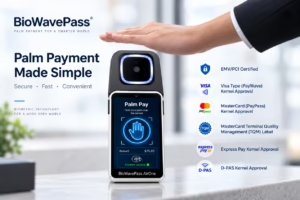
From Palm Payment MVP to Commercial Deployment: Building a Scalable Biometric Payment System
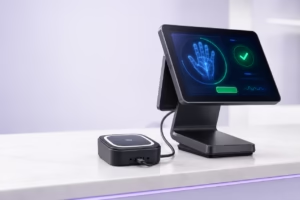
How to Integrate a USB Palm Vein Scanner with a POS Terminal
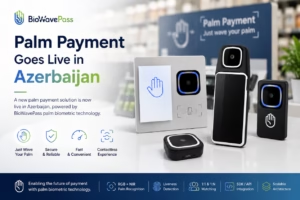
Palm Payment Goes Live in Azerbaijan: From Biometric Technology to Real-World Payment
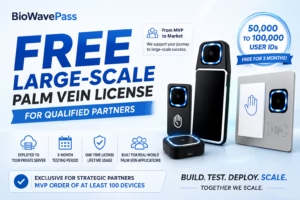
From MVP to Market: Scaling Palm Vein Technology with BioWavePass
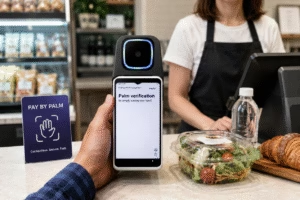
Palm Vein Payment: How Biometric Payments Work Without Cards or Phones
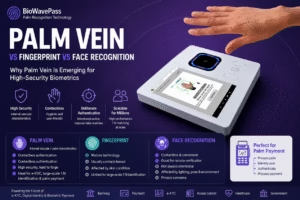
Palm Vein vs Fingerprint vs Face Recognition: Why Palm Vein Is Emerging for High-Security Biometrics
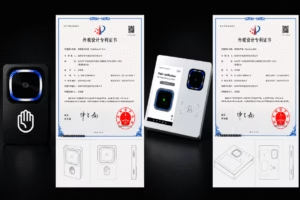
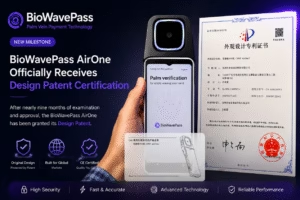
BioWavePass Palm Vein Scanner Products Receive Design Patent Certification
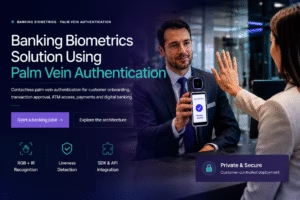
Palm Vein Authentication: The Future of Secure Digital Identity and Payments