What Makes Palm Vein Recognition the Most Reliable Biometric Technology?
In today’s world of digital identity, accuracy and trust define the future of authentication.
While fingerprints and facial recognition dominate daily applications, Palm Vein Recognition — powered by BioWavePass Technology — is setting a new benchmark for security and consistency.
1. Comparing the Three Biometric Methods
| Biometric Type | Feature Source | Feature Point Quantity | Stability Over Time | Environmental Sensitivity | Security Level | Sin contacto |
|---|---|---|---|---|---|---|
| Fingerprint Recognition | Surface ridge patterns (minutiae points) | 30–80 | Affected by age, dryness, or skin condition | High (humidity, dirt, damage) | Medium | ✖️ No |
| Facial Recognition | External facial landmarks (eyes, nose, mouth) | 68–150 | Changes with lighting, expression, or aging | Very high (light, masks, angle) | Medium | ✅ Yes |
| Palm Vein Recognition | Subcutaneous vein network + RGB palmprint (dual-layer capture) | 10,000–20,000+ | Highly stable after age 6 | Minimal | 🔒 Very High | ✅ Yes |
A diferencia de la biometría basada en la superficie, Palm Vein Recognition analyzes internal, invisible vein structures using infrared (IR) y RGB imaging — ensuring precision and true liveness verification.
2. Why Palm Vein Wins
- Internal, Not External: Subdermal vein patterns cannot be seen or copied, offering unbeatable anti-spoofing protection.
- Dual RGB + IR Sensors: Capture both vein and palm texture data for two-layer verification.
- High-Speed Matching: Verified on databases exceeding 5 million records, achieving 99% accuracy y 0.35-second matching speed.
- Touchless and Hygienic: Perfect for healthcare, fintech, and high-traffic authentication environments.
- Resistant to Conditions: Performs consistently under different lighting, humidity, and temperature levels.
3. BioWavePass Integration Advantage
BioWavePass offers a full Palm Vein Recognition hardware and SDK ecosystem compatible with Android, Windows, and Linux.
Developers can easily integrate biometric identity, eKYC, or payment authentication into existing platforms — enabling secure, fast, and contactless operations.
Whether it’s national ID projects, digital banking, or healthcare verification, BioWavePass empowers organizations to deploy next-generation biometric systems with real AI capability.
4. The Future of Digital Identity
Palm Vein technology represents more than security — it represents trust in human identity.
As the world moves toward contactless transactions and borderless identity systems, BioWavePass is redefining how identity is verified — internal, invisible, and uniquely yours.
Your Palm. Your Identity. BioWavePass- Wave Your Palm, Wave Your ID
🔗 Learn more: https://biowavepass.com/
Comparte este artículo
Sobre el autor

También le puede interesar
Can a Palm Vein SDK Capture Data Without an Algorithm Server?
Palm Vein Image Encryption: Why AES-256-GCM Alone Does Not Guarantee Compatibility
Large-Scale Palm Vein Recognition: How to Test the SDK and Plan for Growth

Palm Vein Payment SDK: Direct Algorithm Server Integration or Your Own Backend?
Palm Vein Deployment Support: Who Can Access Your Servers?
Scaling Palm Vein Payment: Single Server or Kubernetes Cluster?
Before You Scale Palm Vein POS: A Terminal Management Checklist
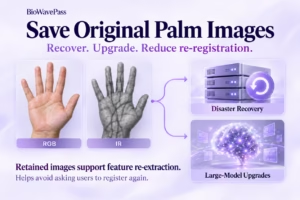
Why Saving Original Palm Images Matters for Biometric Recovery and Future Upgrades By BioWavePass
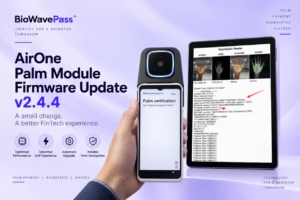
Optimizing Palm Payment Performance: AirOne Palm Module Firmware v2.4.4