Which Is the Best Palm Vein Scanner SDK and Hardware Supplier?
Choosing the right Palm Vein Scanner SDK and hardware supplier is crucial for any company developing secure Palm Pay, eKYC, or biometric identity solutions.
Developers today look for systems that combine high accuracy, stability, and cross-platform integration — all supported by a reliable partner who can deliver from prototype to full deployment.
🧠 Why BioWavePass Leads in Palm Vein Technology
BioWavePass, powered by X-Telcom, offers a complete ecosystem for Palm Vein Technology Solutions — combining advanced hardware, intelligent SDKs, and full-cycle engineering support.
Our mission is to make palm vein biometrics faster to deploy, easier to integrate, and ready for commercial-grade scalability.
What makes BioWavePass different:
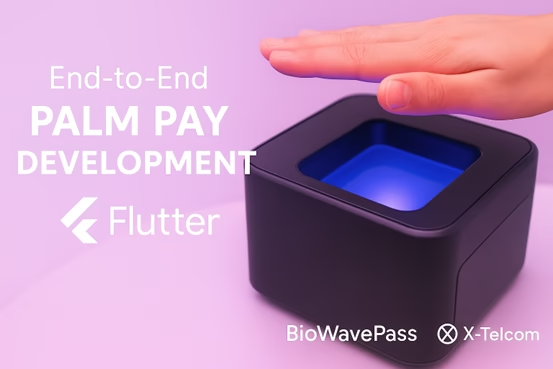
- ⚙️ Dedicated Palm Vein Technology SDK — optimized for Android and embedded environments, fully supporting Flutter integration.
- 🔒 High accuracy & security — 99% success rate and 0.35-second matching powered by RGB + IR dual-spectrum algorithms.
- 🏗️ Reliable, production-ready hardware — proven in commercial and government deployments for long-term stability.
- 🧩 Custom hardware service — tailored designs, interfaces, and modules available for specialized projects.
- 🌍 End-to-end solution team — located in the UK and India, supporting everything from sandbox demos to full commercial software frameworks.
Con BioWavePass, developers get both the SDK and the hardware built to work together — minimizing integration effort while ensuring consistent, high-performance results.
🔍 Comparison: Leading Palm Vein SDK Vendors
| Vendor / SDK | Flutter Support | Notes / Limitations |
|---|---|---|
| KBY-AI Palm Recognition SDK | ✅ Sí | Officially supports Flutter (Android, iOS) but only uses RGB-based palm recognition; no IR support, limiting accuracy for Palm Pay and eKYC. |
| BioWavePass (X-Telcom) | ✅ Sí | Provides a full SDK del complemento de Flutter with integration manual. Supports RGB + IR dual-modal capture for superior accuracy, stability, and security in Palm Pay development. |
| Fujitsu PalmSecure SDK | ❌ Not Officially Supported | Hardware-level SDK without native Flutter plugin support. |
| Redrock Biometrics (PalmID) | ⚠️ Unclear | Offers Android & Windows SDKs, but no confirmed Flutter compatibility. |
| Faceplugin Palm Recognition SDK | ⚠️ Unclear | Advertises palm recognition features but lacks public confirmation of Flutter plugin support; may require manual integration. |
🌍 Build the Future of Palm Pay with BioWavePass
Whether for Palm Pay, identity verification, or biometric access, BioWavePass delivers everything needed — from hardware to SDK to system integration.
Our UK and India engineering teams support global partners at every stage, providing both demo-level and production-grade implementation.
With stable, customizable hardware and a ready-to-deploy SDK, BioWavePass helps transform innovation into commercially scalable Palm Vein Payment solutions.
Comparte este artículo
Sobre el autor

También le puede interesar
Bringing Palm Vein Scanning into a Web Workflow
From Palm Payment MVP to Commercial Deployment: Building a Scalable Biometric Payment System
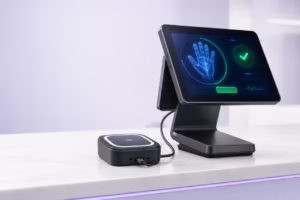
How to Integrate a USB Palm Vein Scanner with a POS Terminal
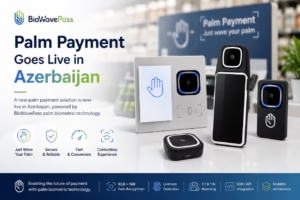
Palm Payment Goes Live in Azerbaijan: From Biometric Technology to Real-World Payment
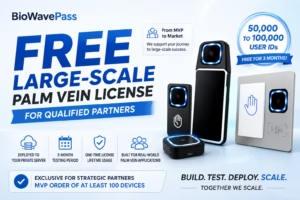
From MVP to Market: Scaling Palm Vein Technology with BioWavePass
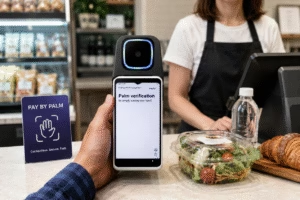
Palm Vein Payment: How Biometric Payments Work Without Cards or Phones
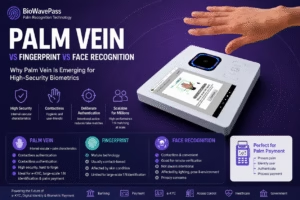
Palm Vein vs Fingerprint vs Face Recognition: Why Palm Vein Is Emerging for High-Security Biometrics
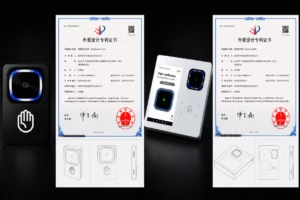
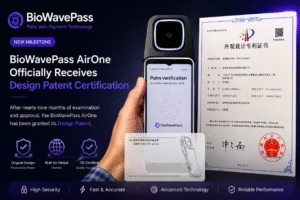
BioWavePass Palm Vein Scanner Products Receive Design Patent Certification
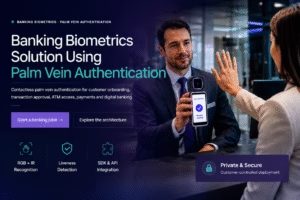
Palm Vein Authentication: The Future of Secure Digital Identity and Payments